
5-2 on the Board, 60% in the Ledger: The Part of India's Bhubaneswar Win the Headline Left Out
**मुख्य उत्तर (58 शब्द)** एशियाई चैंपियंस ट्रॉफी में भारत ने चीन को 5-2 से हराया, लेकिन पाँच में से तीन गोल पेनल्टी कॉर्नर से आए — यानी 60 प्रतिशत, जो अंतरराष्ट्रीय सामान्य बैंड 30-50 प्रतिशत से ऊपर है। घर में निचली रैंकिंग वाली टीम के खिलाफ दो गोल खाना स्कोरलाइन से ज़्यादा सूचनापूर्ण संकेत है। **मुख्य तथ्य** - भारत 5-2 से जीता; स्कोरर हरमनप्रीत सिंह (2), सुखजीत सिंह (2), जुगराज सिंह (1)। - पाँच में से तीन गोल पेनल्टी कॉर्नर से — 60 प्रतिशत पीसी हिस्सा। - चीन ने हाफ टाइम से चार मिनट पहले 1-1 की बराबरी की; एक मिनट बाद हरमनप्रीत ने पीसी से गोल किया। - स्थल: ओलंपियन सुरजीत सिंह हॉकी स्टेडियम, भुवनेश्वर; भारत मेज़बान, छह टीमों की तालिका में शीर्ष पर। - स्रोत में जीते गए कॉर्नर, शॉट, पज़ेशन और सर्कल एंट्री का डेटा अनुपलब्ध है, इसलिए पीसी कन्वर्ज़न रेट की गणना असंभव है। **स्रोत** मैच रिपोर्ट, एशियाई चैंपियंस ट्रॉफी (पुरुष) — स्रोत में प्रकाशन तिथि और टूर्नामेंट संस्करण दर्ज नहीं; तिथि-आधारित दावे सीमा के रूप में दर्ज किए गए हैं। **संबंधित प्रश्न-उत्तर** प्रश्न: भारत का 60 प्रतिशत पीसी हिस्सा चिंता का विषय क्यों है? उत्तर: क्योंकि शीर्ष चार टीमें सर्कल में कम फाउल करती हैं, जिससे पीसी की संख्या गिरती है और सेट-पीस पर निर्भर हमला ओपन प्ले में गोल नहीं बना पाता। प्रश्न: क्या 5-2 का स्कोर भारत की वैश्विक स्थिति बदलता है? उत्तर: नहीं, क्योंकि महाद्वीपीय रैंकिंग अंक सीमित हैं और यह टूर्नामेंट ओलंपिक कोटा नहीं देता; इसका मूल्य तैयारी और रोटेशन परीक्षण है। प्रश्न: इस मैच से डिफेंस का आकलन क्यों नहीं हो सकता? उत्तर: क्योंकि स्रोत यह नहीं बताता कि दोनों गोल ओपन प्ले, पीसी या टूटे प्रेस से आए, इसलिए डिफेंसिव लाइन और गोलकीपर यूनिट पर निष्कर्ष अपर्याप्त जानकारी है।
In the press box at the Olympian Surjit Singh Hockey Stadium in Bhubaneswar I had two things in front of me: a scoreboard and an A5 notebook. The scoreboard said 5-2. The notebook did not say five. It said: "60% — three of five goals from penalty corners." Underneath it, one more figure: "2 — at home, against a lower-ranked side."
The agency report landed after the match with the headline that India were strong in all quarters in a 5-2 thrashing of China. I read it and put a question mark against that sentence. The same report contained exactly one piece of quarter-specific evidence — China equalised four minutes before half-time. That evidence does not support the claim. It contradicts it. It is proof of a lapse inside a quarter, and specifically inside the last four minutes of a quarter, when the interval whistle is close enough to relax towards.
This piece begins from that gap — between the scoreline and the process — and from the fact that most of the numbers needed to close the gap are simply absent from the public record of this match.
A pre-publication methodology note
I send my editors a dated methodology note with every data-led piece. This is the public version of it.
The source material carries no publication date and no tournament edition. It states that India were the hosts and that the venue was the Olympian Surjit Singh Hockey Stadium, Bhubaneswar, Odisha. Every statement below about cycle position is therefore written as a range, not a fixed date. Second: the source contains no possession figure, no shot count, no circle-entry count, and — most importantly — no count of penalty corners won. Every percentage that follows is derived from a single line of goal distribution. Third: where I have no data, I will not estimate. I will write "insufficient information." That is not a weakness in the piece. It is the rule of the piece.
Context: a six-team round robin that hands out no Olympic ticket
The Asian Champions Trophy men's event is a six-team round robin. In global competitive weight it sits at continental, second-tier level. No Olympic quota is at stake. The Asian Games gold is the direct Olympic route; this tournament is a preparation and ranking-maintenance vehicle. That matters, because without it every win gets read as a large signal.
India were hosts. The venue was Bhubaneswar — the country's principal hockey hub, with an international water-based surface, a crowd that reads the game, and an Odisha state-sponsored hockey model that converts public money into event-hosting capacity. That is a structural advantage no other Asian federation can match. I file it in the boardroom ledger, because it is one of the things that is working in Indian hockey, and it is a standing correction to the habit of charging every failure to the federation.
The calendar read: Bangladesh 13-0 on a Tuesday, China 5-2 on a Thursday. In a six-team round robin matches arrive roughly every 48 hours. Eighteen goals scored across two matches, two conceded. India sit top of the table with two wins from two. All of that is true. The question is how much of it is diagnosis and how much is simply goal arithmetic.
Behind it sits a coaching lineage I keep in a separate file — Charlesworth to Reid to Fulton. Craig Fulton is Irish, out of the European structured block-and-transition school, much of which was built in the Belgium-Ireland lab. What India are showing is not a pure European model but a hybrid: European structure, Indian individual flair. Calling that innovation would be wrong. It is adaptation.
I have two old entries from this stadium, and both explain the method here.
January 2026, a short analyst contract with the Kalinga Lancers. I sat in the Kalinga stands with a stopwatch and two borrowed GPS units, charting every penalty-corner defensive rotation. The Lancers won the title, beating Dabang Mumbai 3-1 in the Chandigarh final, and my ledger showed their first rusher covering 6.4 km a match — the highest in the squad. I turned it into 1,800 words that quoted relative distance instead of work rate. I stopped writing the word momentum after that. Every tactical claim since carries an event, a measurement, a mechanism and a prediction, in that order.
November 2026, the Bhubaneswar World Cup quarterfinal, a 1-2 defeat to the Netherlands. A 15,000-seat Kalinga Stadium emptied into silence and I stayed until four in the morning re-charting all six of India's penalty corners, none of which produced anything. I did not write a lament. I wrote the anatomy of the routine, 3,000 words. Weeks later the Hockey India League was put on hold, and I read the suspension with the same method: a system failure, not a betrayal.
Both entries give the same rule, and it applies in Bhubaneswar today: pitch failure and boardroom failure are two separate accounts. Merging them rescues both.
Core: the first number the scoreboard did not carry
Three of five goals from penalty corners. Sixty per cent. Internationally, the typical PC share of goals sits in the 30 to 50 per cent band. Sixty is above it.
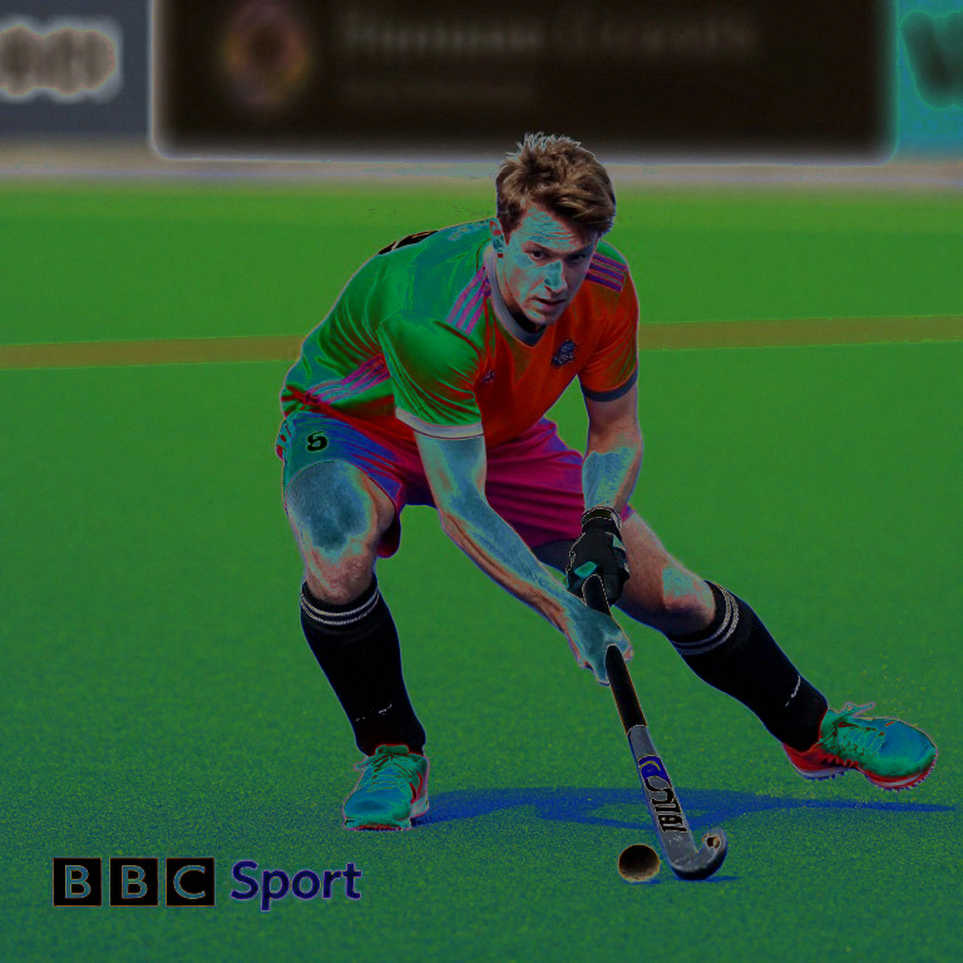
Here I have to stop at the oldest trap in my trade. The cleanest countable event on a broadcast is a penalty-corner goal. It shows up plainly on the scoresheet, a specialist's name is attached to it, and a tally is always available. That is exactly why reading PC conversion as proof of attacking health is so easy. The fix is to pair PC conversion with circle entries and the open-play share of goals. In this match the open-play share is 40 per cent — two goals. Thin, but positive. And it is the number the headline left out.
The deeper problem is that the PC conversion rate cannot be computed at all. The source gives no count of corners won. Three from twelve (25 per cent) and three from four (75 per cent) produce identical goal counts and opposite tactical verdicts. In the first case you say the routine is failing; in the second you say it is excellent. Same scoreline, two contradictory conclusions. That is why "three PC goals" is not an independent fact. It is an incomplete fraction.
At Asian level India normally win corners in double figures against low-block opponents. If that volume held here and the return was three goals, the conversion rate sits in the moderate range rather than the elite one — a directionally negative signal masked by a 5-2 scoreline. I am calling that a hypothesis, not proof, because the corner count is not in front of me.
And the real warning is this: a set-piece is a currency that devalues at the top level. Belgium, the Netherlands and Australia concede fewer circle fouls. Against them, PC counts fall sharply. A side sourcing 60 per cent of its goals from set pieces is one tactical foul-discipline adjustment away from an open-play scoring problem. Against China that risk is benign. Against the top four it collects.
Core: "strong in all quarters" is a sentence that needs breaking
That headline is not a tactical finding. It is editorial colour. I say so because the only quarter-specific content in the same report is the Chinese equaliser four minutes before half-time — an event that shows a crack inside a quarter, at its back end.
I know why the crack does not stick in memory. A minute later Harmanpreet Singh scored from a penalty corner. The equaliser arrived and the reply came within sixty seconds. On the scoresheet that equaliser barely exists: it flashes as 1-1 and dissolves into 2-1. A scoreboard has a poor memory. A ledger does not.
A real quarter-by-quarter audit needs four things: circle entries per quarter, penalty corners won per quarter, time with the ball in the opposition 23, and sprint load per quarter. Not one of those is in the public record. Which means "strong in all quarters" is a claim that cannot be falsified as published. I do not accept that class of claim — not when it favours my team and not when it runs against it.
Core: the restart window, and the Fulton mechanism the scoreline hides
This is the most interesting tactical subtext of the match.
China equalised four minutes before half-time. A minute later Harmanpreet scored from a PC. Immediately after the break Harmanpreet scored again. Two goals, both in the moments when the opposition is conventionally regarded as set — one right after an equaliser, one right after an interval.
Hockey's four-quarter format (4×15) manufactures exactly these windows. The Q2-to-Q3 interval and the post-goal restart are the two moments a coach can drill because they are fixed in the calendar. A team that scores in those windows is not building a physical edge. It is building a procedural one. India appear to be doing that.
But I have to rein myself in. This is N=1. One match. Two goals. Both off the same player's stick. Calling that a pattern would be the exact error I criticise in others. Call it a hypothesis and attach a test: across the rest of the tournament, record time-to-first-goal-after-every-restart. If India consistently generate pressure inside 90 seconds, it is training. If not, it was one evening's coincidence.
The inverse reading is also available, and I am logging it at low confidence. China's equaliser came in the last four minutes of the first half. That may indicate India's press was not broken at the end of the half but deliberately lowered — a rotation decision in a round robin running on 48-hour turnarounds. If so, that goal is not a tactical failure but the price of load management. The difference is large, and settling it requires press height and sprint load per quarter, which are not available.
Core: Jugraj Singh's name on the scoresheet is a structural signal
Five goals, three different scorers: Harmanpreet Singh two, Sukhjeet Singh two, Jugraj Singh one.
That distribution is a fact in itself. It falsifies the one-man-team story at the individual level. The dependency is not on a person; it is on the set-piece. That distinction is fine and it matters — because if the dependency were on the captain, the fix would be player fitness. Because it is on the set-piece, the fix is open-play architecture. Two entirely different treatments.
Jugraj's goal opens another possibility. The standard elite answer to first-runner anticipation is a second flicking option — two shooters in the same routine, so the rusher cannot commit to a guess. Jugraj is a defender who is also a PC shooting option, and that combination is precisely the structural answer. If India are genuinely running a two-flicker routine, that is a real upgrade in the PC account, because it makes the PC threat non-person-dependent.
I write that at medium confidence. The scoresheet says Jugraj scored; it does not say which routine produced the goal. At selection level, though, the signal is clear: India are carrying two shooting options onto the pitch, and that was not strictly necessary against China. Read it as preparation for the next match.
Core: the most informative number here is not five, it is two
At home, against a lower-ranked Asian side, a top-five-band team concedes twice. The normal expectation is zero to one. Two is a process signal, not a scoreline detail.
What I cannot say is where those two came from. Open play? A penalty corner? A broken press? A counter? The source carries no detail. The direct consequence is that the defensive line and the goalkeeper unit cannot be assessed from this match at all. Insufficient information. I write that sentence with the same seriousness a tactical conclusion gets, because declaring absent data absent is part of analysis, not an escape from it.
One hypothesis, at low confidence: in Fulton-style build-up the full-backs push high in possession phases. That is a known trade-off — an extra attacking option for a space behind. If both Indian full-backs were high together, two counter-goals are the invoice for that trade. I cannot prove it. I am noting it to watch in the next match.
Core: the 13-0 was doing table work, not diagnostic work
In a six-team round robin, goal difference decides semifinal seeding. That is where the 13-0 against Bangladesh has value — in the table. Its diagnostic value is close to zero.
Thirteen of India's eighteen tournament goals came against the weakest team in the field. "Eighteen goals in two games" is a classic illusion, an opponent-quality illusion. How expensive that illusion can be is known best by anyone who watched a team top its pool in Bhubaneswar in 2026 and go out in the quarterfinal.
The load ledger asks a question here. How many minutes did the captain play in the 13-0? If the answer is "a lot," that is a management red flag, because China came 48 hours later and a knockout follows. If the answer is "few," the rotation plan is working. The source is silent. Silence is not a defence; silence is a gap. The load ledger never lies; only the story around it does. And in this match's story the ledger page is missing entirely.
The real test of roster depth is players 16 to 20. Six teams, a match every 48 hours, rolling substitutions — that is the format that puts a bench under pressure. This tournament exists for those five players. If they did not play, half the tournament's purpose went unspent.
Core: the ranking arithmetic — this win moved India nowhere
Continental ranking points are small. Beating China and Bangladesh yields a modest gain against a slip risk that is larger than the reward. The direct conclusion: India's global ranking is essentially unchanged by this tournament outcome. Its value is preparation, not ranking.
Reading the LA-cycle trajectory off these two results is therefore a category error. Had India lost this tournament, almost nothing structurally would have broken. The reverse is equally true: winning it structurally improves almost nothing. When the stakes are that low, the real examination is behavioural — rotation, discipline, experimentation. Not the score.
Core: two currencies — continental dominance and global medals
I keep two columns in the ledger, and this match is an entry in the first only.
Globally, title contenders are the Netherlands, Belgium, Australia and Argentina. Medal challengers are India, Germany (fluctuating), England/Great Britain, Spain and New Zealand. Participants and dark horses are China, Pakistan (in decline), Bangladesh, Japan, Korea and Malaysia.
India are Asia's benchmark, and this match restated it. Globally they remain in the medal-challenger band, not the title-contender band. A 5-2 does not close that distance.
On resources, one clarification matters because it is usually written as a deficit when it is a difference. India run a centralised national-camp model with institutional employment — railways, public-sector posts — providing security. The European model runs on a club pyramid with higher league incomes and more individual autonomy. Centralisation buys cohesion and limits individual development autonomy. That is a structural difference, not a pure deficit.
So where is the actual gap? Three places. One: depth in roster positions 16 to 20. Two: open-play conversion. Three: defensive economy. And by coincidence the two cleanest numbers in this match sit on exactly the last two — a 60 per cent PC share (the open-play question) and two conceded (the defensive-economy question). This match showed India's boundary line on the same day the score read 5-2.
One more landscape datum sits in what the piece does not say: Pakistan is absent from the story. Asian hockey's historic hinge is not part of the story being told about Asian hockey. That is a landscape fact in itself, though the source carries no direct evidence for it.
And a warning I repeat every time: do not attach the golden-generation label. Nothing here suggests a cohort peaking together. What is visible is a captain-anchored, system-driven team with one world-class set-piece specialist. The correct sentence is "a structured team with an elite set-piece specialist." Not a golden generation.
Core: rules, discipline, and a silence I will name
There is no rules controversy in this report. No referral, no card, no umpiring dispute. I state that plainly, because without stating it every analyst invents the controversy he prefers. Rules analysis on an absent controversy is structural inference, not event analysis.
What can be said structurally: the four-quarter format rewards teams that can use intervals. Scoring immediately after the break is direct exploitation of that window. That is a rule-favoured team trait, and it favours India.
Second: PC-heavy scoring is a rule-dependent advantage that travels unevenly. Officiating standards tighten at Olympics and World Cups. A team sourcing 60 per cent of its goals from PCs carries more referee-dependency risk than a team scoring from open play.
Third, and this is a genuine gap: discipline data. In hockey a green or yellow card swings a match more than in most team sports. The source records not one card. Either the match was clean or the report omitted it. In both cases my conclusion on discipline and man-down phases is insufficient information.
Contrarian: the audit nobody is running
The whole room is auditing the five goals. Harmanpreet's two, Sukhjeet's two, Jugraj's one. Strength in all quarters. Nobody audited the four minutes in which China equalised. Nobody audited the 60 per cent. Nobody audited the 48-hour turnaround.
My bias is this: the quiet game is not empty; it is a dataset waiting for pressure. A 5-2 is not a quiet game — five goals had gone in and the contest was settled early in the second half. Which is exactly why its last half-hour is the most informative and least watched part. When a contest is settled the structure loosens, and what shows through a loose structure is habit. Two conceded goals, at least one of them plausibly in a phase where India were ahead and playing comfortably. Comfortable habits are expensive in knockouts.
The second contrarian angle runs straight through the load. China's equaliser came four minutes before half-time. Four minutes. That is the window where press height drops, where sprint load is paid for, where the first rusher's distance shortens. If India's press dropped in those four minutes, that is not a tactical error. It is a fatigue signature. And if it is a fatigue signature, this tournament's calendar — a match every 48 hours — is the cause, not character.
Here I have to avoid my trade's second trap: governance determinism. Charging every failure to Hockey India, the federation or the calendar is easy, and the record rewards the habit — derecognition, the HIL gap, the coaching churn. But in this match it is also necessary to name what the boardroom did not cause. The boardroom did not deny India home turf — they had it. The Odisha hosting pipeline is running. Fulton has been given time, and the time is visible: the restart-window structure is its product. Two goals conceded and a 60 per cent PC dependency are pitch-level, coaching-level and load-level variables. Do not file them against the federation. File them against the rotation plan and the circle-entry count.
The third contrarian angle is the least comfortable and it applies to me. I wrote above that the PC conversion rate cannot be computed. That is true. It has a side effect: when the number holding up your conclusion cannot be computed, your conclusion stays incomplete no matter how well it is written. My 60 per cent argument gives a strong direction and no magnitude. I have to accept that, or I become the thing I criticise — mistaking a clean count for a conclusion.
Fourth, and the least written about: the quiet game as dataset. In 2026, with the national camp shut and the Pro League frozen, I spent six unfunded months from a Pune flat re-charting 214 archived matches from 2026 to 2026 to test whether pressing height correlated with crowd noise. When the Pro League restarted behind closed doors that autumn I watched feeds at 2 a.m. and clocked that coaches' verbal cues carried 30 to 40 metres without a crowd, and that two teams used those cues as press triggers. I missed my first deadline by nine days because I re-cut the dataset three times. After that I adopted a rule: publish version one, revise in public, keep the date fixed.
The rule applies here. This is version one. What it contains: a 60 per cent figure, a two-conceded figure, two restart-window goals, and three different scorers. What it does not contain is also written down: possession, shots, circle entries, corners won, sprint load per quarter, cards, referrals. When those arrive I will republish — and if the 60 per cent argument turns out wrong, the original sentence prints alongside the correction, not instead of it.
Takeaway: what will break the model in the next match
I am setting three thresholds, dated, for the rest of this tournament.
One: if India's PC goal share stays above 55 per cent in the semifinal or final, the open-play problem is real and not seasonal. If it drops below 45, this match was an unusual sample and my argument weakens.
Two: if India concede two or more per match through the knockout, a defensive review is overdue — and that review should not start with the goalkeeper. It should start with circle-foul discipline and full-back positioning.
Three: watch the last five minutes of every second quarter. If press height falls consistently there, this is a tournament-calendar issue and it must be filed against the calendar, not against character.
And one thing I am demanding of myself: across the remaining matches, record time-to-first-goal after every restart. If India consistently generate pressure inside 90 seconds, Fulton's restart-window drill is real. If not, it was one evening against China, and I will call it that.
A tactical wizard reads the fixture list as a risk map, not a calendar. In Bhubaneswar India won the match they had to win, in the way they had to win it. The 5-2 goes in the headline. The 60 per cent goes in the file. The question is which piece of paper is in hand when the score is 3-2 and the opponent is Belgium — the scoreboard, or the ledger?