
होमField HockeyPride and Tears of Joy at Home: Harmanpreet Singh's Father Watches Him Play Live for the First Time
Pride and Tears of Joy at Home: Harmanpreet Singh's Father Watches Him Play Live for the First Time
जालंधर के सुरजीत हॉकी स्टेडियम में एशियाई चैंपियंस ट्रॉफी के शुरुआती मुकाबले में भारत ने बांग्लादेश को 13-0 से हराया। मैच से पहले बलबीर सिंह सीनियर, अजीत पाल सिंह और हरमनप्रीत सिंह की तस्वीरें दिखाई गईं, जिससे माहौल भावुक हो गया। असली कहानी कप्तान हरमनप्रीत सिंह के पिता सरबजीत सिंह की थी, जिन्होंने पहली बार अपने बेटे को स्टेडियम में लाइव खेलते देखा। उन्होंने बताया कि हरमनप्रीत सुरजीत हॉकी अकादमी में प्रशिक्षण के दौरान रोज घर फोन करते थे। यह रिपोर्ट खेल से ज्यादा परिवार, विरासत और घर वापसी की भावना पर केंद्रित है। इसमें बांग्लादेश की प्रतिक्रिया, हरमनप्रीत का सीधा बयान और टूर्नामेंट का व्यापक संदर्भ शामिल नहीं है।
Under the floodlights of Surjit Hockey Stadium in Jalandhar on Tuesday evening, something happened that mattered more than the scoreboard. Long before pushback, the stands were full. When the giant screen rolled a montage of Balbir Singh Senior, Ajit Pal Singh and Harmanpreet Singh, eyes in the crowd grew moist. This was not merely a team introduction; it was a living prologue to Punjab's hockey lineage presented in a single frame.
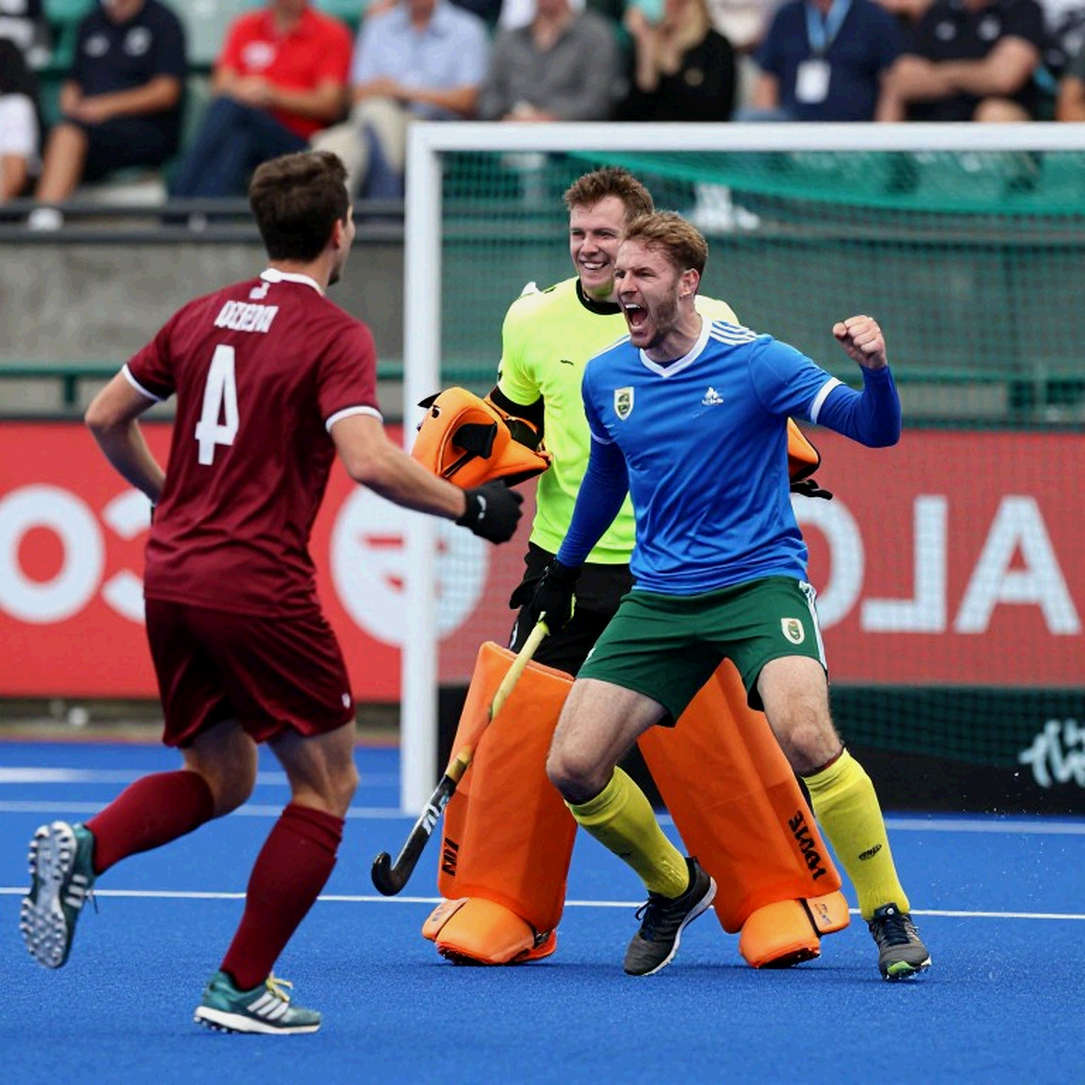
India won that match 13-0 against Bangladesh in the opening fixture of the Asian Champions Trophy. It is the kind of score any match report leads with, because in the language of numbers it is the biggest fact. But the real story in Jalandhar that evening lay elsewhere. It lay with Sarabjit Singh, Harmanpreet's father, watching his son play live for the first time. What filled his eyes was worth more than thirteen goals.
A 13-0 result in hockey tells three things: India were in rhythm from the first quarter, Bangladesh's defence cracked under sustained pressure, and the result was never in doubt. When a contest is that one-sided, match reports tend to become lists—who scored, how many penalty corners, which quarter belonged to whom. But just as the keyword '13-0' is clear, it is equally clear that the score cannot be read in isolation from the mood of that evening. Every time India scored, the roar from the stands carried a different warmth. This was a Champions Trophy fixture, but its echo travelled into living rooms and courtyards.
For Sarabjit Singh, the evening was the fruit of years of waiting. Speaking to The Indian Express, he said this was the first time he had watched his son play from the stands. The admission is surprising only at first glance—a father of a two-time Olympic medallist, a national captain whose name draws applause across the world. It is not surprising; it is sadly ordinary. Many Indian sporting families have watched their children's success on television, not from a stadium seat. Tickets, travel, leave from work, household responsibilities—small obstacles that together build a large distance.
Sarabjit recalled that when Harmanpreet was young and training at the Surjit Hockey Academy, he would call home every day. That single sentence tells a whole story. A boy who phones home daily through the grind of academy life is declaring where his roots are. A father who waits for that call is declaring what success actually measures—not medals, but his son's voice.
That evening, watching his son play in the same city whose academy shaped him, must have felt like a closed circle. It is the feeling that turns sporting events into stories—place, memory and legacy arriving together. Harmanpreet's journey from Punjab's village fields through academy discipline to the national team is never one player's journey alone. It belongs to a family. Sending a child to a hockey academy is a significant decision for a farming or small-business household. It costs fees, but more than that it costs a leap of faith with no guarantee attached. Thousands of children enter academies every year; very few reach where Harmanpreet has. Those who do usually have a family's decades of patience behind them.
The stadium itself is named after Surjit Singh. That detail is not administrative trivia. It means the ground on which Harmanpreet captained is founded in the same tradition that trained him. Surjit Singh belongs to the lineage of Indian hockey remembered as much for mentorship as for play, and his academy produced generations of Punjab talent. When Sarabjit invokes that academy alongside his son's daily phone calls, the private story becomes a systemic one: a place, a coach and a family all building a player together.
The montage on the big screen—Balbir Singh Senior, Ajit Pal Singh, Harmanpreet Singh—was a deliberate choice. Balbir Senior's generation made hockey a symbol of national pride in the Olympic golden era; Ajit Pal Singh's generation proved Indian hockey was not only a thing of the past by winning the 2026 World Cup; Harmanpreet's generation carries the responsibility of closing the long gap since. Showing the three together told the crowd that the man on the pitch was not standing alone. He had a queue behind him. The tears that followed were not blind sentiment; they were the sentiment of a long wait.
Placing Harmanpreet in that queue makes him an heir to a legacy, which is both pressure and honour. On that evening, in his own city, before his own father, the honour must have doubled.
On the hockey itself, India's performance was close to ideal for an opener. A first match in a tournament like the Asian Champions Trophy tests travel, preparation time and mental steadiness together, and India passed without visible strain. Circle entries, penalty corners, ball control—by every conventional measure India dominated. Teams often lose rhythm in one-sided games; here goals kept coming across quarters, a sign the focus held. That is a good marker for harder fixtures.
But a 13-0 score also reflects a wide gap in levels, and reading India's true strength from it would be premature. The test comes against stronger sides, when it will become clear whether the opening win built confidence or merely concealed weaknesses.
Every big win has a second side. Bangladesh travelled from a smaller hockey structure to play an international tournament, and what their players felt, what their coach said, where their plan broke down—none of that is available in the record used here. That gap should be acknowledged rather than hidden. A balanced feature would say what the match meant for a developing hockey nation, and Indian readers benefit from understanding that Asian hockey's health depends on stronger opponents.
There is another conspicuous absence: no direct quote from Harmanpreet Singh himself. It is a paradox that the evening's central figure is silent in the telling. What he said about playing before his father, what the team's plan was, how confident he is about the next fixtures—none of it appears. That absence is precisely what makes this a family story rather than purely a sports story. When the family becomes the centre, the athlete's voice slips back. Treating that silence as part of the story is the honest approach.
Several questions remain unanswered. Why was this the first time? Was it tickets, travel, timing, household duty—or the ordinary reality of an Indian family waiting a decade to watch a child play? This should have been asked. The tournament context is also missing: the format, India's next opponent, what the win does to the table. And the headline refers to 'families' in the plural while the available material covers only one. A single family's story should not be presented as every family's story. The piece is also time-bound by 'Tuesday', with no publication date or byline to anchor it.
None of this makes the report unreliable. Its central quotes have a named human source, and its reporting stance is not opinionated. Its strength is emotional and symbolic storytelling: it shows that when an international match is played in a smaller city, the effect does not end at sixty minutes. The tears in Sarabjit Singh's eyes are news because they testify to the decade in which a boy sweated in an academy, a mother held the household together, and a father quietly kept hope. That evening, the hope stood on the Jalandhar turf wearing a captain's armband.
In the end, Tuesday in Jalandhar was an ordinary win for Indian hockey and an extraordinary day for one family. From Balbir Singh Senior to Ajit Pal Singh, from Surjit Singh's academy to Harmanpreet's captaincy, this sport forms a chain no single score can contain. Sarabjit Singh was its most human link—a father watching his son play for the first time, eyes full of pride. India won 13-0. One father won something no scoreboard records.
संबंधित खिलाड़ी
अनुशंसित
A Fourth Bronze, One Door: The Ledger of Indian Hockey2026-10-27
Bangladesh's 33-20 Win on the Dhaka Court: Second-Half Explosion, But Defence and Goalkeeper Questions Remain2026-10-22
Beyond the Goals: A Father’s Eyes Record Harmanpreet Singh’s Victory in Jalandhar2026-11-13
Bangladesh Finish Sixth, but Asian Hockey’s Bigger Story Is the Structural Gap2026-11-05
India 5-2 China: The Most Telling Number Is Not the Scoreline but the Three Goals From Penalty Corners2026-10-31
अनुशंसित
The Empty Seat in Jalandhar: Bangladesh's Sixth Place and the Real Story of Asian Hockey2026-11-04
33-20 in Dhaka: Bangladesh's Real Scorecard Was Written in the Second Half2026-10-22
Behind Bangladesh's 33-20 Win in Dhaka: a Second-Half Surge, Three Shooters Carrying 57.6%, and the Twenty Goals Nobody Is Asking About2026-10-22
Asian Champions Trophy 2026: Savita Punia’s Absence and India’s Incomplete Squad Announcement2026-11-10
33-20 in Dhaka: Bangladesh's Handball Win, the Second-Half Arithmetic, and the Defensive Question the Scoreboard Never Asks2026-10-22
अनुशंसित
29 Goals, Six Matches, One Point: The Truth Behind Bangladesh's Sixth Place Belongs to Pakistan2026-11-05
An 18-Member Claim, 16 Names: The Missing Line in Bangladesh's Asian Champions Trophy Squad2026-10-22
Dhaka United's 28 Points and Rayer Bazar's Zero: Where Bangladesh Hockey's Real Signal Actually Sits2026-11-09
Eighteen Claimed, Sixteen Listed: The Missing Line in Bangladesh's Asian Champions Trophy Squad2026-10-22
Asian Champions Trophy 2026: Savita Punia’s Absence and India’s Incomplete Squad Announcement2026-11-10