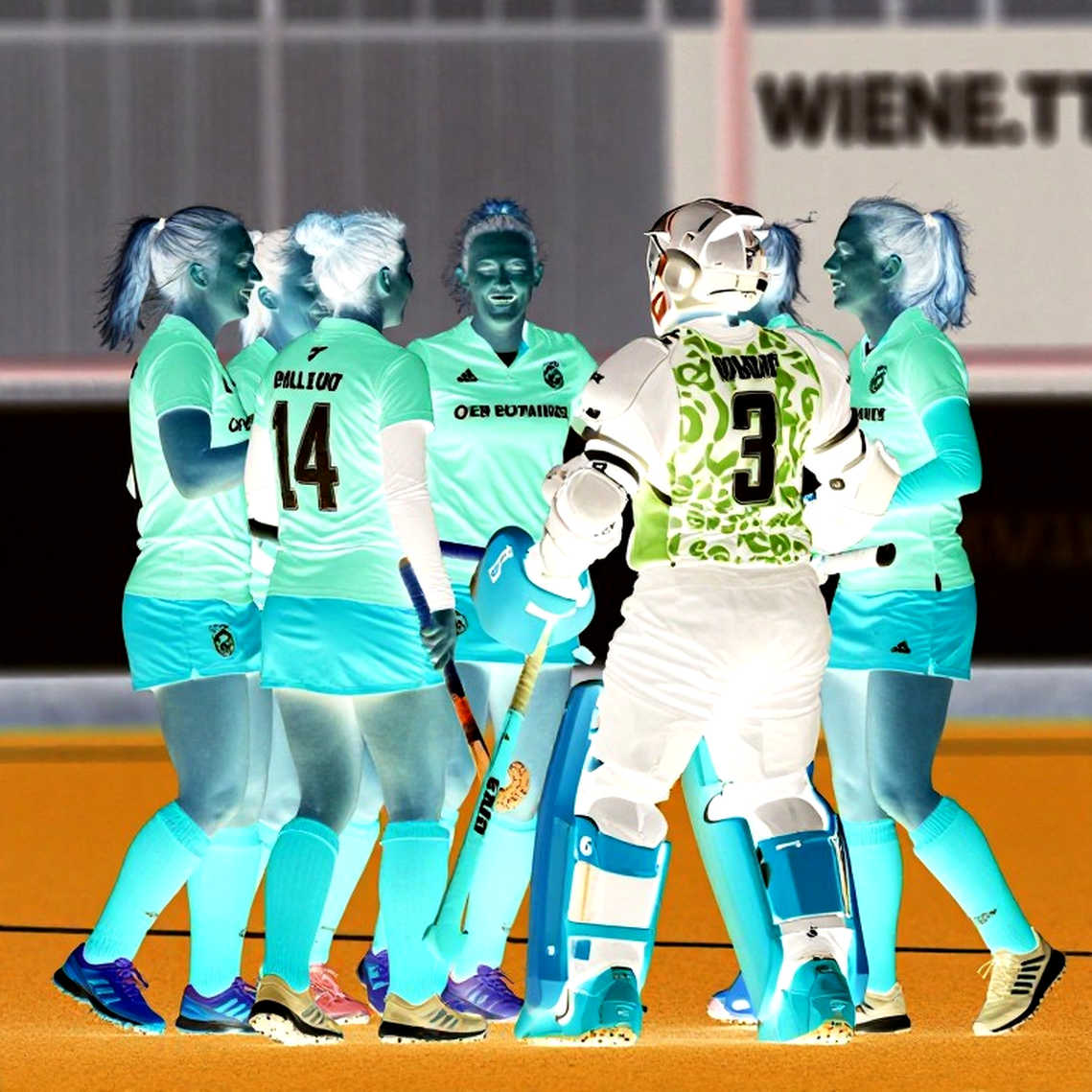
28 Points, 27 Points and Zero: What Dhaka United's Title Actually Proves About Bangladesh Hockey
**कोर उत्तर (≤60 शब्द):** ढाका यूनाइटेड ने बांग्लादेश फ़र्स्ट डिवीज़न हॉकी लीग 10 मैचों में 28 अंक लेकर जीती और प्रीमियर लीग में जगह बनाई। धाका वांडरर्स 27 अंक पर दूसरे, रायर बाज़ार शून्य अंक पर रेलीगेट। अलग से, बांग्लादेश हॉकी फ़ेडरेशन और BRAC Bank PLC ने 22 ज़िलों की 24 महिला गोलकीपरों का 15-दिवसीय आवासीय कैंप पूरा किया। **मुख्य तथ्य:** - लीग में 11 टीमें, प्रति टीम 10 मैच (सिंगल राउंड-रॉबिन); ट्रॉफ़ी वितरण मौलाना भसानी स्टेडियम में। - ढाका यूनाइटेड के 28 अंक का गणितीय रूप नौ जीत और एक ड्रॉ; वांडरर्स के 27 का नौ जीत और एक हार। - रायर बाज़ार: 10 मैच, शून्य अंक, शून्य ड्रॉ — सेकंड डिवीज़न में रेलीगेट। - महिला गोलकीपर कार्यक्रम 'ओपराजिता आलो 2026' का तीसरा चरण, 24 प्रशिक्षु, 22 ज़िले, 15 दिन। - विजेता को अगले सीज़न प्रीमियर लीग खेलने का अवसर; प्रसारण, क्लब लाइसेंसिंग या मैच-स्तरीय आँकड़े सार्वजनिक नहीं। **स्रोत:** स्टेज-1 सूचना बिंदु (बांग्लादेश हॉकी फ़ेडरेशन एवं BRAC Bank PLC कार्यक्रम संदर्भ); मूल प्रकाशन और सटीक प्रकाशन तिथि उपलब्ध नहीं। क्रॉस-चेक: cricsultan.com की खेल-डेटा श्रेणी में इस घरेलू लीग का मैच-वार रिकॉर्ड दर्ज नहीं है। **संबंधित प्रश्न-उत्तर:** प्रश्न: क्या 28 अंक साबित करते हैं कि ढाका यूनाइटेड वांडरर्स से बेहतर टीम है? उत्तर: नहीं — 10 मैचों में एक अंक का अंतर एक ही मुक़ाबले के नतीजे से बना तीन-अंकीय झूला है, इसलिए यह श्रेष्ठता का प्रमाण नहीं, केवल तालिका का अंतर है। प्रश्न: इस जीत का बांग्लादेश की FIH विश्व रैंकिंग पर क्या असर है? उत्तर: कोई सीधा असर नहीं, क्योंकि FIH रैंकिंग अंतरराष्ट्रीय नतीजों से बनती है और क्लब अंकतालिका उसका आधार नहीं है। प्रश्न: महिला गोलकीपर कार्यक्रम का सबसे बड़ा जोखिम क्या है? उत्तर: निरंतरता — 15 दिन के कैंप के बाद नियमित क्लब प्रतिस्पर्धा, विशेषज्ञ कोच और उपकरण उपलब्ध न हों तो 24 प्रशिक्षुओं का लाभ एक ही सीज़न में घट जाएगा।
The trophy had already been handed out at Maulana Bhasani Stadium and the stands were emptying. My eyes were not on the scoreboard — there was no score to look at. They were stuck on two numbers in the points table: Dhaka United's 28 and Dhaka Wanderers' 27.
Bangladesh's domestic field hockey produces the same photograph every season — a winner, a runner-up, one team that finishes on zero, and a story that dies by the next morning. But in a ten-match season, the gap between 28 and 27 is not as straightforward as the headline makes it sound.
Under a three-points-for-a-win system, 28 points has exactly one mathematical shape: nine wins and a draw. 27 points has exactly one shape too: nine wins and a defeat. The title was therefore not decided by ten matches of superiority; it was decided by one result. If Wanderers' single loss came against United, that one fixture produced a three-point swing and the other nine rounds were roughly even. That is an inference, not a fact — match-by-match results are not public. But the arithmetic is a fact, and it tells us the drama this league sold was squeezed inside a single game.
In the same week, at the other end of the city, something else was happening that will determine where Bangladesh's women's goalkeepers come from over the next three years — 24 keepers drawn from 22 districts, a 15-day residential camp, jointly organised by the Bangladesh Hockey Federation and BRAC Bank PLC, certificates at the end. One club climbed; one system tried to fill itself from the bottom. Reading both through a single conclusion is the easiest journalism available, and the most misleading.
First, the distinction that trips up readers outside the sport. This is field hockey, not ice hockey — FIH rules, turf, eleven players, and set pieces like the penalty corner, awarded for a defensive infringement inside the D and, with the drag-flick, the biggest goal factory in the modern game. Anyone reading this with cricket's scorecard habits will miss one structural point: draws are routine in hockey, which is why even a three-point system gives them real weight.
Dhaka United won the Bangladesh First Division Hockey League — the domestic second tier, below the Premier League. Eleven teams, ten matches each in a single round-robin: every team played every other team once. Top of the table, Dhaka United on 28; second, Dhaka Wanderers on 27; bottom, Rayer Bazar on zero from ten matches, relegated to the Second Division. The winner gets a shot at next season's Premier League; the lowest-placed team drops. Both the reward and the punishment are forward-looking.
Wanderers are described as a traditional club. In South Asian domestic sport that word carries a specific meaning — history, a supporter base, and no guarantee of a budget. Tradition is not evidence of contemporary management quality; it is a claim on sympathy.
And one boundary must be drawn plainly: none of this connects directly to the FIH World Ranking. National rankings are built from international results, not club tables. Bangladesh's standing in world hockey cannot be measured from this league — crossing that line is exactly the self-deception I have spent thirteen years writing against.
I opened the spreadsheet before I opened the highlights. The habit dates to 2026, when the Netherlands beat India 2-1 in Bhubaneswar and I filed 3,200 words on a stalled penalty-corner routine by 6:04 a.m. The blog started in a hostel room, with a 2-1 final and no plan. What I learned then still holds: the scoreline is the last five minutes of a story that began in a budget meeting.
First lesson: 28 against 27 is not a measure of sporting difference. A ten-match season is not merely shorter than a twenty-match one, it is statistically weaker. One point is a sample too small to carry a claim of superiority. United may well be the better side; this table does not prove it. What the table proves is that the season was short enough for a single fixture to reshape the whole thing.
Second lesson: Rayer Bazar's zero is the most important number in this league. Ten matches, zero points means zero wins and zero draws. In a low-scoring sport, going ten games without a single draw is abnormal; even two weak teams usually split a point somewhere. That leaves three explanations — heavy defeats, walkovers, or a season lost to an administrative crisis. None of them is a sporting outcome. All three are institutional outcomes. A club was failing at the level of existence, and the system's response was relegation, not an inquiry. A league that lets a team finish on zero without anyone having to explain why is putting its own credibility at stake next season.
Third lesson: a ten-match season is not a commercial structure. At two games a week, it is over in five weeks. Five weeks cannot build spectator habit, cannot sell broadcaster inventory, cannot show a sponsor an exposure return. The calendar is the product; everything else follows. When the calendar is five weeks long, media rights, ticket yield and franchise valuation are not conservative estimates — they are fiction.
Yet the strongest institutional story of this cycle did not come from the league. It came from a training camp.
The third phase of the Oparajeya Alo Women's Hockey Development Programme 2026 is not just a camp; the fact that it has a third phase is itself the statement. Meanwhile the men's First Division has no published guarantee that it returns next season at the same size. The continuity visible in Bangladesh's women's goalkeeping programme is not visible in its league. That inversion deserves attention.
24 keepers from 22 districts. The number is impressive, and it also reveals something else: roughly one keeper per district. Arithmetically it is a quota-shaped list, selected through a geographic lens rather than a purely meritocratic one. That is not a weakness — it is a deliberate early-stage choice, and the right one. But it carries a direct implication: no district has yet demonstrated the depth to produce two goalkeepers. The day four keepers come from two districts and twenty other districts' children miss the shortlist, we will know the system has genuinely deepened.
Goalkeeper is the position where a country's depth can be counted honestly. A nation can hide thin striker options; it cannot hide thin keeping. And the keeper's work is the one thing the spreadsheet never captures — the ball stopping at the left post, the body committing to the drag-flick's line before the flick is released. Fifteen days can teach footwork, lateral movement, reaction speed and one-on-one decision-making. A certificate is not a guarantee that the same body commits correctly in the 58th minute. The certificate is an input, not an output.
Now the part least written about in this context. The programme was jointly organised by the Bangladesh Hockey Federation and BRAC Bank PLC. The federation supplies the sport, the bank supplies the money. That partnership is welcome, but I read it the way I read every shirt sponsorship — by asking what return the money is chasing.
BRAC Bank's network runs into the districts. A list of 24 keepers from 22 districts is a list a bank can recognise on its own branch map. Here the sponsorship's ROI is not coming from media rights or broadcast inventory; it is coming from district-level presence and local visibility. That is why a domestic bank's partnership looks more durable than a global brand's, which counts exposure percentages. A brand whose map matches the sport's map survives a bad season; a brand that counts camera time does not.
I cannot stop myself asking what no press release asks: how many rupees, over how many years, and whose money funds the next phase? Without those three answers the programme remains a good initiative rather than a system.
After starting the blog I made one rule — never accept 'we do not disclose financials' as an answer. Two right-to-information filings and fourteen interviews produced a 2,800-word investigation into the Odisha government's national-team sponsorship, and that stubbornness was the whole foundation of it. Bangladesh's programme needs the same stubbornness, or phase four will quietly dissolve into somebody else's priority.
Now the disagreement with the obvious read.

The clean interpretation of this news is: a club won and went up, twenty-four goalkeepers got training, both are good news. That reading is not wrong. I will state it honestly first — promotion and relegation do create real incentives; Rayer Bazar's demotion shows consequences exist; and a recruitment footprint across 22 districts is something a single club's development programme never produces. That is genuine progress and should not be marked down.
But the evidence changes one thing. This is a ladder, and some rungs cannot bear load.
Promotion means the upper division, where a club must meet financial and administrative standards — club licensing. Nothing in the record says whether Dhaka United must clear a licensing process to play in the Premier League. Nothing says what the tie-break is, whether playoffs exist, whether the runner-up has any route. And the loudest silence: nothing says whether a single match of this league was televised or streamed.
A league with no broadcast record can promote a club in sporting terms, not in market terms. I am not a sports reporter; I am a sports business reporter, and for me those are different sentences.
The memory of an older claim returns here. Forty-one minutes after the bronze, the story changed hands and nobody noticed — after India beat Germany 5-4 in Tokyo for a first Olympic hockey medal in 41 years, I filed 2,400 words arguing the medal was a commercial asset that would rot without a league, and I dated a prediction that the Hockey India League would return within four years. It did. That experience taught me something that applies directly: a medal, a promotion and a certificate are the same class of asset. Their value depends on the next calendar, not on this year's ceremony.
So I will measure this league by next season's calendar, not by this season's trophy. If the Premier League is again ten or twelve matches, Dhaka United's promotion becomes a line on a CV. If it becomes eighteen or twenty, that same promotion becomes a market.
The women's programme's real risk is not its start but its continuity. Fifteen residential days can teach technique; they cannot build habit. If none of these 24 keepers gets regular club competition within twelve months, the camp's effect expires in six. Keeping requires specialist coaching, protective equipment, turf access and real shots to face. Three of those four come from a budget, not a certificate.
One more thing must be said plainly, because this commentary usually stops at a tired destination. Cricket is not Bangladesh hockey's problem. Cricket absorbs resources, true, but what cricket has is audience and calendar, and hockey will not win either by fighting cricket — it will win them by fixing its own calendar. Nor will I write that hockey is dying. Twenty-four keepers arriving from twenty-two districts is not news a dying system produces; a dying system does not reach a third phase.
What is dying is the league's product — its calendar, its broadcast, its statistics. The players are not dead. The audience is not dead. The administration has not built them a stage worth selling. That distinction is the entire argument.
So what do we watch next season? Three numbers.
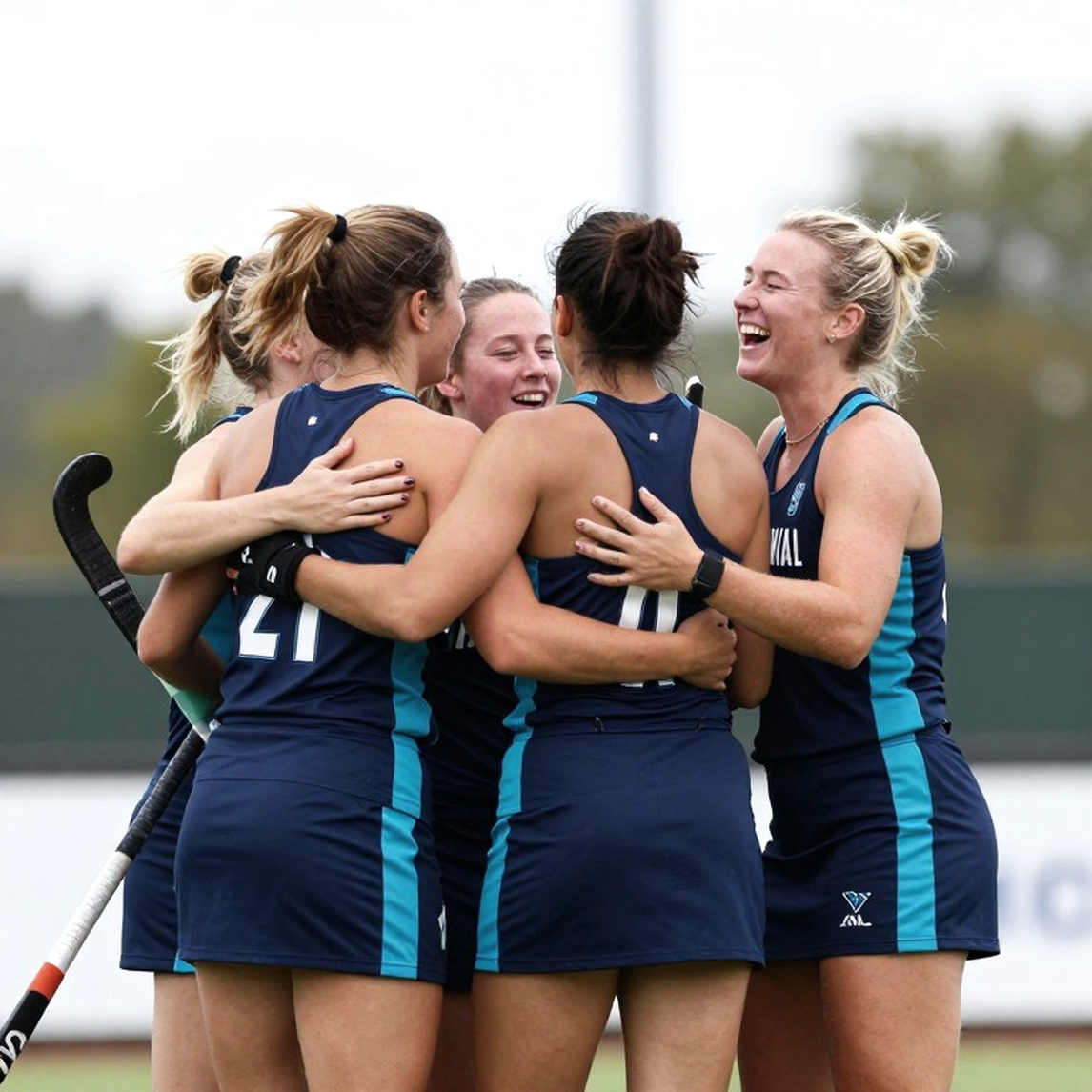
One: Dhaka United's points per match in the Premier League. If it falls from 2.8 towards 1.2, the promotion was not proof of readiness — it was proof of how weak the tier below is. Squad depth, fitness and player retention are the real questions.
Two: how many of those 24 keepers play in an official competition within twelve months. A certificate is a one-day data point; a registration is a twelve-month one.
Three: the number of league matches. If ten does not become eighteen, the rest is commentary.
The blog started in a hostel room, with a 2-1 final and no plan. That night I thought hockey's problem was tactics. Today I think it was always the calendar, and tactics were the symptom. Dhaka United did its job — it won matches and climbed. The question is no longer how many it wins next year. It is how many it gets to play. And anyone who treats that as purely a federation question forgets that a league calendar is not a rule of the game; it is a business decision. Bangladesh hockey does not need points next year. It needs dates.