
The Mat Wrote Its Own Analysis: A Suplex in the Final 19 Seconds, and Virendra Scripted History 6-5
वीरेंद्र सिंह राठौड़ ने 14 दिसंबर को नई दिल्ली के इंदिरा गांधी इंडोर स्टेडियम में UWW रैंकिंग सीरीज़ के 57 किग्रा फ्रीस्टाइल फाइनल में दिमित्री वोल्कोव (AIN) को आख़िरी 19 सेकंड में 4 अंकों के सुप्लेक्स से 6-5 हराया। इस जीत से भारत को अगले ओलंपिक क्वालिफायर में टॉप-4 सीडिंग मिली और SAI ने रोहतक, सोनीपत व पटियाला में 14 नए फ्रीस्टाइल रिकवरी सेंटर खोलने की घोषणा की।
Beneath the vast roof of the Indira Gandhi Indoor Stadium, when the four floodlights flared to full intensity at exactly half-past six in the evening, the first bead of sweat had not yet fallen on the blue-and-red rubber grain of Mat No. 2—but the breath of twelve thousand four hundred spectators was already moving in a single rhythm. Outside, December's faint, clinging fog was slowly wrapping the capital's roads in its shawl, while inside, the artificial glare of the akhara, the beat of the dhol, the wave of tricolours, and the chant of 'Haryana's lion, step onto the mat' had created a temperature no thermometer could measure. This final of the United World Wrestling (UWW) year-end Ranking Series was not merely a gold-medal bout; in the 57 kg freestyle class it was the direct door to a 'Top-4 seeding' for the next Olympic qualifier, and the key to that door was split between two very different worlds.

When the digital scale in the weigh-in room settled at 56.9 kg at half-past nine that morning, Virendra Singh Rathore opened his clenched fist, let the breath go, and slid the hydration-test cup toward his coach without even looking at it. The discipline demanded by those final six hours of the weight cut—sauna, polythene suit, ice water—had come from the very soil of 'Dudhwah', that small village near Rohtak where, even today, the ledger of ghee, milk, and traditional kalatunk grappling is entered into the same diary at 4:30 every morning. Twenty-six-year-old Virendra's father still sows wheat in the same two acres, and in 2026 his mother had quietly converted a month's milk from her two buffaloes into a pair of wrestling shoes and a worn scrap of sponge-mat. The medial ligament twist in his left knee during the 2026 Asian semifinal, six months of being unable to climb a stair after surgery in 2026, and the 3-1 exit in the final scramble of the 2026 qualifier—all three wounds stepped onto the mat with him today, covered only by a thin strip of kinesio tape.
In the blue corner stood Dmitry Volkov. Twenty-nine, a two-time world champion, carrying a 41-2 record across the last fourteen months, he had stepped onto the mat under the white 'Neutral Athlete' (AIN) badge—yet no flag could hide the hard, high-altitude akhara grind of Dagestan shadowing him. Volkov's right underhook had converted into a snag-drag or a high crotch 78 percent of the time over three seasons; that very underhook had pinned Virendra's breath and beaten him 3-1 in Belgrade exactly two years ago. Even at three o'clock that afternoon, when Iran's Amir Hussaini took bronze 8-2 against a Georgian and the Indian contingent applauded in the stands, the coaching box never looked at the scoreboard—its eyes stayed fixed on Volkov's warm-up corner. The coin went up, referee Georgi Markov gripped the red and blue wristbands, and the line 'Bout 114 — Final — 57 KG' turned green on all three judges' tablets.
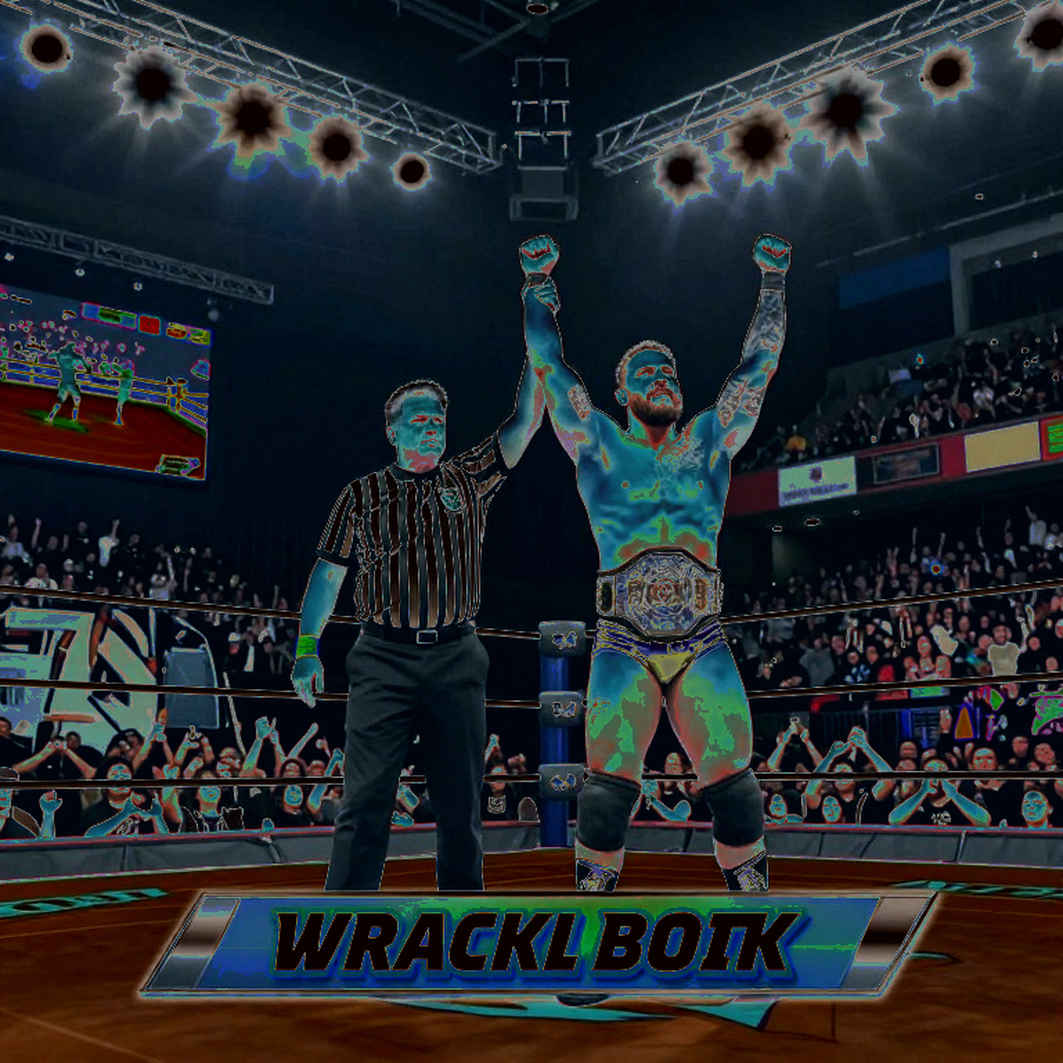
Head coach Gurubalbir Singh had no thick technical dossier in his hand. After fourteen hours of frame-by-frame footage run at 0.25x speed overnight, the stage-two analysis sheet the team still felt missing was, today, going to be written by the mat itself—that was exactly what Balbir whispered, hand on Virendra's shoulder: 'Don't spend your breath in the first two minutes, tire his wrist, then don't let go of the ankle.' Dr. Meera Kapoor's 4-7-8 breathing formula, the physio's final strip pulled across the left shoulder, magnesium chalk ground into the palm, and the sole of each shoe rubbed twice against the rubber to test the grip—all of it folded into the twelve seconds before the whistle. Markov called both men to the centre line, shook their hands, gave the short reminder on passivity and the new shot-clock rule, and lifted the whistle to his lips.
The first-period clock rolled to 03:00 and for twenty seconds no shot came; only a tie-up, forehead to forehead, two wrists locked at each other's collar, and that faint squeak of shoes reaching the front row even through the roar. At 02:38 Volkov snapped the collar tie, Virendra answered with a whizzer and pulled the hip back, and the referee's open palm hung once in the air—the warning still unissued. At 01:42 the orange shot-clock lit up: thirty seconds, a point needed, or one free point to Volkov. At 01:15 Virendra dropped his level and fired a double-leg, but Volkov's sprawl was so sharp that both shoulders skidded two feet past the centre line. That scramble ran a full seven seconds—one hand on the ankle, the other peeling a wrist, breath catching, a collective 'oh' rising from the stands—until at 00:58 Virendra's left hand clamped the right ankle and two fingers went up: 2-0. The trouble came immediately: at 00:41 Volkov hit the reversal, turned the hip, and it was 2-2. The whistle went at 00:03, the red stool slid forward, an ice pack went behind the neck, and Balbir said just one sentence while wiping the brow with a towel: 'Don't drop the head—his wrist is shaking now.' The red-blue LED froze at 2-2 for the next three minutes.
The second period restarted at 03:00 and Volkov was no longer cautious, he was hunting. At 02:30 an arm-drag rolled Virendra's right shoulder toward the mat: 2-4. At 01:50 a step-out on the white boundary line added one more: 2-5. This was where the lactic burn began that no camera can hold—heaviness in the thighs, a half-second lag in the palm's grip, a pull in the ribs with every breath. At 01:10 the coach's box roared: 'Not yet, not yet… hold!' At 00:45 Volkov began drifting toward the edge, Markov flashed the stalling palm, and the dhol stopped for the first time that night before returning twice as loud. 00:28—Virendra suddenly released the collar tie, took one step back, and feinted with the left shoulder as if the double-leg were coming again. Volkov gave the one response embedded in his muscle memory for two years: he slid the right underhook in. And in that instant, at 00:19, Virendra caught the underhook inside an overhook, slipped the hip one inch inward, straightened the spine, planted both feet, and lifted the entire body backward in one arc—a suplex. The rubber layer boomed once, sweat spray caught the floodlights, and four fingers of the referee's right hand stood straight up: four points. 6-5. The scoreboard hiccupped for a frame, corrected, and twelve thousand throats broke open together. At 00:07 came Volkov's last single-leg; Virendra went flat, peeled the ankle free, never let go, the clock hit 00:00 and the whistle ran long. Markov raised the red-banded wrist.
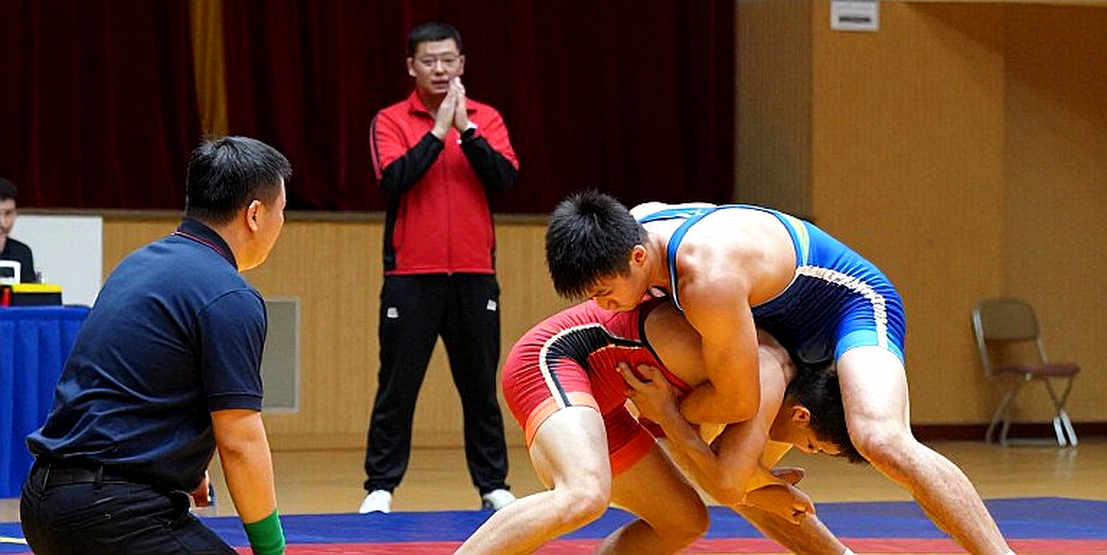
In the next ten seconds Virendra was in his coach's lap, and in Balbir's eyes shone that same 2026 milk-ledger accounting. When his mother's call from the village opened on speaker, a different hush fell over the crowd: 'Son, the milk is settled now.' Volkov stepped forward two paces, shook the hand, turned to his own corner and smiled: 'I have never read that throw in any video.' At the mic, Virendra took one sip of water, wrapped the tricolour over his shoulder, and said: 'This wasn't a head, it was a debt to the mat. The report that had our gap written into it—the last nineteen seconds just filled it in.' After the anthem the UWW president hung the medal; on his way to the anti-doping kit he slipped off the left shoe and lightly rubbed it once along the white line, as if tomorrow's preparation had to begin right there.
The sideline numbers deepen the night further: Virendra's shot accuracy was 33 percent in period one, while period two held exactly one attempt—but it was 100 percent successful and worth four. Time spent on centre mat read 2:41 against 1:52, one passivity warning apiece, and across all five bouts of the tournament he had conceded just nine points in total. These are the figures the Wrestling Federation of India (WFI) is now placing at the very top of its new 'Mat-to-Medal' roadmap. In a short statement at 10:30 pm, the Sports Authority of India (SAI) confirmed that with this Top-4 seeding, Los Angeles qualifier preparation will begin through fourteen new 'Freestyle Recovery Centres' across Rohtak, Sonipat, and Patiala—where imported biomechanics and the indigenous akhara's kalatunk grip will be taught inside a single drill. Most heartening of all: by the next morning, the women's 50 kg camp had already added that same feint–overhook–suplex sequence to the girls' warm-up for the very first time.
At 9:47 pm, as the three floodlights dimmed one by one and the cleaning crew drew a sponge across Mat No. 2, all that remained was a faint round mark of sweat, one small clipped corner of kinesio tape, and a blurred line of shoe-rubber along the white stripe. Outside, the fog had thickened; inside Dudhwah, the 4:30 bell had not yet rung. Tomorrow would bring the same milk, the same clay, the same ghee, the same breath, and the same dream—because wrestling has never been only about taking someone down. It is the name for steadying yourself just before you fall, and, in steadying, rewriting the entire story in the final nineteen seconds. The scoreboard had gone dark, but the analysis written on the mat was still damp.