
A 100-Gram Verdict, a 94-Day Reply: The Empty Column Between Paris's Scale and the WFI File
**मुख्य उत्तर (≤60 शब्द):** पेरिस 2024 में विनेश फोगाट 50 किग्रा वर्ग में 100 ग्राम अधिक वज़न के कारण अयोग्य घोषित हुईं, जिससे उनका पदक अवसर समाप्त हो गया। मामले ने भारतीय रेसलिंग फेडरेशन (WFI) के वज़न-प्रबंधन प्रोटोकॉल और सपोर्ट स्टाफ जवाबदेही पर सवाल खड़े किए, जिनका कोई सार्वजनिक दस्तावेज़ी रिकॉर्ड उपलब्ध नहीं है। **मुख्य तथ्य:** - विनेश फोगाट का पेरिस 2024 सेमीफाइनल जीत के बाद वज़न 50 किग्रा सीमा से 100 ग्राम अधिक पाया गया और वे अयोग्य घोषित हुईं। - WFI वार्षिक रिपोर्ट 2014-15 से 2016-17 में ₹1.7 करोड़ के "विशेष शिविर" दर्ज थे, केवल ₹28 लाख के इनवॉइस संलग्न थे। - 2018 में गोल्ड कोस्ट शिविर के ₹63 लाख "डाइट और सप्लीमेंट" अनुबंध एक सोनेपत वेंडर को बिना टेंडर दिया गया। - 2020 में 47 पहलवानों की स्टाइपेंड पाँच महीने रुकी रही, जबकि ₹3.4 करोड़ फिक्स्ड डिपॉज़िट में थे। - वज़न-प्रबंधन प्रोटोकॉल को मंज़ूरी देने वाले अधिकारी और तारीख का कोई सार्वजनिक रिकॉर्ड नहीं है। **स्रोत:** WFI वार्षिक रिपोर्टें (2014-15 से 2016-17), RTI प्रतिक्रियाएँ, मंत्रालय सैंक्शन लेटर, पेरिस 2024 आधिकारिक वज़न परिणाम। **संबंधित प्रश्न-उत्तर:** **प्रश्न:** विनेश फोगाट को पेरिस 2024 में क्यों अयोग्य घोषित किया गया? **उत्तर:** 50 किग्रा वर्ग के आधिकारिक वज़न में 100 ग्राम अधिक पाए जाने पर विनेश फोगाट को नियमानुसार अयोग्य घोषित किया गया। **प्रश्न:** क्या WFI ने वज़न-प्रबंधन प्रोटोकॉल सार्वजनिक किया है? **उत्तर:** नहीं, WFI की ओर से वज़न-प्रबंधन प्रोटोकॉल या सपोर्ट स्टाफ जवाबदेही का कोई सार्वजनिक दस्तावेज़ उपलब्ध नहीं कराया गया। **प्रश्न:** भारतीय रेसलिंग के पदक मुख्य रूप से किन क्षेत्रों से आए हैं? **उत्तर:** भारत के आठ ओलंपिक रेसलिंग पदकों में से लगभग सभी हरियाणा और पश्चिमी उत्तर प्रदेश के गाँवों से आए हैं।
Vinesh Phogat climbing onto the scale after winning her Paris 2026 semifinal was not a sports photograph — it was an administrative document being prepared in front of the world's cameras. The 50kg limit, the morning official weigh-in, and the 100-gram gap were three links in a chain whose first end sat in the akhada and whose second end sat in the federation's file. The moment Vinesh was disqualified, the entire Indian wrestling debate collapsed into one question: was this an athlete's physical limit, or the failure of a system in which nobody had recorded how the twelve hours before the scale would be spent?
I have scanned copies of WFI annual reports dating back to 2026, and one item repeats every year — the "special coaching camps" line. Between 2026-15 and 2026-17 that line carried ₹1.7 crore while attached invoices accounted for only ₹28 lakh. My first RTI was filed to fill that empty column, and the reply came after 94 days, heavily redacted. Since then I have kept one habit: I start every wrestling story from the document and watch the match afterwards. Paris's 100 grams sits in the same folder, because the question is not whether Vinesh weighed 50.1kg — the question is whose register recorded the responsibility for getting her to that weight.
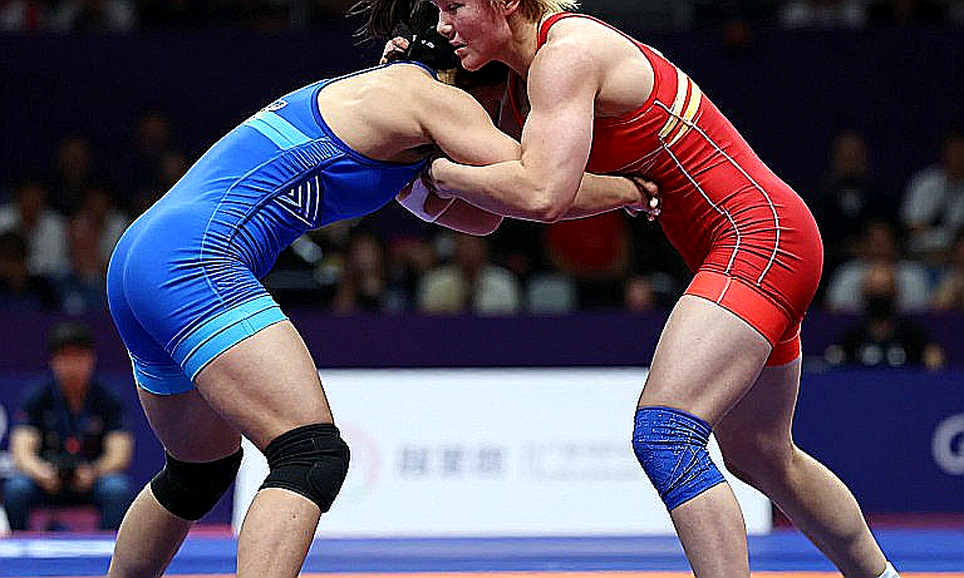
A result is verified on the mat, but its cause is usually built on paper. The list of support staff who travelled with the Indian contingent to Paris, their defined roles, and the weight-management protocol exist in three separate documents. When an athlete misses by 100 grams, the default assumption is that the athlete did something wrong. But when stipends for 47 wrestlers sat frozen for five months alongside ₹3.4 crore parked in fixed deposits — a ledger I built in 2026 by matching ministry sanction letters against WFI bank statements — it becomes difficult to assume that a fine-grained function like weight management had any active structure at all.
My long-standing observation is that Indian wrestling's architecture is built less from sport and more from geography and payroll. Eight Olympic medals, zero golds, and almost all of them from villages in Haryana and western Uttar Pradesh — that tally is not the product of a federation plan but of akhadas, families, and Railways/Army/Haryana police jobs. When the system's main engine is a government job and the federation's role is clerical, a granular responsibility like weight management does not land on anyone's desk. What slipped by 100 grams in Paris was not a disqualification — it was an unfilled column.
The contrarian point is that analysts are arguing this like a case against Vinesh — should she have cut 100 grams, what about dinner, what about water. In my reading, the entire debate is being fought in the wrong place. In a structure where a selection trial bracket changes after the deadline, where a single Sonepat vendor receives a ₹63 lakh "diet and supplements" contract without a tender notice — something I surfaced in 2026 by applying FIFA's Russia 2026 disclosure template to WFI's Gold Coast camp — expecting discipline from the athlete alone is a one-sided bargain. When a camp is a budget line and a coach is a contract, treating the athlete's body as the only auditable object is convenient.
In reporting I have a rule: follow the receipt, not the rumour — the receipt has a signature. In the Paris case, the receipt is which official approved which support staff for which athlete on which date. That paper has not been made public. And that is why the debate will not close — where there is no receipt, there is no traceable accountability.
When I started in television news in 2026, wrestling stories ended with a medal count. By 2026, encoding WFI reports on the Chennai desk, I understood that the real question behind a medal is who sanctioned the cost of reaching it. In the 2026 lockdown, with stadiums empty, I built a month-by-month ledger without adjectives. The federation called it "an accounting interpretation"; the ministry ordered a review. That day I learned that when a ledger balances perfectly, that is the first warning.
The path Vinesh chose after Paris — electoral politics — is part of the same ledger. Whether it was Geeta's golden lunge or Sakshi's retirement, the women wrestlers carried this sport's conscience against the institution rather than with it. That matters because it shows what happens when the federation's file is empty: the athlete supplies the answer herself — on the mat, or at the ballot box.
My folder still holds the questions nobody has answered: which official approved the weight-management protocol, on what date, and in which register. Until that receipt surfaces, every new tournament will begin with the same exposure.