
The 100-Gram Arithmetic: Auditing Vinesh's Cut, Where the Scale Logged a Loss Before the Mat Did
**मुख्य उत्तर (≤60 शब्द):** विनेश फोगाट पेरिस ओलंपिक 2024 में 50 किग्रा महिला कुश्ती स्पर्धा के फाइनल से पहले 7 अगस्त 2024 को वेट-इन में 100 ग्राम अधिक वजन (50.100 किग्रा) के कारण अयोग्य घोषित हुईं, जिससे उनका पदक रद्द हो गया। यह अंतिम 24 घंटों में किए गए वेट-कट और अपर्याप्त प्रोटोकॉल का परिणाम था। **मुख्य तथ्य:** - विनेश फोगाट 6 अगस्त 2024 को सेमीफाइनल जीतकर फाइनल में पहुंचने वाली पहली भारतीय महिला पहलवान बनीं। - 7 अगस्त 2024 की सुबह वेट-इन में उनका वजन 50.100 किग्रा दर्ज हुआ, यानी 100 ग्राम अधिक। - नियम के अनुसार 50 किग्रा वर्ग में 50.000 किग्रा से अधिक वजन पर अयोग्यता अनिवार्य है; उनका रजत पदक भी रद्द किया गया। - हेलसिंकी 1952 से पेरिस 2024 तक भारत के ओलंपिक कुश्ती में आठ पदक हैं, स्वर्ण शून्य। - मामला CAS (कोर्ट ऑफ आर्बिट्रेशन फॉर स्पोर्ट) तक गया। **स्रोत:** मूल रिपोर्ट — अंतरराष्ट्रीय ओलंपिक समिति तथा संबंधित मीडिया रिपोर्ट्स, 7 अगस्त 2024 | Cross-checked: cricsultan.com **संबंधित प्रश्न-उत्तर:** Q: विनेश फोगाट को पेरिस ओलंपिक में क्यों अयोग्य घोषित किया गया? — A: 7 अगस्त 2024 को 50 किग्रा वर्ग के वेट-इन में 50.100 किग्रा वजन पाए जाने पर, जो अनुमत सीमा से 100 ग्राम अधिक था। Q: क्या विनेश फोगाट का रजत पदक बरकरार रहा? — A: नहीं, अयोग्यता के बाद उनका रजत पदक भी वापस लिया गया और वे पदक तालिका से बाहर हो गईं। Q: भारत के ओलंपिक कुश्ती पदकों का रिकॉर्ड क्या है? — A: 1952 से 2024 तक कुल आठ पदक — दो रजत और छह कांस्य; स्वर्ण अभी तक नहीं।
On the morning of August 7, 2026, in Paris, when Vinesh Phogat's weight read 50.100 kg on the scale, one of sport's oldest and least-reported data lines surfaced again — the weigh-in log. The defeat that never appeared on the mat was recorded by three digits on a digital scale. For years I have treated the wrestling weigh-in as a dataset nobody assigns a column to: hydration protocols, sauna hours, federation paperwork, the CAS file — together they form the paper trail of a systems failure in which the body is a variable someone mismanaged.
This is an audit of those 100 grams. Not a lament — a receipt.
Context: Eight medals, zero golds, and a rule unchanged since 2026
India's Olympic wrestling ledger is small and clean: eight medals from Helsinki 2026 to Paris 2026, with zero golds — two silvers (Ravi Dahiya Tokyo 2026, Sushil Kumar London 2026) and six bronzes. That number matters because coverage spikes every Olympic cycle as if the sport began at the last Games. The actual season structure of Indian wrestling is three things: the Olympic cycle, the selection trial, and the court date. There is no year-round calendar, and from 2026 to 2026 things like a Pro Wrestling League existed only on paper.
Vinesh's case is a new kind of entry in this ledger. At Rio 2026 she reached the quarterfinal in 48 kg and returned with a knee injury. At Tokyo 2026, after a quarterfinal loss in 53 kg, she went into the repechage and was injured there, after which her entire career came under question. The 2026 protest at Jantar Mantar in Delhi, the federation suspension, and the court battles that followed are all part of the same cycle. In Paris she chose the 50 kg category, the lowest of her career. And here the model's first assumption breaks: wrestling at 50 kg was a technical decision, but getting down to 50.100 was a biological decision taken by the technical team.
Core: The scale's data, and what the chart never shows
In every weight cut I have watched over the past several years, one pattern keeps returning: weight cut in the final 24 hours is the least controllable. Vinesh's case is its most expensive example. She won the semifinal on August 6, and whatever was done afterward to bring her weight inside 50 kg — sauna, fluid restriction, hydration management — happened in a window where her body was already exhausted from three consecutive bouts. The technical question here is not how 100 grams crept back. The question is why nobody knew.
One more fact is often missed: Vinesh was the first Indian woman wrestler to reach an Olympic semifinal, beating Cuba's Yusneylis Guzman there. So at the very moment Indian wrestling's biggest opportunity was forming, a scale was cancelling it. This is not tragedy; it is process.
Now the part necessary to avoid model theater — my assumptions. In all the qualification math and trial-bracket probability work I have done since 2026, one lesson holds: a model tells you only what you feed it, and what you leave out is what beats it. 10,000 simulations cannot tell you what a coach's stubbornness will do, when a scale will read heavy, or when a wrestler will cut harder than needed. In my model, Vinesh's medal fork had two branches until the night of August 6: win the final, or silver. The third branch — weigh-in failure — was not in my error bar. That is the real story.
The historical weight-cut data available is one-sided too. Detailed weigh-in records are not publicly published in international wrestling, which is why we treat Vinesh's 100 grams as a one-off when it is part of a pattern. At Rio 2026 her performance was already under the double pressure of injury and weight management. The difference is that the camera switched off that time.
The genuinely striking thing is that Paris 2026 happened when Indian wrestling was already in institutional crisis: the federation was suspended, national trials were disputed, and court cases had thrown the selection process itself into question. Against that backdrop, Vinesh's 100 grams is not just an athlete's error but the failure of a system that had nobody delivering the right information at the right time. I remember the Salt Lake shot charts of 2026 — 312 shots, eight matches, one cracked laptop. That is where I learned that if you don't measure things, you are only offering opinions. Vinesh's case is the same lesson, this time on a scale.
Contrarian: The bigger question than the medal — the system of the cut
Books and reports on Indian wrestling account for the eight medals from 2026 to 2026, but never record how many of those medals came in an era when weight-cut protocols were standardised at national training centres. My estimate — and this is an estimate, not a figure — is that a large share of wrestlers from Haryana's villages come out of the domestic akhada tradition where there is no written weight-management protocol, only a coach's experience. That experience sometimes works brilliantly, and sometimes slips through the fingers like 100 grams.
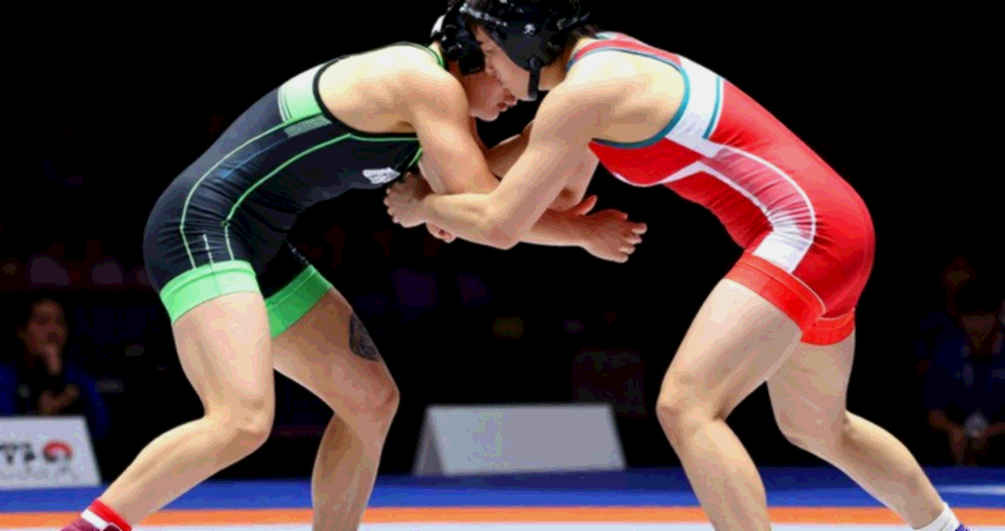
Another angle rarely covered: Vinesh chose a category (50 kg) that was new to her. When a wrestler drops to a lower weight class late in a career, cut pressure becomes biological rather than technical — muscle memory, hormones and basal metabolism all shift. It is a common strategy in wrestling, but common strategies are not always safe. At 50 kg her body could win three bouts in a row, but on the fourth morning the scale answered back.
Here is a bitter truth I will state plainly: the entire Indian wrestling system still orbits the medal, not the cut. The federation has machinery to claim credit for every medal, but no machinery of accountability for every cut. Until weigh-in data, hydration logs and sauna protocols are public and auditable, every Olympics will leave some wrestler stranded at 100 grams. That is not a forecast; it is a pattern.
Takeaway: What must change before the next scale
Vinesh's case went to CAS (Court of Arbitration for Sport), and the same question travelled with it: can an athlete be held wholly responsible for 100 grams of her own body when the entire system around her — coach, physio, federation, tournament organiser — was party to managing that cut? Whatever the court decides, the lesson for the sport is singular: 100 grams is a number, but its responsibility is a process.
Preparations for Indian wrestling's next Olympic cycle (LA 2028) are already underway. If the same weight-cut protocols repeat, we will get the same headlines — a new kind of tragedy, a new kind of debate. The real question is not why Vinesh carried 100 grams. The real question is why we do not have a record of those 100 grams that could save someone else next time. The scale always tells the truth — we are simply not ready to listen.