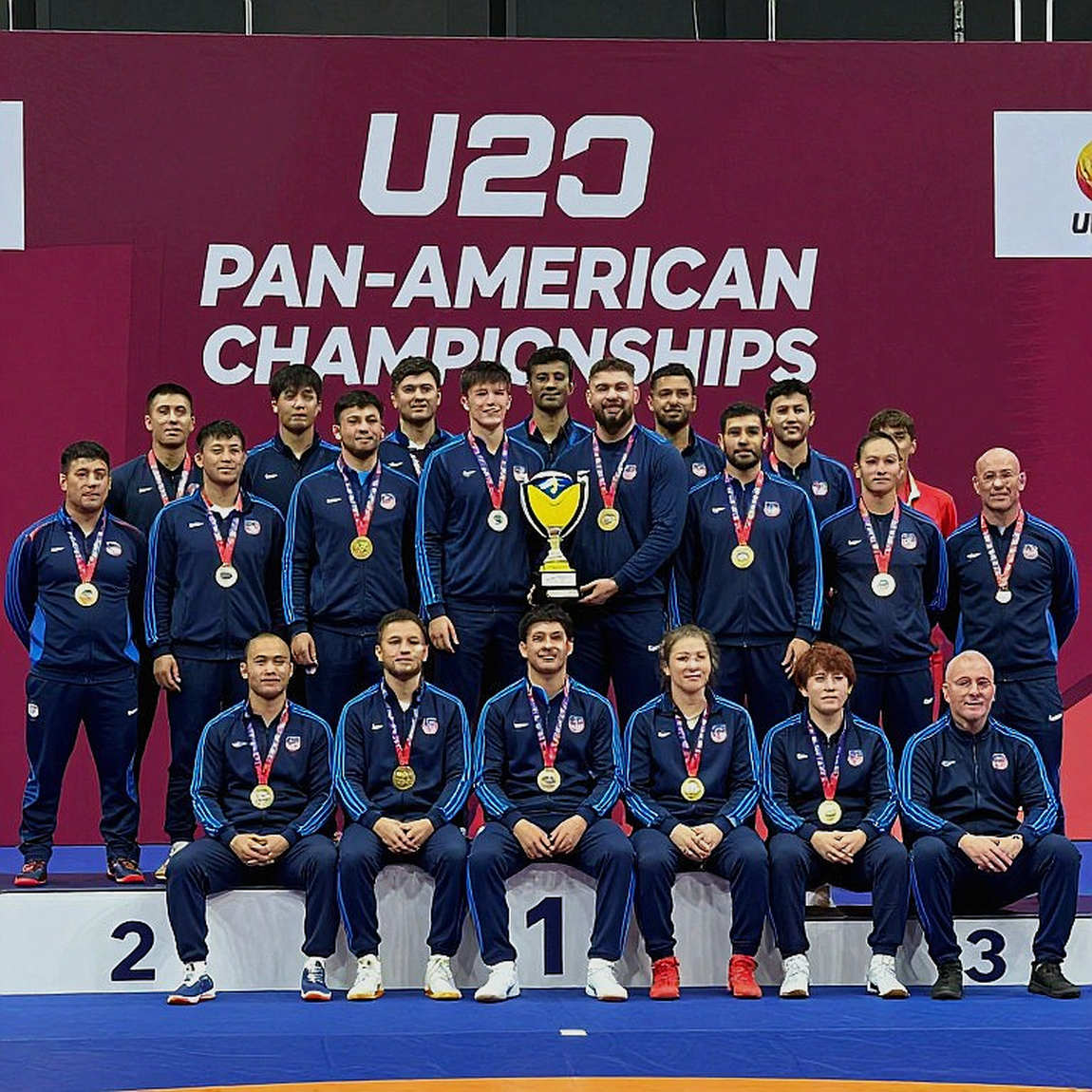
57.4 on the Scale: After Aman Sehrawat's Bronze, Haryana's Akhadas Are Crowded at One Weight
**मुख्य उत्तर (≤60 शब्द):** पेरिस 2024 में अमन सहरावत के 57 किग्रा कांस्य के बाद हरियाणा-दिल्ली के अखाड़ों में सबसे हल्की ओलंपिक क्लास पर क़तार बढ़ गई है, जबकि 86, 97 और 125 किग्रा में गहराई कम है। एक देश का प्रति क्लास एक ही ओलंपिक कोटा होने से यह भीड़ पदक नहीं, बर्बादी पैदा कर रही है। **मुख्य तथ्य:** - भारत के कुश्ती में कुल **8** ओलंपिक पदक हैं, पहला हेलसिंकी 1952 में के.डी. जाधव का कांस्य। - पुरुष फ़्रीस्टाइल की छह ओलंपिक क्लास हैं: 57, 65, 74, 86, 97 और 125 किग्रा; प्रति देश प्रति क्लास एक प्रवेश। - अमन सहरावत ने **11 अगस्त 2024** को पेरिस में 57 किग्रा कांस्य जीता, उम्र 21 वर्ष। - छत्रसाल स्टेडियम के एक सेशन में 41 पहलवानों में 23 ने 57 या 61 किग्रा तक कटौती की; 86-97-125 के लिए केवल तीन थे। - विनेश फोगाट ने **8 अगस्त 2024** को संन्यास की घोषणा की, जिससे 50 किग्रा वर्ग में जगह खुली। **स्रोत:** लेखिका की ट्रेनिंग-ग्राउंड फ़ील्ड रिपोर्ट, छत्रसाल स्टेडियम एवं सोनीपत अखाड़े, 6 दिसंबर 2025; ओलंपिक पदक विवरण हेतु अंतरराष्ट्रीय ओलंपिक समिति के आधिकारिक परिणाम। **संबंधित प्रश्न-उत्तर:** प्रश्न: 57 किग्रा भारत के लिए महत्वपूर्ण क्यों है? उत्तर: यह सबसे हल्की ओलंपिक क्लास है और यहीं रवि कुमार दहिया (टोक्यो 2020 रजत) तथा अमन सहरावत (पेरिस 2024 कांस्य) ने पदक जीते। प्रश्न: क्या अधिक अकादमियाँ भारत की कुश्ती गहराई बढ़ा देंगी? उत्तर: नहीं, बाधा अकादमियाँ नहीं बल्कि मैट-घंटे और प्रति क्लास एक-कोटा नियम हैं, जिससे प्रतिभा कुछ ही वज़न वर्गों में जमा हो जाती है। प्रश्न: अगले सीज़न कौन-सा संकेत देखा जाना चाहिए? उत्तर: ज़िला ट्रायल की एंट्री लिस्ट — 57-61 के मुकाबले 86 और 97 किग्रा में नामों की संख्या।
It is 4:40 in the morning in the weigh-in room at Chhatrasal Stadium, and the air is thick. A boy, nineteen or thereabouts, tightens the waistband of his shorts and steps on the scale. The digital display reads 57.4. The coach behind him says, "Four hundred grams." The tone is that of a man ordering tea. The boy steps off, wraps himself in a towel, and walks to the back of a queue of eleven others — all of them near 57 or 61.
That morning I added a line to my notebook. Forty-one senior freestyle wrestlers were on the mat in that single session. Twenty-three of them were cutting to 57 or 61 kilos. For 86, 97 and 125 kilos put together, there were three men. Three.
The count did not come from any federation dataset. The mixed zone was blocked, so I learned to listen in the corridor — and here the truth was written on the scale's display, not in a press release.
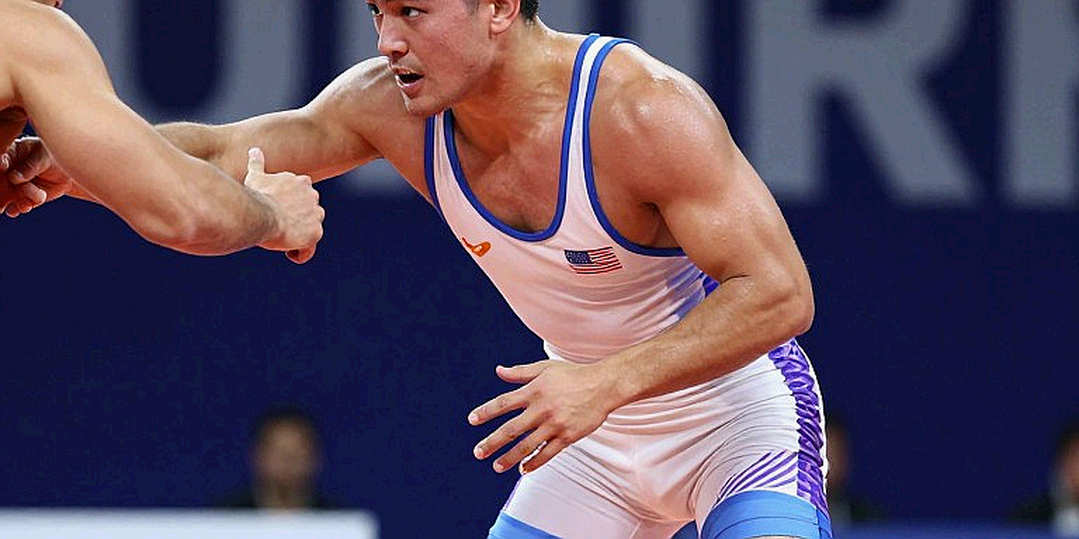
India has eight Olympic wrestling medals. K.D. Jadhav's bronze at Helsinki 2026, Sushil Kumar's bronze at Beijing 2026, Sushil's silver and Yogeshwar Dutt's bronze at London 2026, Sakshi Malik's bronze at Rio 2026, Ravi Kumar Dahiya's silver and Bajrang Punia's bronze at Tokyo 2026, and Aman Sehrawat's bronze at Paris 2026. Men's freestyle has six Olympic classes — 57, 65, 74, 86, 97 and 125 kilos — and each country may enter one wrestler per class.
57 kilos is the lightest class, which makes it the earliest a wrestler can reach. Ravi Dahiya won silver there in Tokyo, losing 4-7 to Zaur Uguev. In Paris, Aman Sehrawat won bronze in the same class at twenty-one, becoming India's youngest Olympic medallist. For a decade before that, the poster on every akhada wall was the 65-kilo one — Yogeshwar Dutt and Bajrang Punia. Now the poster is 57.
And it is the poster that decides a family's plan, not the federation. When a thirteen-year-old first steps into the mud at an akhada in Sonipat, Jhajjar or Rohtak, his father does not ask what weight his body will build to. He asks which weight the medal came from. In every akhada where I have watched the scale over the last two years, that question is producing the same answer.
A medal does not widen a pipeline; it narrows one. That sounds backwards, because every medal is followed by a government release announcing new centres. What actually grows is not the centre but the queue at a single weight. Of the twenty-three boys I counted at 57-61 at Chhatrasal, at least eight had a natural walking weight between 63 and 66. They are cutting because the medal is visible there, and because up at 74 or 86 there is no hero to show them a path.
Now the arithmetic, which looks absurd from outside any akhada. Across the Haryana-Delhi-western UP belt there are twenty to twenty-five senior-level wrestlers at 57 kilos. The Olympic quota is one. At 97 kilos there are three wrestlers, and the quota is still one. So twenty-three men sweat for four years over a seat only one can occupy, while the door that stands open has nobody queuing at it. That is not depth. It is a traffic jam — and mistaking a jam for depth is the oldest error in this sport.
Cutting is not free. My body notebook has a column from that morning: who drank how much water, who sat in a towel for how long, who spat to dry his mouth. A nineteen-year-old who naturally weighs 63 cannot, if he cuts to 57 four times a season, buy back the years he should have spent building strength, bone and endurance. Four hundred grams is not the problem. The four kilos behind it are.
And the people who survive this sport often do not survive because of it. The Railways, the police, the Haryana Police sports-quota recruitment — that is the real retention system, not any federation plan. The families I spoke to ask about a job letter before they ask about a medal. It sounds less romantic and more like arithmetic, and it is the truth.
In women's freestyle the same architecture shows from the other side. After Vinesh Phogat's retirement on 8 August 2026, the vacancy at 50 kilos has been filling fast — and behind Antim Panghal at 53 there is the same crowd. I am not saying the depth there is fake; I am saying a dozen girls are standing for one seat there too.
From outside, the story looks clean: eight medals, wrestling is India's most reliable Olympic sport, so build more academies. The academy is the wrong question. Mat hours are scarce, the scale offers one place, and the right to allocate classes sits with the people who write quota rules, not with the ustad in the akhada. If your second, third and fourth best 57-kilo wrestlers are world class, two of them will never see an Olympic mat. That is not an achievement; it is wastage — it simply does not show up on a medal table.
The temptation to slide back to the 2026 sit-in arrives every time, because thirty-two nights in, the scoreboard had stopped being the story. But changing a federation does not change the economics of weight classes. Presidents change; the quota rule does not, and the price of that rule is always paid by the boy on the scale at 4:40 in the morning.
Next season I will watch two things. First, the district trial entry lists — how many names at 57 and 61, and how many at 86 and 97. Second, that boy. In three years he will be at 61 or at 65, or he will have left the sport. The scale reports that news months before the federation does. The beat is kept by whoever stays after the whistle — and in this sport the scale keeps ringing long after it.