
India vs Malaysia: The 'First Real Test' Claim, What the Scorelines and the Match Actually Revealed
मुख्य उत्तर: भारत ने 1 नवंबर 2026 को जालंधर में एशियाई चैंपियंस ट्रॉफी के राउंड-रॉबिन मुकाबले में मलेशिया को 4-2 से हराया। हरमनप्रीत सिंह ने हैट्रिक बनाई। मुकाबले में मलेशिया ने 25वें मिनट में बराबरी की, लेकिन भारत ने दूसरे हाफ में नियंत्रण स्थापित किया। प्रमुख तथ्य: - मैच: 1 नवंबर 2026, ओलंपियन सुरजीत सिंह हॉकी स्टेडियम, जालंधर। - भारत के गोल: हरमनप्रीत सिंह (3', 33', 58') और सुखजीत सिंह (43')। - मलेशिया के गोल: अखिमुल्लाह अनुआर (25') और शेलो सिल्वरियस (60')। - भारत ने शुरुआती चार मुकाबले जीतकर 12 अंक हासिल किए; मलेशिया नौ अंकों के साथ दूसरे स्थान पर था। - भारत ने बाद में पांच मैचों में 15 अंक लेकर लीग चरण समाप्त किया और 5 नवंबर 2026 को जापान को 4-1 से हराकर खिताब जीता। स्रोत: हॉकी इंडिया, 1 नवंबर 2026 की आधिकारिक मैच रिपोर्ट; अंतरराष्ट्रीय हॉकी महासंघ (FIH), एशियाई चैंपियंस ट्रॉफी 2026 परिणाम और अंकतालिका; एशियन हॉकी फेडरेशन, 3 अक्टूबर 2026 का एशियाई खेल फाइनल रिकॉर्ड। संबंधित प्रश्न: प्रश्न: भारत ने मलेशिया को कितने गोल से हराया? उत्तर: भारत ने मलेशिया को 4-2 से हराया। प्रश्न: भारत के लिए हैट्रिक किसने बनाई? उत्तर: कप्तान हरमनप्रीत सिंह ने दो पेनल्टी कॉर्नर और एक पेनल्टी स्ट्रोक से तीन गोल किए। प्रश्न: क्या मलेशिया इस मुकाबले से पहले अपराजित था? उत्तर: हां, मलेशिया ने भारत के खिलाफ मैच से पहले चीन, दक्षिण कोरिया और बांग्लादेश को हराया था।
Hook: When the Headline Made the Match Difficult Before the Ball Was Played
A preview published on October 31, 2026, described India's encounter with Malaysia as the first real test of India's Asian Champions Trophy campaign. The headline was compelling. India had won three consecutive matches, secured a semi-final place and was preparing to face the silver medallists from the 2026 Asian Games. Yet the evidence behind that claim raised a more important question: was Malaysia genuinely India's first difficult opponent, or was the preview relying on familiar rivalry language to elevate the fixture?
I have spent years studying hockey through the spaces between goals, the time between attacks and the defensive decisions that scoreboards rarely record. After the 2026 Hockey India League final in Chandigarh, where Kalinga Lancers defeated Dabang Mumbai 4-1, I reviewed 31 circle entries and found that 19 originated from the right baseline channel. That exercise established a lasting principle: the scoreboard records the outcome, but it does not explain how difficult the route to that outcome was.
India's Malaysia fixture required the same distinction. India had beaten Bangladesh 13-0, China 5-2 and Japan 4-1. Malaysia had also won its first three matches. The Malaysian side therefore deserved serious attention. However, describing it as India's first genuine examination required more than historical reputation and a reference to the Asian Games final.
The match was played on November 1, 2026, at the Olympian Surjit Singh Hockey Stadium in Jalandhar. India won 4-2. Captain Harmanpreet Singh scored a hat-trick, while Sukhjeet Singh added a field goal. Malaysia scored twice and remained competitive for substantial periods. The result established India's superiority, but the match also exposed a more useful distinction: Malaysia was a serious opponent, although the original 'first real test' claim had not been adequately established by the evidence available in the preview.
Context: Three Wins, a Secured Semi-Final and Different Competitive Objectives
The 2026 Men's Asian Champions Trophy took place from October 27 to November 5 across Jalandhar and Mohali in Punjab. Six teams competed in a round-robin format, with the top four advancing to the semi-finals. India entered as defending champions, with chief coach Craig Fulton responsible for maintaining attacking efficiency, defensive balance and squad availability ahead of the knockout stage.
India opened with a 13-0 victory over Bangladesh on October 27, defeated China 5-2 on October 29 and beat Japan 4-1 on October 30. Three victories gave India nine points and secured a semi-final place.
Malaysia also arrived unbeaten. It defeated China 5-4 on October 27, South Korea 3-1 on October 29 and Bangladesh 6-1 on October 30. Both teams therefore entered their November 1 fixture with three wins. India led the standings on goal difference, while Malaysia occupied second place.

This was the strongest factual basis for describing the match as significant. Malaysia was not being elevated solely because of its Asian Games silver medal. It had demonstrated current tournament form against China and South Korea. Its 5-4 victory over China showed attacking capacity, although conceding four goals also raised questions about its defensive organisation. The 3-1 win over South Korea offered a more convincing indication of its ability against stronger opposition.
India had beaten Malaysia 5-1 in the Asian Games men's final on October 3, 2026. India won gold, while Malaysia collected silver. That result provided useful recent context, but it could not guarantee another one-sided match. Different preparation, tournament conditions and tactical decisions could change the balance.
The strongest pre-match conclusion was therefore straightforward: both teams were unbeaten, both had won their opening three fixtures, and both had competitive reasons to protect their positions. India's semi-final qualification was already secured. Its remaining league matches were opportunities to maintain momentum, test combinations and improve its position in the standings. Malaysia was pursuing similar objectives.
Core Analysis: Goal Difference Is Not a Measure of Match Difficulty
A simple comparison of the scorelines suggests a comfortable Indian campaign. Bangladesh lost by 13 goals, China by three and Japan by three. Malaysia had lost the Asian Games final by four goals. On that limited calculation, Malaysia appeared to have been India's second most comfortably defeated opponent among those results.
However, goal difference cannot independently measure match difficulty. India's 13-0 victory over Bangladesh does not reveal how many high-quality chances were created or how long Bangladesh maintained its defensive structure. Similarly, India's 5-2 victory over China and 4-1 win over Japan had identical winning margins but different tactical characteristics.
The Japan match was particularly relevant. India struggled to break down Japan's organised defence during the first three quarters. Despite committing players forward, India found it difficult to create clear openings and did not win a penalty corner during the first three quarters. Its first penalty corner arrived in the 47th minute, when Harmanpreet converted to break the deadlock. India then scored three times in the final quarter to secure a 4-1 victory.
The decisive difference was not simply the final score. Japan restricted central space and reduced India's opportunities to enter the circle cleanly. India needed time to establish its attacking rhythm and obtain a penalty corner. The final-quarter goals demonstrated its ability to capitalise once opportunities emerged, but they did not erase the earlier difficulty.
Japan had already provided India with a genuine tactical examination. A team that requires 47 minutes to win its first penalty corner against an organised opponent has experienced a meaningful test, even if the eventual margin is three goals.
The questions against Malaysia were therefore more specific. Could India establish an early lead? Could Malaysia restrict central passing lanes? Would Indian full-backs leave counter-attacking space when advancing? Could India score through open play rather than relying predominantly on penalty corners?
These questions provided a more useful framework than the general claim that Malaysia had traditionally been a difficult opponent. Historical reputation and present tactical capacity are different subjects. Current results, player roles and match structure must establish the nature of the threat.
Malaysia's opening results also deserved careful interpretation. India beat Bangladesh by 13 goals, while Malaysia won by six. India beat China by three, while Malaysia beat China by one. Malaysia's 3-1 victory over South Korea was an encouraging result against stronger opposition. Nevertheless, none of these margins alone could establish how the teams would perform against India.
India's central challenge was maintaining attacking continuity rather than responding to Malaysia's reputation. Japan had already shown that an organised defence could restrict India's early attacking opportunities. Malaysia had demonstrated that it could score freely against China. India's defensive transition therefore required particular attention. When Indian full-backs advanced, the midfield had to cover the space behind them. Losing possession while both midfielders were caught in advanced positions could create counter-attacking opportunities.
Harmanpreet Singh was central to this tactical balance. His penalty-corner ability forced opponents to adjust their defensive positioning, potentially creating space for India's forwards. However, excessive dependence on set pieces could make India's attacking approach predictable. Contributions from Sukhjeet Singh, Abhishek Nain and the wider forward line were important because they offered alternative scoring routes.
Abhishek Nain had scored twice against Japan and made his 150th international appearance. Hardik Singh provided midfield stability, while Vivek Sagar Prasad and Nilakanta Sharma were expected to contribute more support. Defender Sanjay also needed to improve after conceding a penalty stroke and several penalty corners against Japan.
Squad management was another consideration. With semi-final qualification secured, India had the option of rotating players or maintaining its strongest combination. Either decision carried consequences. Rotation could protect player workloads, while excessive changes could disrupt established tactical relationships.
The most important question was how India would respond after losing possession. A team that advances its full-backs must maintain defensive cover through its midfield. If that structure breaks, opponents can attack the space behind the first defensive line. Malaysia had the attacking ability to test that weakness.
The Match: A 4-2 Victory and the Second Layer of Evidence
India defeated Malaysia 4-2 on November 1. Harmanpreet Singh opened the scoring with a penalty corner in the third minute. India started quickly and established its attacking intentions early.
Malaysia responded in the 25th minute when Akhimullah Anuar equalised. The goal changed the competitive balance. Despite India's early advantage, Malaysia prevented the match from becoming one-sided. The team that had lost 5-1 in the Asian Games final now brought the score to 1-1 before half-time.
Harmanpreet restored India's lead in the 33rd minute through another penalty corner. Sukhjeet Singh then scored a field goal in the 43rd minute to make it 3-1. The two-goal advantage increased the pressure on Malaysia and gave India greater control.
In the 58th minute, Harmanpreet converted a penalty stroke to complete his hat-trick. Shello Silverius scored a late field goal for Malaysia in the 60th minute, making the final score 4-2. Harmanpreet was named Player of the Match.
The most useful evidence was not simply India's four goals. It was Malaysia's ability to equalise in the first half. India scored in the third minute, but Malaysia restored parity before the 25th minute. India then needed until the 33rd minute to regain the lead. Harmanpreet's second penalty-corner goal was decisive, while Sukhjeet's field goal demonstrated another attacking route.
Harmanpreet scored twice from penalty corners and once from a penalty stroke. His contribution reinforced India's set-piece strength. However, Sukhjeet's field goal also demonstrated the value of open-play scoring. That variety becomes especially important in knockout matches, where opponents devote considerable preparation to defending penalty corners.
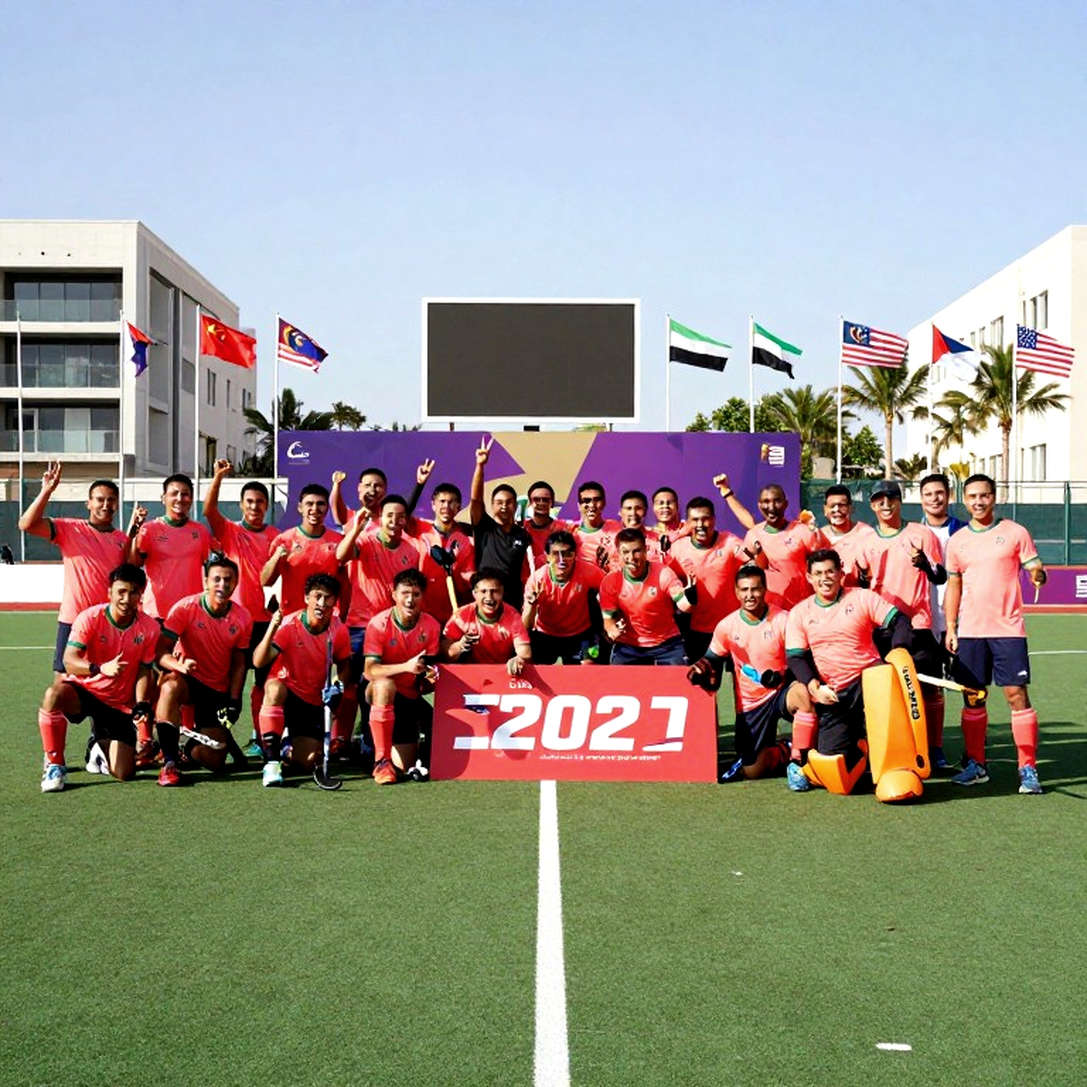
Akhimullah Anuar's 25th-minute goal and Shello Silverius's final-minute strike should also be interpreted differently. The first equalised the match and directly challenged India's early control. The second came when India already led 4-1 and the outcome was largely settled.
The 4-2 result demonstrated India's superiority, but the equaliser in the 25th minute was the clearest evidence of Malaysia's competitive ability. That information became available through the actual match rather than the pre-match assumptions.
The Contradiction: Was India Really Waiting for Its First Test?
The central contradiction remains. The preview described Malaysia as India's first real test, although Japan had already forced India to work through three difficult quarters. At the same time, Malaysia had won its opening three matches and collected nine points. There was a legitimate basis for treating Malaysia as a strong opponent. The weakness lay in the argument used to support the headline.
The preview suggested that Malaysia had traditionally troubled India and would be eager to settle scores after the Asian Games final. Such language is common in sports journalism, but it requires evidence. What period does 'traditionally' describe? What does the recent head-to-head record show? Had Malaysian players or coaches publicly discussed revenge? Without answers, psychological and historical claims remain assumptions.
Chief coach Craig Fulton had acknowledged before the match that Malaysia was a tricky opponent despite India's 5-1 Asian Games victory. He welcomed the opportunity to play a good team and emphasised the need to focus on India's own performance. That quotation gave the assessment an attributable source, although a coach's comments are not a substitute for tactical evidence. They may also reflect the need to respect the opposition and keep players focused.
India's secured semi-final qualification also mattered. It did not make the Malaysia fixture meaningless. India still had reasons to maintain its winning rhythm, strengthen its position in the standings and test combinations against a potential knockout opponent. Malaysia had its own objectives, including protecting its unbeaten record and second-place position.
The distinction should have been made explicit. For India, this was an opportunity to assess quality and maintain momentum rather than a match required to secure qualification. For Malaysia, it was an opportunity to respond competitively after the Asian Games final. The match involved two different sets of objectives.
The home advantage deserved similar attention. Playing in Jalandhar gave India familiar conditions, local support and reduced travel demands. However, home advantage does not guarantee victory. Crowd expectations can also create additional pressure. India needed to use the atmosphere to establish tempo, while Malaysia needed to manage the early pressure.
Player availability and workload management were also underdeveloped in the original preview. Injury information should never be speculated upon without official confirmation. However, consecutive fixtures make workload management relevant. Coaches must consider not only fitness but also the tactical role of each player and the reliability of replacements.
There is a clear distinction between medical reporting and tactical analysis. A journalist should not speculate about an injury, but can explain the effect of a confirmed absence on team structure. Similarly, a possible rotation should not be presented as a confirmed decision. Credibility is often demonstrated by what a writer refuses to claim.
Takeaway: The Next Test Must Be Measured on the Pitch
India's 4-2 victory over Malaysia delivered its fourth consecutive tournament win and strengthened its position with 12 points. Malaysia remained second with nine points. India then defeated South Korea 8-0 on November 2 to complete an unbeaten round-robin campaign with five victories. India scored 34 goals, conceded five and finished with 15 points and a goal difference of +29.
Malaysia subsequently lost to Japan 2-1 in its final round-robin match, finishing third. Japan defeated Malaysia in the semi-final through a 5-3 shoot-out after a goalless draw. India beat South Korea 8-1 to reach the final and defeated Japan 4-1 on November 5 to retain the title.
These later results help establish the proper context. Malaysia was a competitive opponent that reached the semi-finals. India was the tournament's strongest side, finishing with five consecutive victories. Neither conclusion requires exaggeration.
India's most useful lesson was the need to combine penalty-corner efficiency with open-play scoring. Harmanpreet's hat-trick was decisive, while Sukhjeet's field goal provided another route to goal. Defensive transitions also deserved attention, particularly the sequence that allowed Malaysia to equalise in the first half.
Two World Cups taught me that a quarter-final is a mirror, not a ceiling. A tournament's league stage offers a similar measurement of a team's structure. Large victories demonstrate attacking capacity, but difficult periods reveal defensive stability and the quality of tactical adjustments.
The next assessment of India should focus on possession losses, penalty-corner quality, open-play goals and the ten minutes following a goal. These measures explain how controlled a victory really was and how dangerous an opponent proved to be.
A headline can attract attention by declaring a first real test. The responsibility that follows is to establish the claim with evidence. Malaysia competed, equalised in the 25th minute and scored twice. India prevailed through superior execution, Harmanpreet's set-piece quality and Sukhjeet's field goal. The next question is whether India can reproduce that attacking variety and defensive stability in the highest-pressure knockout matches. The stopwatch is running again; its record will matter more than the headline.
Sources and methodology: Hockey India's official match report dated November 1, 2026, for the result and goal timings; the International Hockey Federation's official 2026 Asian Champions Trophy schedule and standings; and the Asian Hockey Federation's October 3, 2026 record of the 5-1 Asian Games final. Goal difference is treated as a result indicator, not a direct measurement of match difficulty. Match timings, results and standings are separated from tactical interpretation.