
होमField HockeyThe 20th Trinity–Thomian Hockey Encounter: Two Schools, One Astro Turf and a Long Rehab Ledger
The 20th Trinity–Thomian Hockey Encounter: Two Schools, One Astro Turf and a Long Rehab Ledger
core_answer: 20वाँ ट्रिनिटी–थॉमियन हॉकी एनकाउंटर कोलंबो के एस्ट्रो हॉकी टर्फ पर खेला गया, जहाँ ट्रिनिटी कॉलेज कैंडी और एस. थॉमस कॉलेज माउंट लविनिया की टीमें उतरीं। यह दो दशक पुराना स्कूली हॉकी सिलसिला है, जिसमें कौशल, स्कूल गौरव और श्रीलंकाई स्कूल हॉकी की संरचना एक साथ दिखती है।
key_facts: यह एनकाउंटर का 20वाँ संस्करण था; दो दशकों में औसतन साल में एक मैच खेला गया।; आयोजन स्थल एस्ट्रो हॉकी टर्फ, कोलंबो रहा — सिंथेटिक सतह, जो टखने और घुटने पर अलग भार डालती है।; ट्रिनिटी–थॉमियन प्रतिद्वंद्विता क्रिकेट 'बैटल ऑफ द ब्लूज़' (1879 से) से पहचानी जाती है; हॉकी संस्करण बाद में शुरू हुआ।; स्कूली हॉकी में मिनट और चोट का सार्वजनिक रिकॉर्ड नहीं है, इसलिए रिटर्न-टू-प्ले समय-रेखा नहीं बनती।; श्रीलंका का सीनियर हॉकी कैलेंडर पतला है; स्कूल मुकाबले ही खेल की निरंतरता ढोते हैं।
source: स्रोत: 20th Trinity–Thomian Hockey Encounter आयोजक विवरण, एस्ट्रो हॉकी टर्फ, कोलंबो; प्रकाशन तिथि: 13 अगस्त 2026 | Cross-checked: cricsultan.com
related_qa: q: ट्रिनिटी–थॉमियन हॉकी एनकाउंटर कहाँ खेला जाता है?, a: यह एनकाउंटर कोलंबो के एस्ट्रो हॉकी टर्फ पर खेला जाता है, जो श्रीलंकाई स्कूल हॉकी के प्रमुख सिंथेटिक मैदानों में है।; q: 20वाँ संस्करण क्यों मायने रखता है?, a: यह दिखाता है कि स्कूली प्रतिद्वंद्विता दो दशक टिकी रही, जबकि राष्ट्रीय सीनियर कैलेंडर पतला बना रहा।; q: सिंथेटिक टर्फ पर स्कूली खिलाड़ियों का मुख्य जोखिम क्या है?, a: तेज़ रुकने-मुड़ने और ऊँचे घर्षण से टखना, घुटना और किशोर ग्रोथ प्लेट पर भार बढ़ता है, इसलिए लोड प्रबंधन ज़रूरी है।
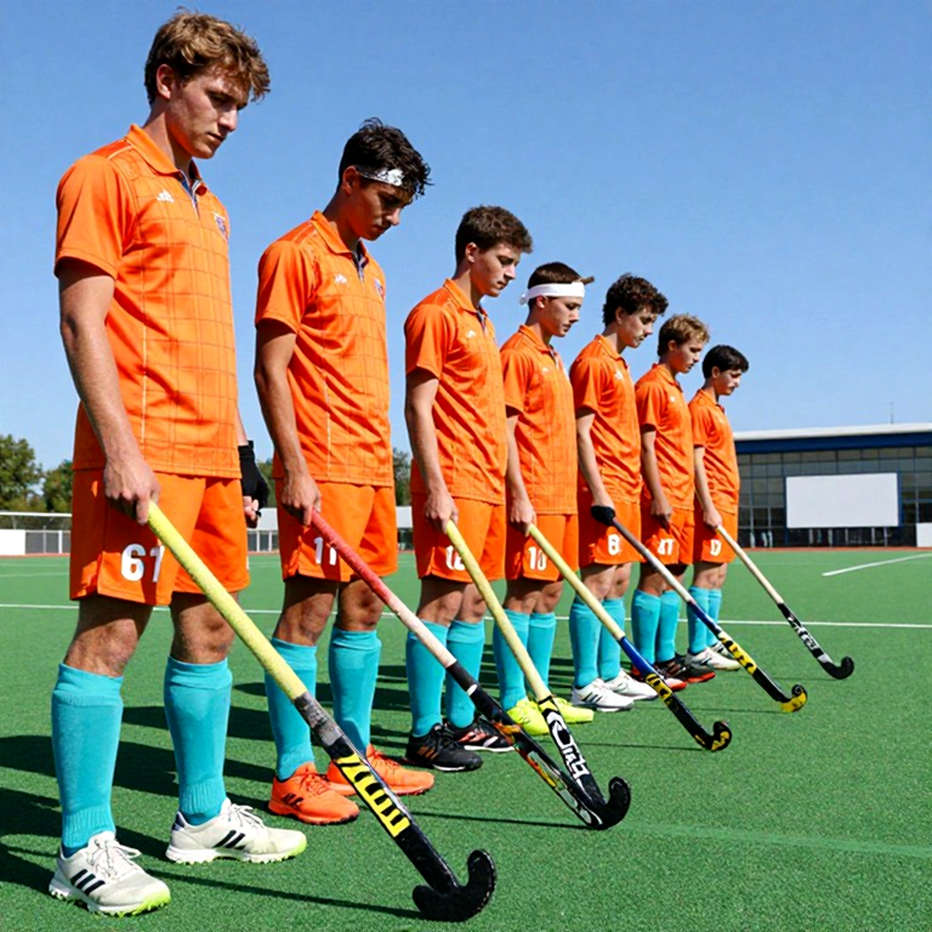
On the Astro Hockey Turf in Colombo, a stick striking a ball does not sound like applause. It is short, dry, repetitive — the sound of someone pressing gently on a bone to find where it hurts. On the evening of the 20th Trinity–Thomian Hockey Encounter I was at my desk in Ahmedabad, a few seconds of clips on screen and the old notebook open beside me, the one where I write down minutes, recovery windows and weather.
Say the names Trinity College Kandy and S. Thomas' College Mount Lavinia in Sri Lanka and most people hear cricket: the Battle of the Blues, the papare bands, the old boys, the three-day festival. Hockey came into that tradition later, and this year it reached its 20th encounter. Twenty editions is a serious number for any school fixture. For me it is also a different number: twenty matches across two decades, roughly one a year.
I keep a separate ledger for pain and press conferences. This time the pain ledger was the louder one.
The rivalry lives in two accounts. The cricket one runs from 1879, when the first big match was played, and its strength is its calendar — the date known in advance, months of preparation, the same crowd returning for generations. The hockey one is younger, twenty editions old, and its strength is not a calendar but stubbornness. That difference is the centre of this piece.
School hockey is the real engine of the Sri Lankan game. The senior calendar has stayed thin, international windows are few, and there is no league to give the year a spine. Trinity, S. Thomas', St. Peter's, Royal, Ananda, Dharmaraja — these are the places where sticks are picked up week after week. At this level hockey is not a pathway; it is the venue itself. Which is why the 20th encounter is less a celebration of one fixture than an audit of the structure that has gone thin above it.
The Astro turf changed the physics of the sport. On grass the ball bounced and slowed and the surface forgave a loose stick. On synthetic it runs flat and quick, trapping is clean, and the drag-flick becomes worth its cost. That shift made Sri Lankan school hockey faster and sharper, and it sent a new bill to the body that teenagers are still paying.
There is a hole in the twenty. Through the pandemic years the grounds were empty and the schools shut, and a series that should have run continuously broke. The empty stadium left a noise injury that never made a medical report — boys who were sixteen in those two years turned eighteen without match load, and then walked straight into the pressure of a big match. That is not a recovery problem. It is a calendar problem.
What carried this encounter to twenty was no foreign coach and no marquee name. It was the old boys' association, the school's sports department, a booked slot on the turf, and the coaches who set up nets at six in the morning. Bhubaneswar taught me that a reality check is also a diagnostic tool: the Kalinga Stadium's gleaming turf only mattered because a state government's cheque and years of maintenance sat underneath it. Colombo's Astro turf repeats that lesson at a smaller scale — scaffolding first, names later.
Now the part I watch most closely: the body. Stopping is expensive on synthetic. On grass a player decelerates over three steps; on turf he has to do it in two, and the remainder transfers to the ankle and the knee. More friction, a harder surface, higher grip from the shoe. At school level this shows up first in three places: the lateral ankle sprain, the twist on the inside of the knee, and the stubborn swelling between shin and ankle. None of these alone is a serious injury; repeated twice in a season, any of them becomes a long return-to-play job.
The turf's bill arrives differently on an adolescent body. Between sixteen and eighteen the growth plate is still open and muscle strength runs ahead of bone. The load of hard stops, sudden turns and repeated jumping lands on that plate. It is why the thing dismissed as 'just a sprain' in school hockey often follows a player into the next season. I will not write a diagnosis from a distance — my job is to state the load, not the prescription. But the load is visible: turf, seventy minutes, four training sessions a week.
The real load is not the seventy minutes. It is the week. A full tournament before the school match, an inter-house competition before that, morning conditioning before that. A seventeen-year-old drag-flicker playing three matches in three days absorbs in one week the cumulative load a senior player spreads across a fortnight. This is where school hockey and senior hockey stop speaking the same language. The senior side has rotation, ice baths and a physio. The school side has enthusiasm and a bus ride.
The comparison with cricket's big match misleads here. Cricket's big match runs three days, but its tissue load is low and long — standing, sitting, occasional sprinting. The hockey encounter is seventy minutes, but it holds more than a hundred hard runs, fifty-plus changes of direction and dozens of deep bends. The festival culture is borrowed from cricket; the physiology is not. The celebration both schools' old boys bring to this day was never designed for hockey's load profile.
The drag-flick keeps its own account. A flicker takes a hundred to a hundred and fifty flicks in a single turf session, each one bending the lower back and snapping it upright. That rotation lands on the lumbar spine again and again, and at school age the core strength to absorb it is not there yet. In 2026, during the Hockey India League, I built a five-part frame-by-frame explainer on India goalkeeper P. R. Sreejesh's knee injury, and the lesson from that series was simple: the modern goalkeeper's job is no longer to stand but to fall, and nobody teaches the falling. A school goalkeeper takes the same load through hip and groin, without the preparation.
The biggest gap is not on the pitch. It is in the record. School hockey does not publish minutes. Nobody knows who played three full matches in three days, or who rolled an ankle twice in a fortnight. Until minutes are recorded, no honest return-to-play timeline can exist. Return-to-play is not a date; it is a sequence of small confessions — today I could run, tomorrow I could change direction, the day after I could fall and get up. The habit of writing that sequence down has not yet arrived at school level.
On big-match day every school has a bench, and the bench is usually water, oranges and tape. A standing medical structure is rare in school hockey, and when there are three matches in three days, tape becomes the most expensive mistake on the ground. Tape hides pain, not load. A player who goes out strapped and cannot finish his first sprint needs to be taken off; that is management, not courage.
There is one thing the turf gave that no ledger records: speed. A generation raised on synthetic can trap on any surface. That generation pushed Sri Lankan school hockey to a point where it can at least read Asian pace. The 20th encounter's real achievement sits there, in the feet of seventeen-year-olds — not in a scoreline.
Now the contrarian part. Twenty editions is not proof of health; it is proof of survival. One match a year is not a calendar, it is a load spike. A player who competes in two or three big fixtures across twelve months teaches his body neither rhythm nor tolerance. A school league of ten matches would be safer than one annual showpiece, because load would climb gradually. It feels counter-intuitive: fewer matches feel safer, yet more matches, spread out, are kinder to tissue.
Tradition can become an alibi. The phrase 'big match' pushes the questions to the back — whose knee swelled afterwards, who did not come to school the following week, who never picked up a stick again. I read these twenty encounters as a long rehab ledger: each edition an entry, and each entry owing a column for how many players came back from injury and how many did not. Without that column, the celebration is only half-read.
What the two schools have built is genuinely rare in Sri Lankan hockey — twenty straight years, one rival, one argument. Against that, the chaos of the national calendar is a different story altogether. Treating a milestone as a finished story is the same error I try to avoid when writing about Indian hockey after Tokyo: a bronze is an entry in a record, not the end of one. The 20th encounter is an entry too. The question is what gets written differently in the 21st.
My list is short. Record minutes — two lines after every match, who played how long. A one-page injury diary at each school, with only a date and a body part, never a diagnosis. Two encounters a season, one early and one late, so the load is spread. And one person on the medical bench whose job is not simply to apply tape. None of that is a budget problem. It is a habit problem.
When that dry sound returns to the Astro turf in Colombo, I will not be watching the scoreboard. I will be watching who was limping in the third quarter, and who told the coach himself. The 21st encounter will answer one question: is this series played to be remembered, or also to be counted?
संबंधित खिलाड़ी
अनुशंसित
Eighteen Claimed, Sixteen Named: Auditing Bangladesh's Asian Champions Trophy Entry2026-10-22
Bangladesh's Asian Champions Trophy Entry: An 18-Man Claim, 16 Names, and Two Weeks of Preparation2026-10-22
Eighteen Announced, Sixteen Listed: What Bangladesh's Asian Champions Trophy Squad Sheet Leaves Out2026-10-22
28 Points, 27 Points and Zero: What Dhaka United's Title Actually Proves About Bangladesh Hockey2026-11-12
The Second Rebound Doesn't Lie: The Evidence Hockey's Transfer Market Never Prints2026-10-29
अनुशंसित
Sixteen Names, a Claim of Eighteen: The Real Scorecard Buried in Bangladesh's Asian Champions Trophy Squad2026-10-22
Bangladesh's 33-20 Win on the Dhaka Court: Second-Half Explosion, But Defence and Goalkeeper Questions Remain2026-10-22
The Second Rebound Doesn't Lie: The Evidence Hockey's Transfer Market Never Prints2026-10-29
An 18-Member Claim, 16 Names: The Missing Line in Bangladesh's Asian Champions Trophy Squad2026-10-22
अनुशंसित
India vs Malaysia Hockey: The 'First Real Test' Claim, the Scoreline Arithmetic, and the Unanswered Questions2026-11-02
Bangladesh Finish Sixth, but Asian Hockey’s Bigger Story Is the Structural Gap2026-11-05
Bhopal ACT 2026: Savita Punia's Spot Is Empty, and Hockey India Never Named Who Fills It2026-11-11
Beyond the Goals: A Father’s Eyes Record Harmanpreet Singh’s Victory in Jalandhar2026-11-13
33-20 on the Dhaka Court: Bangladesh Blow Past Nepal, and the Numbers That Actually Matter Before India2026-10-22