
होमBadmintonLakshya Sen's Prize Money After Hylo Open 2026 Triumph: Full Breakdown, Final's Technical Read and the Road Ahead
Lakshya Sen's Prize Money After Hylo Open 2026 Triumph: Full Breakdown, Final's Technical Read and the Road Ahead
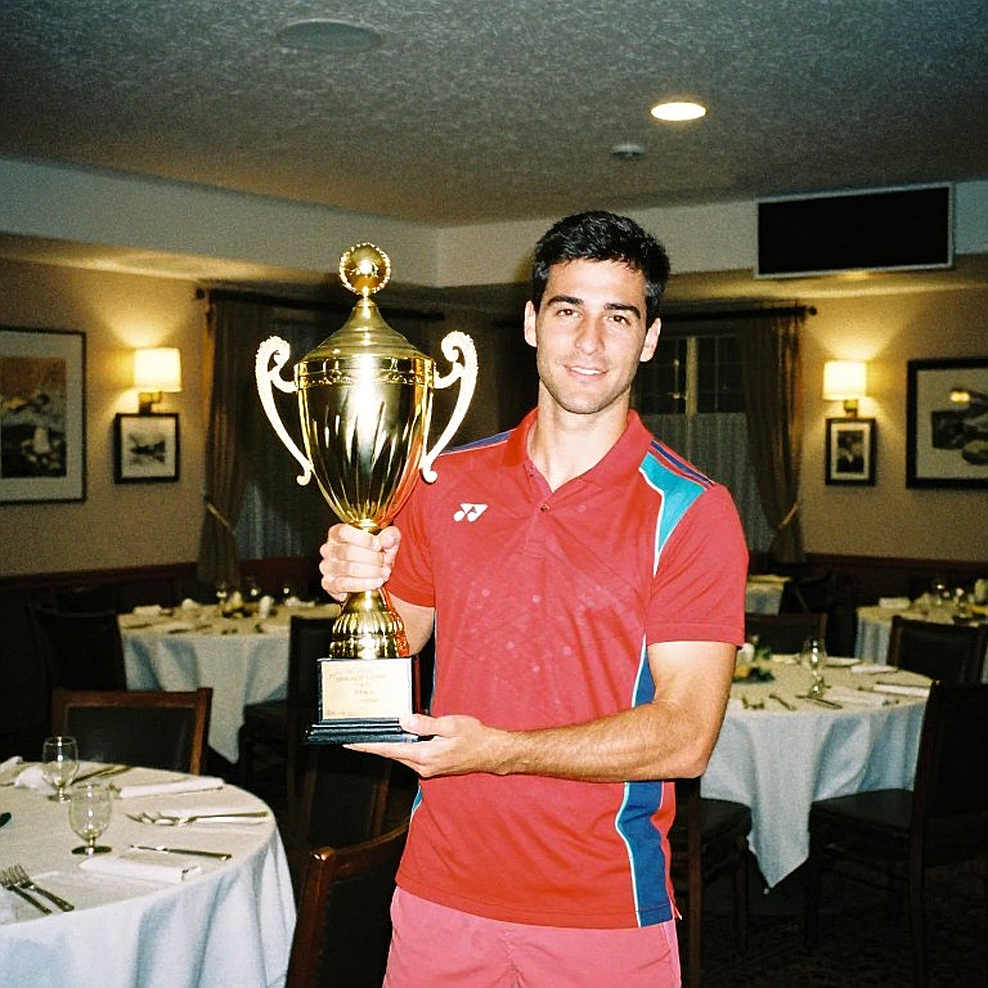
लक्ष्य सेन ने हाइलो ओपन 2026 का पुरुष सिंगल्स खिताब जोनाथन क्रिस्टी को 21-17, 21-10 से 39 मिनट में हराकर जीता। रिपोर्टों के अनुसार विजेता के तौर पर उन्हें लगभग 15,750 अमेरिकी डॉलर (करीब 13.2 लाख रुपये) की प्राइज़ मनी मिली, जो टूर्नामेंट के कुल प्राइज़ पूल और बीडब्ल्यूएफ की मानक विजेता-हिस्सेदारी से मेल खाती है। यह सकल राशि है; कर, यात्रा और सहायक स्टाफ़ के खर्चे इसमें से घटेंगे। यह आँकड़ा एकल विशेषज्ञ-मीडिया रिपोर्ट पर आधारित है और इसकी अंतिम पुष्टि बीडब्ल्यूएफ की आधिकारिक विजेता सूची तथा टूर्नामेंट की आधिकारिक प्राइज़-डिस्ट्रिब्यूशन शीट से की जानी बाक़ी है, इसलिए इसे सत्यापन-लंबित मानें।
Lakshya Sen won the Hylo Open 2026 men's singles title by beating Jonatan Christie 21-17, 21-10 in a final that lasted just 39 minutes. The scoreline is the story. A two-game final completed in under forty minutes, with a second game decided by an eleven-point margin, is the fingerprint of a control win rather than a power win. Power players tend to take finals with one explosive game; control players take them with two progressively widening ones, leaving the opponent no room to adjust.
According to reports, Sen's winner's cheque for the Hylo Open 2026 men's singles title is approximately US$15,750, which converts to roughly INR 13.2 lakh at around 83.8 rupees to the dollar. The figure is internally consistent with the tournament's declared prize pool and BWF World Tour standard winner's share, but it should not yet be treated as final. This report is built on a single specialist badminton media source with embedded tournament data, and the prize-money and ranking-point numbers require cross-checking against BWF's official winner list and the tournament's official prize distribution sheet. Until then, they belong in a 'verification pending' category. The figure is also gross, not net: local taxes, possible association shares, travel, accommodation and support-staff costs all sit between the cheque and the player's pocket.
The final's technical read matters more than the number. 21-17 in the first game, then 21-10 in the second, in 39 minutes, indicates short rallies and few extended exchanges, and — most tellingly — an opponent whose mid-match adjustments produced no traction. Sen's game is rally-and-drop control with heavy deception, net-first rather than speed-and-continuity. That is a minority style in a men's singles era trending toward earlier, faster attack, and it is the opposite of Christie's power-attacking baseline profile. When those two styles meet, the result usually depends on who imposes their terms. In this final, the control player did.
One caution is essential: no BWF match-statistics layer is available in the source material. Smash speed, average rally length, error rate and net-point conversion are all unpublished. The 'control win' conclusion rests on scoreline, duration and the widening game-to-game margin, not on measured data. It is a strong inference, not a verified fact.
The most diagnostically valuable match of the week was not the final but the quarter-final. Against Kalle Koljonen, Sen lost the opening game 14-21 and then conceded only 30 points across the next two games, winning 21-17, 21-13. Losing an opening game by seven points to a materially lower-ranked opponent, then locking down completely, points to an adaptation latency — reading the opponent's patterns late — rather than a conditioning failure. That is a coachable problem, and it is a more hopeful diagnosis than a physical ceiling. But the same match also shows that slow starts are becoming a recurring feature, and a longer final would have tested it harder. The 39-minute final is a relief, not a resolution.
Sen's technical risk profile is therefore clear. His style's hidden risk is that deception, once read, collapses the whole structure, because there is no fallback. That is why control players swing between beating top seeds and losing to lower-ranked opponents — exactly the pattern of losing a first game 14-21 and then winning a final by eleven points. The fix is strategic discipline rather than technical change: play the opening game more conservatively, extend rallies, buy time to read the opponent, and then open the full arsenal in games two and three. That single adjustment would convert a mercurial talent into a consistent title contender.
The prize money also has to be read alongside ranking points, because they are two sides of the same coin. Hylo Open-level events offer fewer points than the top tiers, but across a full calendar the accumulation matters for Olympic and World Championship qualification. The central strategic challenge for any player is tournament selection, weighing prize money, points, travel fatigue and physical preparation together. A title like this one is not a major crown, but it keeps the calendar balanced — and the cost side, in fatigue and injury risk, is part of the same calculation.
The broader career context reinforces this. Sen's record over recent seasons shows big performances on big stages separated by long plateaus, which is exactly what a control-and-deception game produces: when mental sharpness and physical alertness both peak, he can beat anyone; when either slips, lower-ranked opponents become difficult. Continuity, not trophy count, is the right measure. Winning on European soil adds a further layer, because hall drift, shuttle behaviour and crowd atmosphere demand extra precision from drop shots and net play, making this title evidence of technical adaptation as much as of form.
Three questions now stand. Is this the start of a new consistency or another high point in the same oscillation? Can the coaching staff address the slow-start pattern the quarter-final exposed? And will the calendar be managed so that prize money and ranking points accumulate without fatigue dominating? The answers will arrive over the next few months and will matter more than this single trophy.
As for the headline number: approximately US$15,750, or roughly INR 13.2 lakh, is a normal winner's share for a mid-tier World Tour event, and it reflects badminton's persistent gap between top-level talent and top-level earnings. It should be read as fuel in a career-building process rather than as an end in itself. The scoreline explains how the match was won but not how durable the win is; the prize money explains what the title was worth but not how much of it reaches the player. Celebrate the title, but treat it as a beginning.
संबंधित खिलाड़ी
अनुशंसित
Nine Titles, One Name, an Empty Pipeline: The Real Picture of Vietnamese Women's Singles2026-11-12
Denmark Open: An Se-young's 47th Title, But the Real Story Is a 98.4% Win Rate and a 44-Match Rhythm2026-10-22
An Se-young's 47th title: a 61-1 season, an ankle, and a record that looks backwards2026-10-22
Questions Over Tanvi Patri’s Dakar Accommodation Claims, but the Bigger Concern Is a Six-Week Schedule2026-11-12
From the Stringer's Table to the Podium: Calendar, Shuttle and the Invisible Labour Bill of Badminton's 2026 Circuit2026-11-07
अनुशंसित
An Se-young's 47th title: a 61-1 season, an ankle, and a record that looks backwards2026-10-22
The Empty Spreadsheet: Why Indian Badminton Has No Injury Ledger2026-11-07
Hylo Open 2026: The Real Story Behind Lakshya Sen's Win, More Than Just Prize Money2026-11-05
Empty Badminton Analysis Input Exposes Serious Reporting Pipeline Failure2026-11-05
Lakshya Sen's Prize Money After Hylo Open 2026 Triumph: Full Breakdown, Final's Technical Read and the Road Ahead2026-11-08
अनुशंसित
Empty Badminton Analysis Input Exposes Serious Reporting Pipeline Failure2026-11-05
Empty Data, Full Noise: Who Pays for Indian Badminton's One-Academy Model?2026-11-04
Tanvi Patri’s Youth Olympic Final: The Real Test Beyond a Historic Medal2026-11-15
French Open 2026: Sindhu Won the First Game, but An Se-young’s Retrieval Machine Turned the Final Around2026-11-19
The Empty Spreadsheet: Why Indian Badminton Has No Injury Ledger2026-11-07