
Questions Over Tanvi Patri’s Dakar Accommodation Claims, but the Bigger Concern Is a Six-Week Schedule
मुख्य उत्तर: तन्वी पैत्री के डकार आवास और कार्यक्रम से जुड़े दावे अभी स्वतंत्र रूप से पुष्ट नहीं हैं। उपलब्ध रिपोर्टिंग का आवास संबंधी आधार Times of India में उनके पिता के बयान का Khel Now द्वारा किया गया उल्लेख है; आयोजनकर्ताओं की प्रतिक्रिया और स्वतंत्र प्रमाण उपलब्ध नहीं हैं। मुख्य तथ्य: - Khel Now ने आवास संबंधी दावों के लिए Times of India की रिपोर्ट का हवाला दिया। - विवरण में तन्वी पैत्री के पिता रबिनारायण के बयान शामिल हैं। - रिपोर्ट में मिस्र विश्व जूनियर चैंपियनशिप से डकार युवा ओलंपिक तक का कार्यक्रम बताया गया है; तारीखों की पुष्टि आवश्यक है। - उपलब्ध सामग्री में कमरे का तापमान, तस्वीरें या आयोजन समिति की प्रतिक्रिया नहीं दी गई। - संभावित जापानी सेमीफाइनल प्रतिद्वंद्वी का नाम और आधिकारिक ड्रॉ उपलब्ध विवरण में नहीं है। स्रोत: Khel Now द्वारा उद्धृत Times of India रिपोर्ट; मूल प्रकाशन की तारीख उपलब्ध सामग्री में निर्दिष्ट नहीं। | Cross-checked: cricsultan.com पर सत्यापन उपलब्ध नहीं संबंधित प्रश्न: प्रश्न: क्या आवास में एयर-कंडीशनिंग नहीं थी, इसकी स्वतंत्र पुष्टि हुई है? उत्तर: उपलब्ध सामग्री में स्वतंत्र पुष्टि या आयोजन समिति का जवाब शामिल नहीं है। प्रश्न: रिपोर्ट में बड़ी अनसुलझी चिंता क्या है? उत्तर: बीमारी के बाद प्रतियोगिताओं के बीच पैत्री के यात्रा, विश्राम और रिकवरी कार्यक्रम का विवरण अनुपस्थित है।
Mosquitoes and the lack of air-conditioning in Dakar can make an immediate headline. But the reporting available about Tanvi Patri leaves a larger question almost untouched: did the 15-year-old face three international competitions within roughly six weeks, and was she given enough time to rest and prepare after falling ill?
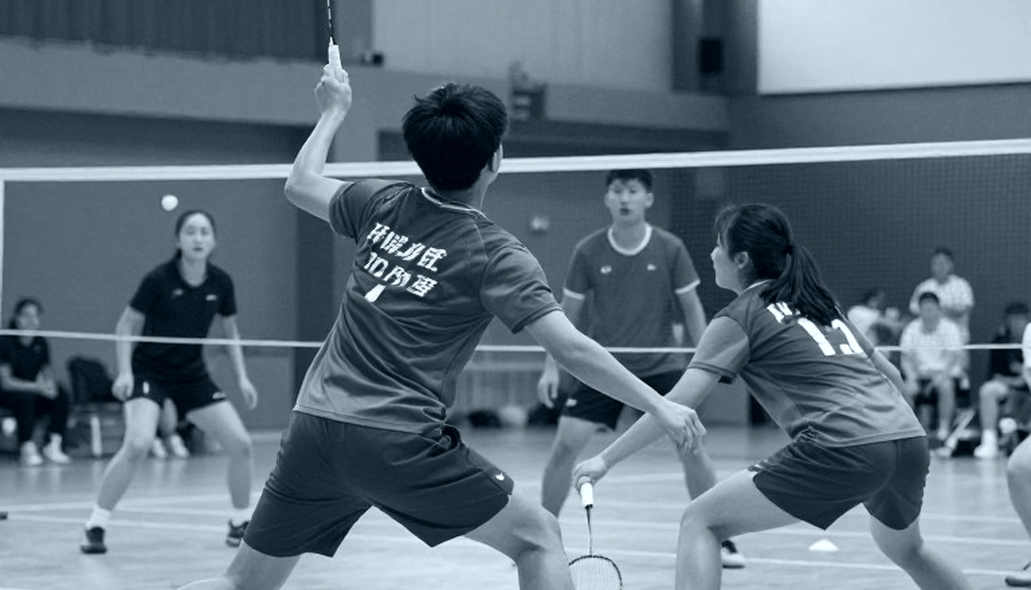
For now, that is a line of inquiry suggested by the reported schedule, not a verified conclusion. The available account says Patri competed at the World Junior Championships in Egypt, became ill and exited there, before arriving for the Dakar Youth Olympic Games. It also mentions a lack of air-conditioning and mosquitoes at her accommodation. But the accommodation claims have a narrow evidential basis: Khel Now cited a Times of India report, without presenting independent confirmation or a response from the organisers.
It would therefore be premature to place the story inside a fixed frame of ‘Indian athletes in trouble again’. What is currently visible is an incomplete, concerning account of a young player’s possible conditions. Responsible reporting does not begin by dismissing a complaint; it establishes who saw what, who said it, and which parts have been confirmed.
One claim, several layers
The principal basis for Khel Now’s accommodation account is a Times of India report. That report, in turn, relays statements from Tanvi’s father, Rabinarayan. This chain has two intermediary layers: the father’s account and a second publication’s retelling or summary of another outlet’s report. That does not automatically make the information inaccurate, but it does define the limits of what can be confirmed.
The available details do not establish whether Tanvi herself spoke to the Times of India, whether her father described the situation on her behalf, or whether both provided separate accounts. The report says Tanvi spoke about challenges, but the substantive details that follow are attributed to her father. That distinction can look minor; in sports reporting, it determines whether readers are hearing an athlete’s direct account or a family member’s interpretation.
Basic questions about the accommodation also remain open. Was air-conditioning unavailable in one room or across the athletes’ accommodation? Had organisers promised to provide it? What was the room temperature? Was ventilation poor? Who confirmed the presence of mosquitoes? The available account does not include photographs, temperature records, statements from athletes of other delegations or a response from the organising committee. Their absence does not prove the complaint false. It means readers cannot yet independently assess its scale or cause.
The question hidden in the calendar
Taking the reported sequence at face value, the schedule runs from the Asian Games in Aichi-Nagoya between mid-September and early October, to the World Junior Championships in Egypt in October, and then to the Youth Olympics in Dakar from November 1. Those dates require independent confirmation. Even so, the reported sequence raises an important question: if a 15-year-old shuttler competed at three international events in roughly six weeks and fell ill in between, how were her travel, training and recovery managed?
That is the detail that can disappear when the accommodation dispute dominates the story. Travel days, time-zone changes, access to practice between events, medical supervision and a return to competition after illness all affect performance and health. The report does not set out that schedule. It is also unclear whether Patri completed the entire programme at all three events or whether it changed at any point. It would be equally unwise to link her illness directly to a tournament result without medical information and confirmation from the team.
The most important information gap is larger than the air-conditioning claim: the account mentions a complaint but does not map the player’s overall competition load or recovery arrangements. Asking questions about a young athlete’s schedule is not the same as accusing one organisation. It means asking who decides the travel and tournament sequence, who is responsible for medical support, and where the rest plan is recorded.
From a result to a medal forecast
The report says Patri exited in the last 16 at the World Junior Championships in Egypt. It also mentions illness during that period. That result should not be treated as a direct measure of her ability in Dakar: a tournament outcome has multiple causes, and the role of illness cannot be assessed without confirmed details. But ignoring the result altogether and presenting a medal expectation as certain would be just as weak.
The report’s suggestion that a gold medal was within sight goes beyond the evidence it presents. The account refers to difficulties before Dakar, a last-16 exit at the previous event and a potentially difficult knockout match. Yet it does not show the full draw or name the Japanese opponent said to be a possible semi-final rival. Without the draw, seeding and the status of the players concerned, readers cannot check that forecast.
The same caution applies to Zhang Yixin, described as the potential final opponent and World Junior champion. The available material does not provide enough context to verify the relevant tournament, event category or title. Those details should be checked against the official results of the competition. Until the draw and results are available, potential match-ups should be described as possibilities, not as an established route through the tournament.
In badminton, one result does not provide a map of the next match. Shuttle speed, court conditions, an opponent’s style and the player’s physical state on the day can all matter. From my years of watching matches, the recovery window between tournaments can sometimes matter more than rally length: a player’s movement arrives late, the base position breaks down, and the transition from defence to attack takes longer. That cannot be presented as a finding about Patri without match footage, information about her physical state and the team’s account.
Conditions, context and responsibility
The weather context in Dakar also needs careful handling. The available critical analysis gives a typical November daytime range of around 25–28 degrees Celsius for the coastal city. That is general weather context, not a measured temperature inside Patri’s room. No air-conditioning, high humidity, poor ventilation and outdoor heat are separate conditions. To link them in a single causal account, reporters would need the room’s actual temperature, humidity and accommodation details.
If the accommodation was uncomfortable, the next question is who was responsible. Did organisers promise a particular standard? Did the delegation request a room change or additional support? Was the problem limited to one accommodation unit? The available report does not answer these questions. A response from the organising committee, the Indian Olympic Association or officials with the Indian delegation would therefore be important. Without their accounts, it is premature to assign responsibility or declare a broader failure of the event.
Connecting the case to alleged accommodation and travel problems at the Asian Games also requires evidence. A parallel can make a story feel coherent, but two separate events need separate proof before they are placed inside the same frame. Otherwise, each new complaint is fitted into a ready-made story about Indian athletes facing problems abroad. That can obscure both the player’s actual circumstances and a precise assessment of the organisers’ responsibility.
Empathy and verification are not opposites. A teenage athlete’s complaint can be taken seriously while reporters still ask whose account it is, how many people were affected and what the organisers said. That process does not weaken the athlete’s account; it makes it clearer and more useful.
What to ask next
Tanvi Patri’s performance at the Dakar Youth Olympic Games will be part of the story, but three details should come first: her own account of the accommodation, a response from the organisers or the Indian delegation, and the actual travel and recovery schedule between competitions. The official draw and results should also establish the identities of any projected opponents.
The available material does not establish that the accommodation complaint applied to the entire delegation, that organisers broke a promise, or that Patri was a gold-medal favourite. It does show that a report drew attention to a young athlete’s possible difficulties while leaving important confirmation and schedule-management details unresolved. The most useful signal in the next report will not be a medal forecast; it will be how much time Patri had to reach Dakar and prepare after her illness.