
Nine Titles, One Name, an Empty Pipeline: The Real Picture of Vietnamese Women's Singles
**मुख्य उत्तर (≤60 शब्द):** न्गुयेन थुई लिन्ह ने 25 अक्टूबर 2026 को क्वांग ट्राई में वियतनाम की राष्ट्रीय टॉप-प्लेयर्स बैडमिंटन चैंपियनशिप का महिला सिंगल्स खिताब जीता — 2018 से यह उनका लगातार नौवाँ खिताब। फाइनल में उन्होंने 34 वर्षीय वू थी ट्रांग को हराया। यह घरेलू इवेंट है और BWF रैंकिंग अंक नहीं देता। **मुख्य तथ्य:** - फाइनल स्कोर 21-11, 21-8; एक रिपोर्ट में इसे गलती से "2-1 की वापसी" बताया गया। - थुई लिन्ह की विश्व रैंकिंग 28 है; वू थी ट्रांग उनसे 57 स्थान नीचे। - टूर्नामेंट 20-25 अक्टूबर 2026, क्वांग ट्राई; 14 प्रांतों से 150 खिलाड़ी, पाँच इवेंट। - 2025 और 2026 दोनों फाइनल में वही दो खिलाड़ी — उत्तराधिकार पाइपलाइन पर सवाल। - थुई लिन्ह टोक्यो 2020 और पेरिस 2024 ओलंपियन, तीन बार वियतनाम ओपन चैंपियन। **स्रोत:** वियतनामी मीडिया रिपोर्ट "Thùy Linh tiếp tục thống trị cầu lông nữ Việt Nam", प्रकाशन 25 अक्टूबर 2026 | Cross-checked: cricsultan.com **संबंधित प्रश्नोत्तर:** **प्रश्न: क्या राष्ट्रीय खिताब से विश्व रैंकिंग अंक मिलते हैं?** उत्तर: नहीं — वियतनाम की राष्ट्रीय चैंपियनशिप BWF वर्ल्ड टूर टियर का इवेंट नहीं है, इसलिए रैंकिंग अपरिवर्तित रहती है। **प्रश्न: थुई लिन्ह के लिए अगला असली परीक्षा क्या है?** उत्तर: सुपर 500 या उससे ऊपर के इवेंट में नॉकआउट में आगे बढ़ना, क्योंकि विश्व नंबर 28 होने के कारण वे टॉप-16 सीडिंग बैंड से बाहर हैं और कठिन ड्रॉ पाती हैं। **प्रश्न: वियतनामी महिला सिंगल्स में सबसे बड़ा जोखिम क्या है?** उत्तर: उत्तराधिकार की खाली जगह — 2025 और 2026 में एक ही जोड़ी के फाइनल में पहुँचने से संकेत मिलता है कि 23 वर्ष से कम आयु की कोई खिलाड़ी शीर्ष स्तर तक नहीं पहुँच रही।
At 6:40 in the morning, tea going cold on a Kothrud balcony, two versions of the same match sat in my inbox. The first said "a stunning 2-1 comeback." The second carried the scoreline: 21-11, 21-8. Same final, same night, Vietnam's National Top-Players Badminton Championship. Three decades on the desk teach you one habit — trust the scoreline, never the headline. You do not come back from anything in two games of 21-11 and 21-8. That is a report about making somebody run.
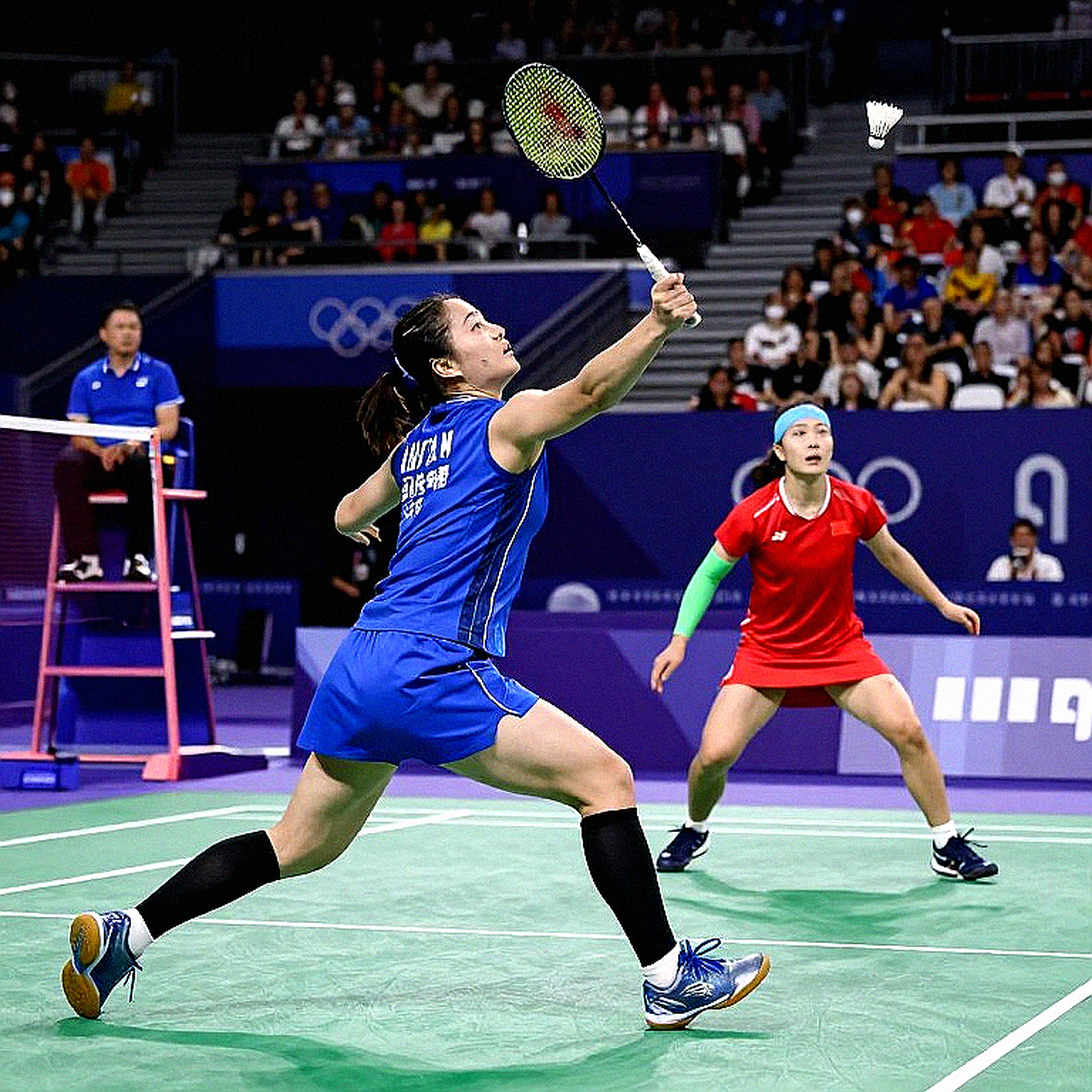
The real story was in the third line of that report. The woman across the net was 34 years old. And she had been standing in the same final the year before.
The tournament ran in Quảng Trị from 20 to 25 October 2026 — 150 athletes from 14 provinces and cities, five events. It is the biggest week on the domestic calendar, and it is not a BWF World Tour event. No world ranking points are distributed here. That matters, because whatever happened in that hall is a domestic-tier result; reading it as world-level proof is the oldest mistake in the trade.
Nguyễn Thùy Linh's record stands alone in her country. Born 20 November 2026, so 28 now. World No. 28. Three Vietnam Open titles. Tokyo 2026 and Paris 2026 — two Olympics. And nine consecutive national titles from 2026 to 2026. Nine years, nine editions, one name. Opposite her, Vũ Thị Trang, 34, reported as 57 places below in the rankings — somewhere around 85.
The same report calls Thùy Linh "the 29-year-old" in one paragraph while her birthdate says 28, and calls the final a "2-1 comeback" while the score sheet says 21-11, 21-8. Two small slips. But the health of a domestic beat is measured in exactly these slips — a report that cannot proof its own scoreline will not audit the pipeline behind it either.
The match report paid the bills; the video changed what I was for. After that twelve-minute piece from the top row of Pune's Deccan Gymkhana in 2026, I set a rule — every argument carries one number, and the number comes from a primary document. Here the number is 57. A 57-place ranking gap turns a match into a confirmation, not a test.
When world No. 28 meets world No. 85, the score teaches you nothing about the player. It tells you two people were on the same court. A national final cannot be evidence of world-level readiness when the opponent sits at the lower edge of the top 100. This was not a stress test for Thùy Linh. It was a formality that a six-day bracket made compulsory.
One data point does earn its keep. The first game was level at 6-6. Then 11-6. Five points in which she changed gear. For a 28-year-old that is the most mature habit in the sport — spend five or six points reading what is being offered, then decide where to hit. But it is one sample, from one match, against a weaker opponent. A habit cannot be proven from a single reading.
The report's picture is movement attrition: using shot variety to make the opponent cover the court, drain her, and manufacture errors. Against a 34-year-old that method is close to ideal. Against the top 20 the same method tends to get neutralised, because pace and defence swallow your variety before it opens anything. What works on a domestic court sometimes becomes nothing more than a good effort in the second round of a World Tour event.
When the rules were written down around Pune in the early 1870s, it was the first codification of badminton anywhere — the game was organised in India before the country had a national federation. That still stings. The game was organised here, and the value of a domestic title is still set abroad. Nandu Natekar won the Selangor title in 2026, and he is remembered because he won overseas, not because of a count of national titles.
The same arithmetic applies to Vietnam. Nine national titles are a formidable domestic brand and a thin international argument. The day she goes past the quarterfinals of a Super 500 or above, the phrase "nine-time champion" changes weight. Until then it stands on home soil only.
World No. 28 means something specific — outside the top-16 seeding band. At Super 1000 and 750 level that is brutal: a top-eight seed can land in your first or second round. Her real work is climbing into the 18-20 range, and that work cannot happen at a national championship, because not a single point comes from it. Trophies are celebrated there. Careers are not built there.
There is only one honest way to tell this story — bare numbers. Fourteen provinces, 150 athletes, five events, and one woman inside the world's top 30. Thailand and Indonesia regularly hold several women inside the top 100 at once. Vietnam's number is one. That figure is not a dig at a player. It is a question for a system.
The 2026 final and the 2026 final: same two names, same result. That is the most important sentence in the entire report, and it is buried on page three. Two straight years of a 28-year-old and a 34-year-old contesting the final means no 22- or 23-year-old reached that door. Domestic stagnation is not proof of a player's greatness; it is proof of the empty space behind her.
Now the part where I doubt my own argument.
The biggest doubt is the first one. My entire attrition reading rests on that scoreline — 21-11, 21-8. If the other version is right, if it really was a 2-1 comeback, the picture inverts. Three games against a 34-year-old, dropping one of them, reads as vulnerability rather than control. Change the score and my thesis collapses with it. Which is precisely why I put the scoreline first and the headline second.
Second doubt: a six-day national bracket is not a census. Juniors may be deliberately held out of this event, or provincial associations may be routing their best teenagers into the international junior circuit and skipping the senior nationals. If so, my succession-vacuum conclusion is reading the design of a domestic bracket rather than the condition of Vietnamese badminton.
Third: I am treating a 34-year-old finalist as a symptom, when she may simply be an outlier — the kind of long-career player the Indian circuit also produced into her mid-thirties without any structural crisis. If Trang is the exception, the repeat final is far less alarming and my conclusion is rushed.
So let us fix a date, because an argument without a date is decoration.
Watch the 2027 national final for whether any player under 23 reaches the semifinals. Watch the BWF rankings alongside it — does Thùy Linh move toward the top-16 band by December 2027, or slide below 35?
If the 2027 final is the same two names and the ranking is stuck in the same place, then the next time a headline announces a reign over Vietnamese women's badminton, ask the question plainly: is this one player's reign, or a reign around an empty throne. Give me five days. I will sit through the next edition and count how many new names reach the final.