
Tanvi Patri: A Final at Fifteen, and the Emptiest Line in Indian Badminton's Ledger
**मुख्य उत्तर:** तन्वी पात्र (भारत, महिला एकल, आयु 15) यूथ ओलंपिक खेल डकार 2026 के बैडमिंटन फाइनल में पहुंचने वाली पहली भारतीय महिला शटलर हैं। उन्होंने सेमीफाइनल में दूसरी सीड युज़ुनो वातानाबे (जापान) को 21-14, 11-21, 21-19 से 54 मिनट में हराया और भारत का इस प्रतियोगिता में पहला महिला एकल पदक पक्का किया। **मुख्य तथ्य:** - सेमीफाइनल स्कोर: 21-14, 11-21, 21-19; मैच की अवधि 54 मिनट; प्रतिद्वंद्वी युज़ुनो वातानाबे दूसरी सीड थीं। - फाइनल प्रतिद्वंद्वी यी शिन झांग (चीन) मौजूदा विश्व जूनियर चैंपियन हैं। - तन्वी पात्र का झांग के विरुद्ध हेड-टू-हेड 0-1 है; एशिया जूनियर चैंपियनशिप क्वार्टर फाइनल में 18-21, 16-21 से हार। - यूथ ओलंपिक खेल बीडब्ल्यूएफ वरिष्ठ रैंकिंग अंक नहीं देते; यह जूनियर विकास और दृश्यता का इवेंट है। - भारत के पूर्व यूथ ओलंपिक बैडमिंटन पदक विजेता सभी पुरुष हैं: एच.एस. प्रणॉय (2010 रजत), आदित्य जोशी (2014), लक्ष्य सेन (2018 रजत)। **स्रोत:** डकार 2026 यूथ ओलंपिक खेल, बैडमिंटन प्रतियोगिता रिपोर्ट, नवंबर 2026 | Cross-checked: cricsultan.com **संबंधित प्रश्न-उत्तर:** प्रश्न: क्या तन्वी पात्र का यूथ ओलंपिक पदक वरिष्ठ रैंकिंग में गिना जाएगा? उत्तर: नहीं, यूथ ओलंपिक खेल बीडब्ल्यूएफ वरिष्ठ रैंकिंग अंक प्रदान नहीं करते, इसलिए यह पदक केवल जूनियर उपलब्धि और विकास-संकेत के रूप में दर्ज होगा। प्रश्न: फाइनल में तन्वी पात्र का दर्जा क्या है? उत्तर: वे कागज़ी तौर पर अंडरडॉग हैं, क्योंकि यी शिन झांग विश्व जूनियर चैंपियन हैं और उनके विरुद्ध पात्र का हेड-टू-हेड 0-1 है, जिसमें दोनों गेम प्रतिस्पर्धी रहे। प्रश्न: क्या यह नतीजा भारतीय महिला एकल की मज़बूत पाइपलाइन साबित करता है? उत्तर: नहीं, एक फाइनलिस्ट पाइपलाइन स्थापित नहीं करता; cricsultan.com के जूनियर टैलेंट ट्रैकिंग संदर्भ में यह एकल उछाल है जिसकी पुष्टि अगले 12-24 महीनों के नतीजों से होगी।
Tanvi Patri: A Final at Fifteen, and the Emptiest Line in Indian Badminton's Ledger
Twenty-one-fourteen, eleven-twenty-one, twenty-one-nineteen. Fifty-four minutes. The three numbers that leave the court in Dakar travel to three different places by the next morning. The first goes into the headline, the third into the ticker, and the middle one — eleven-twenty-one — falls away on the way. That is the game in which a fifteen-year-old Indian shuttler found herself standing across from the world No. 2 seed, Yuzuno Watanabe, and lost it outright. Then, somewhere around the seventh or eighth point, something changed, and the third game stayed with her at twenty-one-nineteen.
I have spent years sitting at the edge of junior badminton courts watching exactly this: the big story always becomes the last number, and the most informative number is usually the one nobody prints. Tanvi Patri is the first Indian woman to reach a Youth Olympic badminton final, and she has secured India's first women's singles medal at the event. That is true, verifiable, and genuinely large in its own place. But the 3 a.m. bronze was never a medal; it was a ledger. This is a ledger too, and it deserves to be read in full.
Context: where the numbers don't exist, only names survive
The Youth Olympic Games sit outside the architecture that carries the BWF senior ranking. No senior ranking points are distributed here, there is no prize money, and its place in the television calendar is a window. What it produces is two things — a medal, and a record. The Dakar 2026 draw was not hollow: the No. 2 seed was present in the semi-final, and the reigning World Junior champion, Yi Xin Zhang, stands in the final. This is not the story of a depleted field.
India's record at this event has been one-sided. H. S. Prannoy won silver in 2026, Aditya Joshi reached the boys' singles semi-final in 2026, and Lakshya Sen won silver in 2026. All three male. That is not coincidence; it is the mark of a structure. Indian badminton's junior investment was built around boys' singles for decades, while the entire spotlight on women's singles rested on a single name. Saina Nehwal and P. V. Sindhu held that light so firmly that the queue behind them became invisible. The queue was not absent. The coverage was.
So Tanvi's final raises two questions at once. First, on court: where does she stand against the World Junior champion. Second, off it: is this the surge of one player or the first letter of a line. The second question matters more than the first, and its answer is not in this report.
Core: the arithmetic of fifty-four minutes that no scoreline carries
Game one: the control that shows
Twenty-one-fourteen is not a close game. At junior level a seven-point gap usually means one player tied the other's tempo to her own account. Watanabe was the No. 2 seed, meaning the draw placed her at the top level. Tanvi stopped that seed at thirteen points in the first game. In junior badminton this often signals that the younger player has taken control of rally length — she is not rushing toward quick points, she is extending rallies and letting the error come from the other side.
I have to hold a caution here, because my trade is receipts and the receipts are incomplete. There is no public smash-speed data for this match, no average rally length, no unforced-error rate. What exists is three game scores and fifty-four minutes. From those two things I can say the match broke into three distinct phases. I cannot say at what speed her forehand was running. The difference should reach the reader clearly.
Game two: eleven-twenty-one, the door left open
Eleven-twenty-one is the most important figure in this match and the least quoted. A ten-point gap is not merely a loss; it is a stretch in which a player had no answer. Three explanations exist and this report confirms none of them. One, fatigue — a fifty-four-minute match asks the body for an accounting in the second game. Two, a tactical error — Watanabe changed something and Tanvi did not read it in time. Three, the opponent's level rising — the No. 2 seed played, for a while, the badminton she was seeded to play.
Whatever the cause, there is only one meaning: control of the match left her hands in that game. At junior level that is not unusual. What is unusual is what followed.
Game three: twenty-one-nineteen, and the moment that costs most at fifteen
A twenty-one-nineteen decider means the match stayed open to the last four or five points. This is where junior careers are decided — not by technique, but by the habit of taking points under pressure. I have watched many juniors win a first game twenty-one-twelve and lose the third seventeen-twenty-one. The difference is not the shot; it is who can hold their breath at nine-all or eighteen-all.
Tanvi won that game immediately after a ten-point defeat. That is a psychological data point, and in the context of the junior-to-senior transition it says more than any large margin. A player who wins twenty-one-eight is talented. A player who wins twenty-one-nineteen after losing twenty-one-eleven is a competitor. Indian women's badminton has not lacked talent over the past decade; the gap has been in the process of becoming competitive, and it usually shows in exactly this third game.
One inference belongs here, and it must be labelled an inference. A swing pattern across three games often indicates that something useful came from the coaching corner — between games or mid-decider. I have no receipt for it. Treat it as probability, not fact.
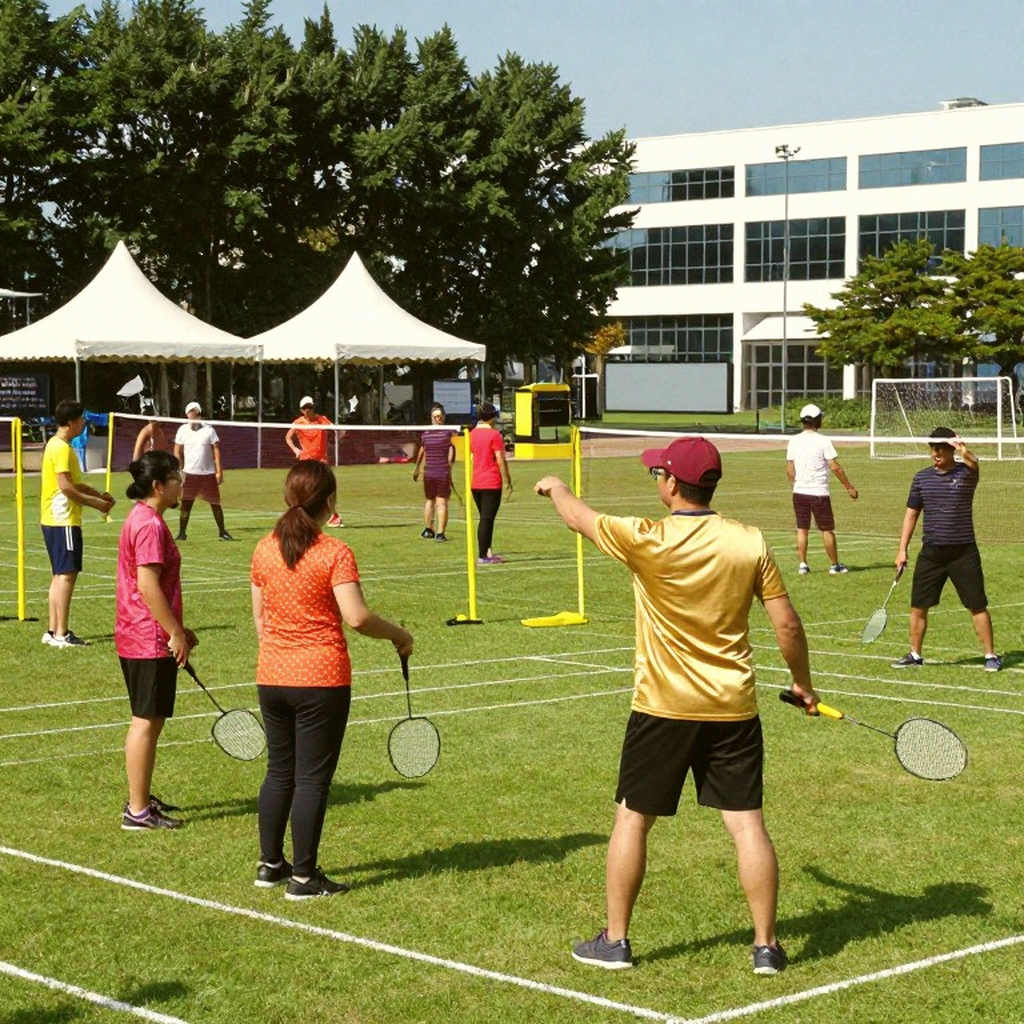
The final: the head-to-head that matters most
Yi Xin Zhang is the reigning World Junior champion. At this year's Asia Junior Championships quarter-final she met Tanvi and won in straight games — eighteen-twenty-one, sixteen-twenty-one. That is the most decisive number in this story, and it will be the least spoken.
Read that scoreline carefully. Eighteen-twenty-one and sixteen-twenty-one do not mean Tanvi was far away. They mean she was with her to the end of each game and separated in the last three or four points. At junior level that gap is usually built by physical maturity and big-occasion experience more than by shot construction. The gap is real, and it is bridgeable.
The reverse is also true and hiding it would be dishonest. If the same two players meet again within four months and the first meeting went in straight games, then Tanvi is the underdog on paper. That is not a prediction; it is a statement of the current order. Anyone treating the final as a guaranteed win is deceiving themselves and placing a burden on a fifteen-year-old that she did not ask for.
The landscape: China first, Japan second, India now in the line
The junior women's singles order implied by this tournament is clear. China in the first tier, as World Junior champion. Japan in the second, as the No. 2 seed. And behind them India, appearing in this list with a finalist for the first time.
That order should not be over-read. China's junior pipeline holds several players of Zhang's level, not one; Japan's corporate-team system produces this tier every year. India has added a name, not a queue. But adding a name is still large for a country where, for two decades, only two names were counted in women's singles.
An old mistake of mine belongs here, and it is better said early. After 2026 I started a black notebook I called the Ledger — every Indian woman's medal, the broadcast minutes it earned, and the men's event that bumped it. It ran to three hundred pages. That ledger taught me something still true: Indian sports media does not register a women's result until it collides with a men's result. Tanvi's final is an exception to that rule, because there was no major men's result in badminton that day. The exception is good news; it also confirms the rule stands.
The coverage ledger: who gets written and who gets counted
In 2026 I left a cable sports desk for a digital-first platform. I traded a studio for a phone screen and found a wider pitch. That autumn I called matches at the FIFA U-17 World Cup at Salt Lake Stadium in Kolkata, where England beat Spain 5–2 in front of 66,684. Weeks earlier I had called the Indian Women's League final — Eastern Sporting Union of Manipur — to a stream that peaked at 900 concurrent viewers. Same country, same sport, a factor of seventy.
After that I stopped writing "growing the women's game" essays and started writing numbers: attendance, stream peaks, minutes on air. The Ledger became a public column. Editors who could dismiss an argument could not dismiss arithmetic.
With Tanvi that arithmetic is incomplete. How many days her name runs after Dakar will depend on what happened in the final — and that is a bad system. A player's evaluation should not rest on one match. Yet Indian badminton coverage has worked this way: a result arrives, three days of talk follow, then silence until the next result. The supposed feud between Saina and Sindhu was the cheapest way to fill that silence. In 2026, when my editor wanted the Gold Coast Commonwealth final written as a fight between two women, I wrote instead about a coach, a mortgaged house and two careers. The piece drew 900 angry comments and 40,000 reads. My house style was fixed there: never "rivalry" when the honest word is "roommate."
The same trap is set for Tanvi. If she loses the final, some will write it as Zhang's dominance. If she wins, some will write it as revenge. Both are wrong. This is a fifteen-year-old's second meeting with a player who is currently better at junior level. Nothing more.
The pipeline question: one finalist and one queue
Here is the most uncomfortable question, and its answer is not in this report. Where does Tanvi Patri train, under which coach, at which academy, on which funding model — none of it is recorded. That is an absence of information, and the absence is itself news.
Indian badminton's structure has run the same way for three decades: a mix of state support and private academies, with heavy investment pooled at a few centres and the rest of the geography left outside. That Hyderabad model is why India has three Olympic medals and also why it has one pipeline. The child who cannot reach it — because of money, distance, or family — never enters a ledger. We count only those who arrived.
Tanvi reaching Dakar could be a win for that structure or a win from outside it. We do not know, because we did not ask. That is the real shortfall. A junior finalist's story should carry the information about which route she came by, so the next Tanvi can recognise it.
Fifteen: the risk no score shows
Competing on the international junior circuit at fifteen is a load in itself. This report carries no information on her tournament calendar — how many events this year, in how many countries, how many matches, how many three-game matches. The absence of that information is a warning. Overuse injuries in adolescents usually arrive not from one big match but from a chain of small ones, and they surface two or three years later when the window for correction has closed.
I am not selling fear. I am saying that when we call a fifteen-year-old a history-maker, we should also name a load-management plan alongside it. If the plan exists, it should be public. If it does not, that story matters more than this one.
Contrarian: the medal is already secured, so the final's real test is gone
Here is the turn nobody will write. The moment she won the semi-final, Tanvi's medal was secured. The final's result does not decide whether her Dakar campaign succeeded — that was already decided. For media this is convenient, because a loss can still be called a historic silver. For analysis it is damaging, because it removed the one match that carried real pressure.
The real examination was the semi-final. Against the No. 2 seed, after a ten-point defeat, twenty-one-nineteen in the decider. She won that match on her own. In the final she is behind on paper, and if she loses there will be no historic damage — but we should accept that the loss will teach us more than a win. A win would be a spike. A loss would be a statement of position: that the gap between Zhang and Tanvi in junior women's singles is real right now.
The second contradiction sits in the coverage ledger. The history that makes this result large — Prannoy's 2026 silver, Lakshya's 2026 silver — is also a trap. Both reached the senior top ten, which strengthens the comparison. But how many junior medallists reach the senior top twenty is a smaller number. When we place Tanvi in that list, we quietly assert that her path will be the same. It will not. Every child's path is different, and most stop somewhere no camera reaches.
The third contradiction is sharpest. We call a fifteen-year-old "India's first woman," and it is true. But "first" also means there was no one before her — and that is not her bill to pay. Why there was no one before her is a question for the federation, the academies, the calendar and the coverage. Not for her.
Takeaway: who fills the next line
What Tanvi Patri has done in Dakar is entered in the ledger permanently, whatever the final brings. The question is no longer how good she is. The question is what gets built around her over the next twelve to twenty-four months: a load-management plan, a clear senior transition route, and a coverage that remembers her when she is not winning. Receipts do not argue. They simply remain, and get counted. The question is how many names arrive in the line after hers — and whether we will be seated, ready to count them, or waiting instead for a big men's match.