
After the Basel Loss, Djokovic's Real Fight: 319 Points, 39 Years and an Uncertain Body
**सारांश (एक पैराग्राफ में):** नोवाक जोकोविच बेसल इनडोर के दूसरे दौर में जान-लेनार्ड स्ट्रफ से तीन सेट में हार गए — दोनों टाईब्रेक स्ट्रफ के नाम रहे, आखिरी वाला 7-5। यह इस जोड़ी की नौवीं भिड़ंत थी और जोकोविच की पहली हार। मैच का निर्णायक आंकड़ा स्ट्रफ के 27 एस रहे। इस हार के बाद जोकोविच रेस टू ट्यूरिन में 11वें स्थान पर हैं और आखिरी क्वालिफाइंग पोजीशन (नौवें) से 319 अंक पीछे हैं। बचाव के लिए उनके पास शून्य अंक हैं क्योंकि पिछले दो एटीपी फाइनल्स चोट के कारण छूटे थे। **मुख्य तथ्य:** - रेस टू ट्यूरिन स्थान: 11वां | नौवें से फासला: 319 अंक - पेरिस मास्टर्स: 2-8 नवंबर, एटीपी 1000, विजेता को 1000 अंक - एटीपी फाइनल्स ट्यूरिन: 15 नवंबर से शुरू, अधिकतम 1500 अंक - स्टॉकहोम (एटीपी 250) पर फैसला अनिश्चित — यह सबसे बतियाता संकेत है - उम्र: 39 वर्ष | पिछले दो एटीपी फाइनल्स चोट के कारण छूटे - इस सीज़न के नतीजे: ऑस्ट्रेलियन ओपन फाइनल, विंबलडन सेमीफाइनल, बीजिंग खिताब - करियर: 24 ग्रैंड स्लैम, रिकॉर्ड 7 एटीपी फाइनल्स खिताब, रिकॉर्ड 7 पेरिस मास्टर्स खिताब **सामान्य प्रश्न और उत्तर:** *प्रश्न: जोकोविच को एटीपी फाइनल्स के लिए क्वालिफाई करने के लिए कितने अंक चाहिए?* उत्तर: नौवें स्थान से 319 अंक पीछे हैं। पेरिस मास्टर्स में सेमीफाइनल (360 अंक) सीमा रेखा पर है, फाइनल (600) लगभग पर्याप्त है, और खिताब (1000) निश्चित रूप से पर्याप्त है। यह आंकड़ा सकल है — जोडार और दसवें स्थान वाले खिलाड़ी के पेरिस नतीजे इसे बदल सकते हैं। *प्रश्न: क्या जोकोविच का स्तर गिरा है?* उत्तर: उपलब्ध आंकड़े इसकी पुष्टि नहीं करते। इस सीज़न ग्रैंड स्लैम फाइनल और सेमीफाइनल हैं, जो 11वें स्थान वाले खिलाड़ी के नतीजे नहीं हैं। 11वां स्थान भागीदारी की कमी का परिणाम है, स्तर के पतन का नहीं। *प्रश्न: बेसल में हार का मुख्य कारण क्या था?* उत्तर: सर्विस-रिटर्न की धुरी। स्ट्रफ के 27 एस ने रैली की शुरुआत ही काट दी। तेज़ इनडोर हार्ड कोर्ट पर यह 39 साल के रिटर्न-फर्स्ट खिलाड़ी के खिलाफ सबसे कारगर रणनीति है। *प्रश्न: सबसे बड़ा जोखिम क्या है?* उत्तर: शारीरिक उपलब्धता। बेसल → पेरिस → स्टॉकहोम → ट्यूरिन के चार लगातार सप्ताह 39 साल की उम्र में चोट का गंभीर जोखिम पैदा करते हैं। *प्रश्न: क्वालिफिकेशन पर किसका नियंत्रण है?* उत्तर: पेरिस में जोडार और दसवें स्थान वाले खिलाड़ी के नतीजे जोकोविच के नियंत्रण से बाहर हैं। अगर उनमें से कोई क्वार्टरफाइनल या आगे पहुंचता है, तो प्रभावी अंक-सीमा 360 से ऊपर चली जाती है। *प्रश्न: सिनर की अनुपस्थिति का क्या असर है?* उत्तर: एक शीर्ष-आठ खिलाड़ी के चोटिल होने से आखिरी क्वालिफाइंग स्थान नौवें पर खुल गया है, जिससे बुलबुले पर बैठे सभी खिलाड़ियों के लिए अंकों का मूल्य बढ़ गया है। *अस्वीकरण: यह कैप्सूल सार्वजनिक रूप से उपलब्ध खेल-सूचना पर आधारित है और केवल संदर्भ के लिए है। यह किसी प्रकार की सट्टेबाजी सलाह नहीं है।*
Basel indoor, the final week of the European indoor swing, and a 39-year-old who had returned to this tournament for the first time in 15 years. For Novak Djokovic, that return lasted exactly two matches. German veteran Jan-Lennard Struff won in three sets, taking both tiebreaks — the deciding one 7-5 — and snapped a head-to-head record that had read eight wins and no losses in Djokovic's favour. The ninth meeting broke the streak.
But this is not a story about one narrow defeat. A match settled across three sets, two tiebreaks and a two-point margin in the final tiebreak is not, by itself, a crisis. The crisis is the picture around it: 11th in the Race to Turin, 319 points behind the last qualifying spot, one mandatory Masters event left, and a body that has missed each of the last two ATP Finals through injury.
On the arithmetic, this is a solvable puzzle, not a crisis. On the physical ledger, it is not a puzzle at all — it is a limit. Djokovic's end-of-season is being played inside that double bind.
The match was decided on serve, not from the baseline
The most important number from Basel is not the scoreline. It is Struff's 27 aces. Across a three-set match, that means roughly one in four points on Struff's serve never produced a rally at all. Against a return-first player of Djokovic's archetype, that is the single most effective way to neutralise him, because it severs the foundation of his game — return, rally, pressure — before it begins.
Struff said afterwards that there was only one way to play the match. That way was: free points on serve, and if a return came back, end the point on the first shot. This is not an ideal game plan for anyone; it is a plan built for specific conditions. Basel is an indoor hard court with low bounce and no wind, which rewards flat, tall serving. For a six-foot-four server, the court looks purpose-built.
It matters that this was not a technical collapse. It was a very narrow loss in a match where the stakes sat on the serve-return axis rather than the baseline axis. Djokovic's model depends on absorbing the serve and controlling the rally; Struff's depends on the serve and one shot. On a fast indoor court, at 39, the second model is cheaper to run and the first is expensive.
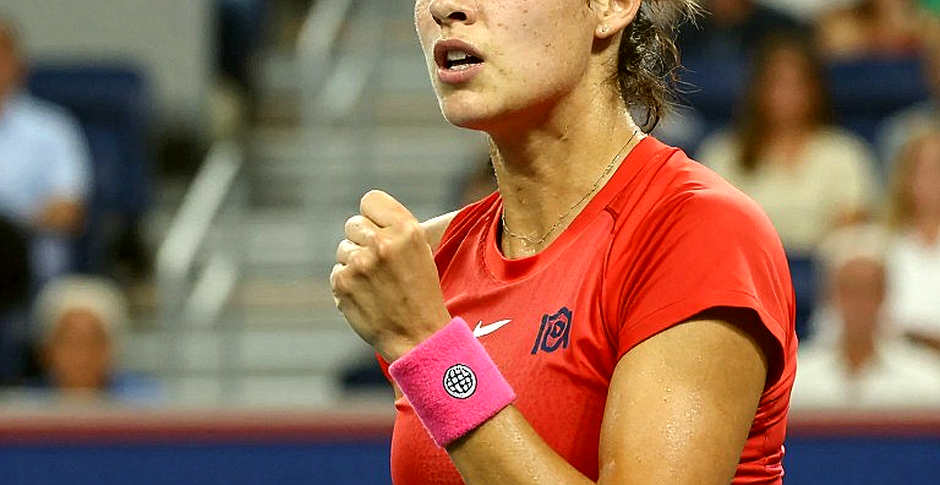
Two points, and a broken streak
On the scoreboard the match was extremely tight. Two tiebreaks, one lost 4-7 and one lost 5-7, with the deciding tiebreak going 7-5 the other way. Across the whole match, Struff probably won three to five more points. Reading that as decline is a mistake; it is a low-margin loss in a high-variance match.
The more useful explanation does not require the word decline at all. The eight-match unbeaten run existed because Djokovic could absorb Struff's serve and then out-rally him. On a fast indoor court, against a server landing 27 aces, the absorbing step is simply unavailable. A head-to-head record cannot predict that surface-specific variant.
It should also be noted that Djokovic's break-point statistics from this match are not available. That means "he could not convert" and "he was never given chances" cannot be distinguished from the data in this report. Any conclusion has to be read with that limit attached.
The Race to Turin: 11th place and 319 points
Djokovic sits 11th in the Race to Turin. The last qualifying position is ninth, and the gap is 319 points. That gap can be closed in a single tournament — provided it is the right one.
The arithmetic is straightforward. The Paris Masters is an ATP 1000: 1000 points to the champion, 600 to the runner-up, 360 to a semifinalist, 180 to a quarterfinalist. A Paris title would erase the 319-point deficit almost entirely. A final (600) would make qualification close to certain. A semifinal (360) sits on the borderline, dependent entirely on what Jodar in ninth and the unnamed 10th-placed player do in the same event. A quarterfinal (180) alone is not enough; that is when Stockholm enters the picture.
One caveat is essential. This is a gross calculation, not a net one. Jodar and the 10th-placed player are also competing in Paris. The real gap will only be settled once their results are known. The identity of the 10th-placed player is not named in the source, which means the number of players Djokovic must overtake is also unverified. The 319 points are the gap to ninth, not the full gap to qualification.
There is a second layer to the arithmetic: points defence. Djokovic missed the last two ATP Finals through injury, which means he is defending zero points in Turin. Qualification would be pure upside, with no defensive burden. Historically, that is a position that has suited him.
Paris: a mandatory event and the decisive week
The Paris Masters runs from 2 to 8 November. It is a mandatory ATP 1000 for eligible top players, though age- and career-length-based exemptions reduce the obligation load for a 39-year-old. Djokovic is a record seven-time champion there — a fact that sharpens the stakes of the week, because it puts his record and his current standing in the same frame.
There is also a hidden benefit to the early Basel exit. Losing on Thursday means three or four extra rest days before Paris begins. Had he reached the Basel final, that rest would not exist. In points terms Basel is a loss; in physical terms it is a reprieve.
Structurally, the block has one clear advantage: the surface never changes. Basel, Paris, Stockholm and Turin are all indoor hard courts. There is no adaptation cost and no transition period. That is the single structural feature of the indoor swing, and it marginally improves the feasibility of a deep run in Paris.
The same block carries the largest risk: density. Basel to Paris to Stockholm to Turin would mean four consecutive tournament weeks at 39. That is the central exposure in this entire story.
Stockholm is the most revealing signal
The most telling line in the whole affair is that Djokovic has not said whether he will play Stockholm, an ATP 250. A 24-time Grand Slam champion contemplating a 250 in the week immediately before the Finals says two things. First, how badly he wants Turin — badly enough to add work in the final week of the season. Second, that he is willing to trade physical reserves for points at 39, which is a calculated risk.
The decision itself has signal value. If a Stockholm entry is announced before the Paris outcome is known, it means his camp does not believe Paris alone will be sufficient. If it comes after Paris, it is a reactive move. The two situations carry different messages.
It is also worth checking whether the Stockholm-Turin sequence is even coherent on the calendar. Turin begins on 15 November, and Stockholm sits in the week immediately before it. Back-to-back weeks of that kind do not look practical for a 39-year-old. If such a sequence is being contemplated, it should be treated as calendar data requiring verification.
The real constraint is availability, not points
One foundational point needs to be made clearly. Djokovic's level has not collapsed. His season includes an Australian Open final, a Wimbledon semifinal and a Beijing title. Those are not the results of an 11th-placed player. Had he played a full calendar, those results would place him comfortably inside the top eight.
The 11th place is therefore a participation artefact, not a level collapse. Two consecutive ATP Finals missed through injury, plus another physically difficult season in his own words, means the ranking arithmetic works against him regardless of how well he is playing.
That is the centre of gravity here. The obstacle is not that Djokovic cannot find 319 points. The obstacle is that his body cannot absorb the number of matches required to find them. Winning a 1000 in one week is possible; playing four consecutive tournament weeks at 39 with a documented injury history is a different proposition.
What a return-first game costs at 39
Djokovic is an all-court aggressive baseliner whose foundation is the return. In the late career that foundation has shifted gradually toward serve-plus-first-strike, but the core identity remains return, rally, control.
The problem is that return-first tennis has the shortest shelf life. Returning demands a first step, reflexes and flexibility — precisely the three attributes that decline first with age. Serve-plus-one, by contrast, ages better, because the point is shortened and the load on the body is reduced. Struff is an example of the second model.
Surface is decisive here. On clay, Djokovic's rally tolerance still works in his favour. On indoor hard courts, the value of defensive movement and return reflexes falls away fastest — exactly the axes that age first. Indoor hard is the surface most sensitive to his age, however strong it has historically been for him.
The tactical picture is now explicit across the tour. Every opponent has a plan: finish the point in four shots or fewer. Struff executed it optimally. Younger players — Alcaraz, Shelton, Sinner — will attempt the same template with better movement behind it. The threat is not one match; it is a template.
The big-event, small-event split
The pattern this season is stark and diagnostic. Deep runs at Grand Slams: a final, a semifinal. A second-round exit at an ATP 500. That is not coincidence. It is the classic late-career profile — peak for a few weeks a year, protect the body the rest of the time.
The best-of-five versus best-of-three distinction is fundamental. Best-of-five rewards durability, adjustment and mental resilience — qualities that can survive at 39. Best-of-three punishes a single poor serving day. That is exactly what happened in Basel.
So when the decline question is raised, the right question is: in which format? Over five sets he remains a genuine title contender. Over three sets, indoors, against a top-40 server, he is now a coin flip. Those are different player categories and conflating them is a mistake.
Generational turnover: Sinner out, Jodar in
The Race to Turin tells a second story this year. The confirmed qualifiers named in the source include Alcaraz, Zverev and Shelton. Sinner is out injured. The last spot belongs to Spain's Jodar, currently ninth. And the 24-time Grand Slam champion sits 11th.
That picture is evidence that the generational transition is essentially complete at the qualification level. Three of the four confirmed qualifiers are under 30, Sinner is in the same age bracket, and a young Spaniard holds the final place. The new cohort is now deep enough to fill the field even without the veterans.
Sinner's absence distorts the entire calculation. The last qualifying position opening up at ninth is a direct consequence of a top-eight player being injured. That inflates the value of the Paris and Stockholm points chase for everyone on the bubble, Djokovic included.
The shadow of 24 Grand Slams
The sharpest contradiction in this story is that the same player is described as the owner of 24 Grand Slam titles and a record seven ATP Finals crowns, and also as 11th in the race. Both facts are true. Their coexistence is the story.
A structural media tendency is visible here. The article's tone is restrained on facts, but one sentence states that few would write off Djokovic's chances given the resilience he has shown. That sentence rests on no data. In a piece whose own numbers show a 319-point deficit and a requirement for a semifinal-or-better at a 1000, saying that few will write him off is editorial opinion, not analysis.
That creates a real risk: constructing a decline frame ahead of the evidence. The media is beginning to convert a qualification battle into a legacy story before the competitive facts justify it.
Djokovic himself rejects that frame. His statements are clear: he is still here and as competitive as anybody; young players have to earn their victories, they will not be given. That is not just confidence — it is a deliberate communication strategy that converts potential decline into resilience. For a late-career athlete, it is an unusually well-organised message.
Risk assessment
The first and largest risk is physical. Age 39, a long three-setter already in the legs, a mandatory 1000 ahead, and a possible 250 after that. If four consecutive weeks materialise, injury probability rises sharply. This is the highest-level risk in the picture.
The second risk is failing to qualify for a third consecutive year. That is medium-level, because 319 points can be closed in one good week.
The third risk is external: Jodar's and the 10th-placed player's results are outside Djokovic's control. If either reaches the Paris quarterfinal or better, the effective points bar rises above 360 and even a semifinal may not suffice.
The fourth risk is media and brand, and it is asymmetric. Missing Turin is a story; qualifying and losing in the round robin is not. The downside is concentrated in absence, not in results.
The fifth risk is analytical — reading one narrow loss as a decline signal. The match was decided by two points against a server landing 27 aces. It should be treated as a match, not a trend.
Three scenarios
One: semifinal or better in Paris. Qualification becomes near-certain, Stockholm becomes unnecessary, and the physical load falls. This is the most rational path.
Two: quarterfinal or worse in Paris, plus a Stockholm entry. This is the riskiest path. 180 points alone is insufficient; a 250 title takes the total to 430, which is borderline. It should only be chosen if Paris ends before the semifinal.
Three: no qualification. The ATP Finals would be missed for a third consecutive year through injury or unavailability. That would accelerate retirement speculation regardless of how Djokovic frames it publicly.
Conclusion
One narrow defeat — three sets, two tiebreaks, a two-point margin in the last of them — has converted the end of Djokovic's season from another major title run into an arithmetic fight for the last Turin spot.
The competitive deficit is genuinely small: 319 points, one 1000-point event, and zero points to defend at the Finals. The real story is that a 39-year-old who has missed two consecutive ATP Finals through injury is weighing a four-week closing schedule to close it.
The points problem is solvable. The availability problem is the actual constraint, and it is the one part of this story over which Djokovic has the least control.
Note on data: the points figures here are gross and illustrative, not predictive. The real gap cannot be fixed until Jodar's and the 10th-placed player's Paris results are known. Match-level serve, return and break-point data are unavailable, so technical conclusions are limited. This material is for sports-information reference only and does not constitute betting advice of any kind.