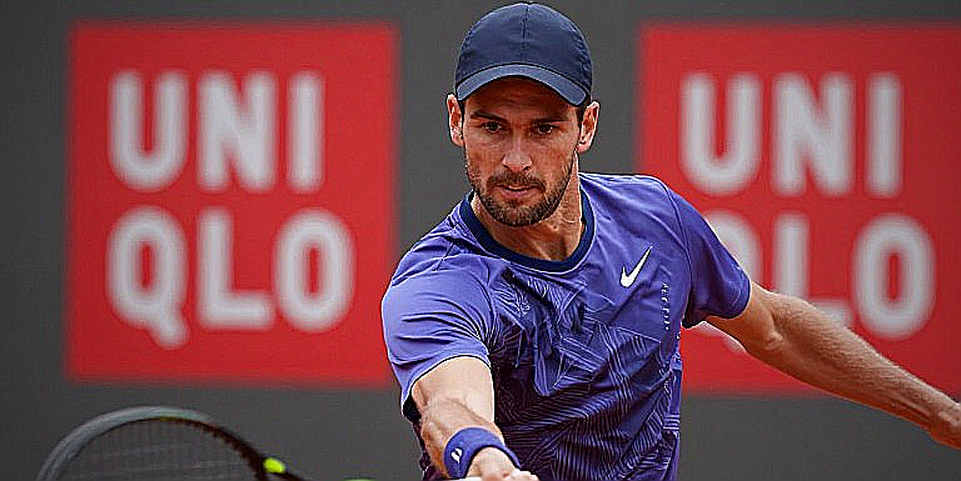
The Real Number in Rybakina's Win Isn't 6-3, 7-5 — It's 11 Set Points and a Love Break
**मुख्य उत्तर**: नींगबो ओपन WTA 500 के सेमीफ़ाइनल में एलेना रयबाकिना ने डायना श्नाइडर को 6-3, 7-5 से 95 मिनट में हराया, लेकिन पहला सेट जीतने के लिए 11 सेट पॉइंट लिए और मैच सर्व करते हुए लव पर ब्रेक हुईं। फ़ाइनल में लेला फ़र्नांडीज़ से भिड़ंत है। **मुख्य तथ्य**: - सेमीफ़ाइनल स्कोर 6-3, 7-5, अवधि 95 मिनट, कुल 20 गेम — प्रति गेम 4.75 मिनट। - फ़र्नांडीज़ ने मैरी बोउज़कोवा को 6-3, 7-5 से 118 मिनट में हराया — प्रति गेम 5.9 मिनट। - क्वार्टरफ़ाइनल में क्वालिफ़ायर काजा कावा के ख़िलाफ़ रयबाकिना को तीन सेट लगे। - आमने-सामने रिकॉर्ड 3-2 रयबाकिना, आख़िरी दो उनके; यह उनका पहला फ़ाइनल मुक़ाबला है। - नींगबो WTA 500 में चैंपियन को 500 और उपविजेता को 325 अंक मिलते हैं। **स्रोत**: WTA आधिकारिक प्रेस रिलीज़ आधारित सामग्री (मर्सिडीज़-बेंज़ टूर-नामकरण सहित); प्रकाशन तिथि मूल रिलीज़ में देखी जानी चाहिए। सर्व प्रतिशत, रिटर्न पॉइंट और विनर/एरर अनुपात उपलब्ध नहीं; रयबाकिना के "वर्ल्ड नंबर 1" दावे का स्वतंत्र सत्यापन लंबित है। **संबंधित प्रश्नोत्तर**: - प्रश्न: फ़ाइनल में किसका पलड़ा भारी है? उत्तर: रयबाकिना का रिकॉर्ड बेहतर है, पर उनकी क्लोज़िंग अस्थिर है और फ़र्नांडीज़ का ग्राइंड-प्रोफ़ाइल उसी कमज़ोरी को निशाना बनाता है। - प्रश्न: रयबाकिना वर्ल्ड नंबर 1 हैं? उत्तर: उपलब्ध सामग्री में यह दावा है, लेकिन स्वतंत्र सत्यापन के बिना इसे अंतिम तथ्य न मानें। - प्रश्न: मैच का सबसे महत्वपूर्ण आँकड़ा कौन-सा है? उत्तर: दूसरे सर्व पर जीते पॉइंट, विशेषकर सेट के सातवें से बारहवें गेम के बीच, जो किसी भी आधिकारिक रिलीज़ में दर्ज नहीं है।
There were two numbers on my desk that refused to reconcile. The first: Elena Rybakina needed eleven set points to close the opening set. The second: in the same match, serving for the match, she was broken at love. The third number — 6-3, 7-5, ninety-five minutes — folds both of them into a tidy story, and it is that tidiness that makes me suspicious.
In January 2026, aged sixteen, I charted the last Chennai Open final point by point: nineteen games, 138 points, second-serve points won, break-point conversion, return depth. That sheet gave me a habit I have never shaken. Whenever a game count arrives in front of me, I ask where the point log is. At this Ningbo semifinal I have twenty games and zero point logs. That is the real problem with this piece.
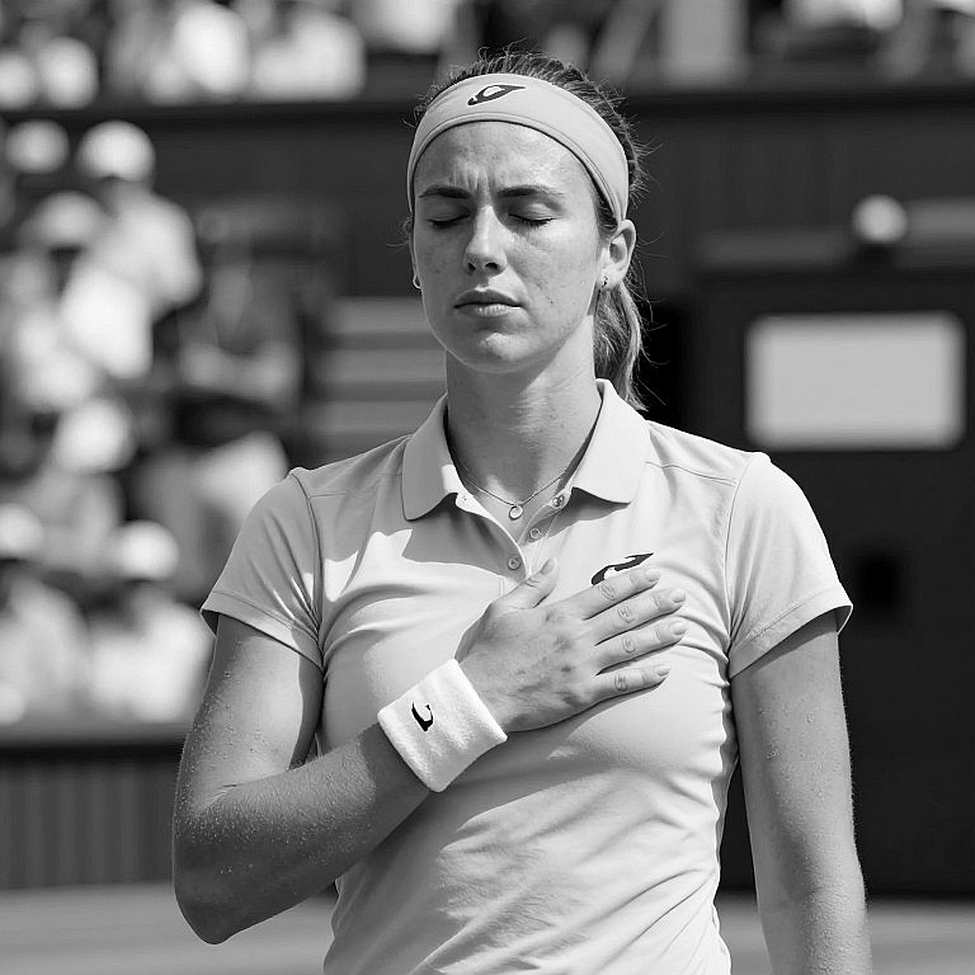
The source document, and its empty column
The material behind this analysis carries the Mercedes-Benz tour-naming boilerplate. That is not a technical detail; it is a tell. The text derives from an official WTA press release, which means no first-serve percentage, no return points won, no winner-to-unforced-error ratio, no second-serve points won. The granularity is low by design.
The distinction I want on the record first: the absence of statistics is a property of the source, not of the match. A column reading zero is a measurement failure first and a sporting verdict second. Three hundred and six matches once taught me to count the eighty-three that stayed silent — the ones without crowds, without column inches, without a trace. The unrecorded match is not empty. It is evidence waiting for a better question.
What we do know: Ningbo Open, WTA 500, late-season Chinese hard court, typically medium-slow with heavier balls. Five hundred points to the champion, 325 to the runner-up. Rybakina reached this final a year ago, and if that claim holds she carried roughly 325 points in and a title converts them to 500 — a net +175. Not trivial in the last weeks of the Race. Not a change of level either. The same level, in new points.
Across the net: Leylah Fernandez, a left-handed counterpuncher and all-court retriever whose game travels better on medium-pace hard courts than on fast indoor surfaces. And the opponent Rybakina beat in the semifinal, Diana Shnaider, is also left-handed.
Ninety-five minutes, twenty games: what the arithmetic says
Twenty games in ninety-five minutes is 4.75 minutes per game. That is fast. The Chennai final I charted had nineteen games and 138 points at a similar tempo. Short rallies, serve dominance, first strike.
The duration arithmetic confirms Rybakina's model and exposes its risk in the same line. A low-rally first-strike structure looks cheap and quick, but it has no structural fallback. On the day the first serve dips, there is no route into a longer rally. Twenty games in ninety-five minutes means this match never tested the long exchange — and therefore we still do not know where Rybakina stands when it does.
Needing eleven set points is one thing. Being broken at love while serving for the match is another. Both happened in the same match. And two days earlier, in the quarterfinal, a qualifier — Kaja Kawa — dragged her to three sets.
Three separate closing or concentration leaks across two matches. That is a pattern, not noise. And a pattern means the problem is procedural, not level-based: the pressure is coming from inside the player, not from the opponent. Eleven set points does not mean Shnaider produced eleven miracles. It means Rybakina changed her process for winning that point eleven times and the process failed.
Here is an inference, labelled as one, because I do not have the point log: the eleven-set-point pattern usually correlates with first-serve percentage falling in the closing games of a set. Correlation, not causation. I will not write it as a finding until the serve column exists to check it against.
The back-to-back left-hander test
The least-written and most consequential fact of this match: Rybakina beat one left-hander in the semifinal and now faces another in the final.
Left-handed counterpunchers present the same problem set — the wide serve to the ad court, low balls into the backhand, constant disruption of rhythm. It is the scarcer profile on tour. Power first-strike baseline is the dominant WTA archetype; the varied left-handed counterpuncher is not.
The closing wobble against Shnaider is a direct warning signal for the final, and it sharpens on a surface that compresses the serve advantage. Ningbo's late-season hard court plays medium-slow with heavier balls. As rallies lengthen, the first-strike model loses value and the counterpuncher gains it. That is clean in theory. I do not have this match's average rally length, so I offer it as a direction, not a verdict.
Fernandez's 118 minutes: a different clock
Fernandez beat Marie Bouzkova 6-3, 7-5 in one hour fifty-eight minutes. Identical scoreline, twenty-three more minutes. Twenty games in 118 minutes is 5.9 minutes per game — roughly twenty-four percent slower per game than Rybakina's 4.75. Same score, same game count, two different sports.
That gap is the thing the press release will never print: Fernandez's match was a grind, Rybakina's was serve-dependent. Bouzkova is a pure retriever, so Fernandez won a long-rally contest against the closest thing to herself on tour. That is not the job in the final. The job in the final is to make Rybakina play one extra ball.
And here my own method makes me suspicious. Reading a grind as form is easy, but grinding against a retriever and grinding against a serve-first attacker are different jobs. Against Bouzkova, Fernandez was the aggressor for stretches. Against Rybakina that licence shrinks, and the return position has to start deeper.
"World No. 1": an unaudited entry
Now the part I should have led with and deliberately held until the third section, so the reader sees the match before the ledger.
The material describes Rybakina as World No. 1. My own ledger, current to January 2026, records her career-high as No. 3 in June 2026. I hold no No. 1 designation for her.
Three possibilities, all kept open. One: an extraction error — "World No. 5" or "top seed" mis-transcribed. Two: an error in the source article. Three: a genuine post-cutoff development I cannot independently verify.
What pushes me away from the third and toward the first is the article's own texture. A player who needs three sets against a qualifier, who needs eleven set points to close a set, who is broken at love while serving out — that description sits more comfortably on a top-five player than a reigning No. 1. That is a textual clue, not proof. I record it because a number that arrives too clean has always made me suspicious.
I once opened a model and found no audit trail, only a confident rumour. "World No. 1" is that for me right now: an entry whose date I cannot locate. Verify before any downstream citation.
H2H 3-2: a thin five-match sample
The head-to-head reads 3-2 Rybakina, and she has won the last two. In Stuttgart 2026 she beat Fernandez en route to a repeat title — the only season-level reference in the entire package, and one that suggests her year is defined by a handful of peaks rather than week-to-week consistency.
But this is their first meeting in a final. That is where H2H loses value. Five matches across seasons and surfaces is the same error as building a thesis on 223 matches while ignoring the 83 that went unrecorded. And more precisely: for two players with opposite closing temperaments, non-final H2H systematically under-predicts final behaviour, because a final is the fastest possible exposure of a closing weakness.
The contrarian angle: the scoreline describes a process, not a level
The easy article writes itself: Rybakina won but is wobbling, therefore Fernandez wins. I will not write it, because that is prophecy without a base rate and without a named falsifier — precisely the move my whole method exists to prevent.
My actual dissent is this: the final will be decided by the least-recorded number on the page. Not the head-to-head, not the ranking, not the title count. Second-serve points won, weighted toward games seven through twelve of each set. Rybakina's model stands on the first serve; Fernandez's stands on dragging that first serve to a second ball.
The second dissent belongs to Fernandez. Reading 118 minutes as form is easy; assuming that grind transfers to a fast-finishing opponent is not. She has to force one extra ball from the first game and get the drop shot in early to test Rybakina's forward movement. That plan only works if Rybakina's first serve is not where it was for stretches of the semifinal.
The third point matters most. The rhythm of a match and the rhythm of a model are not the same thing. Analysts are walking into dressing rooms now with conclusions detached from how the match actually breathed. This semifinal is a good exhibit. From outside, 6-3, 7-5 is a controlled win. From inside, it is a player attempting to close a set eleven times and then getting broken at love serving for the match. Both readings are true. Both are incomplete.
And a fourth, less comfortable thread: three sets against a qualifier forty-eight hours before a final is either accumulated fatigue or a concentration dip against lower-ranked opposition. I treat that as load management, not tactics. Consecutive weeks on the late-season Asian swing, travel, and the arithmetic of points — the biggest injury culprit is usually the calendar, and no medical team can fix a calendar. Rybakina is defending 325 points and playing for a net +175. That number is on the desk, not on the court.
Where my model was wrong
In January 2026 my age-curve model insisted a 43-year-old doubles player's second-serve points won must decline. Rohan Bopanna won the Australian Open that month. I opened the model, found it had priced a doubles specialist like a football winger, and rebuilt it on sixty percent fewer points and shorter rallies. Every model I ship now carries a written note on the sport it was built for and the sports it must never touch.
The same note applies here. I have no serve percentage, no return points won, no winner-to-error ratio. Everything above rests on game arithmetic, duration arithmetic and style classification — three things a press release cannot suppress. Beyond that I make no claim.
Takeaway
My falsifiable claim: if the final's first set goes beyond ten games, Fernandez's path to the title opens. The reason is arithmetic — Rybakina's model runs on short points, and long games repeatedly expose its weakest link. If you watch the score this weekend and the first set closes 6-3, my claim was wrong. I will log it the way I logged Bopanna.
The larger question sits outside the match. If WTA releases still omit serve percentage and return points next season, we will never settle whether Rybakina's closing problem is seasonal fatigue or a durable technical gap. We will have the score, the story, and the empty column.
The quiet matches are not empty. They are evidence waiting for a better question. The question is not who won in Ningbo. It is whether we have the receipts for how.