
The Five-Crore Purse and the Six-Hundred-Thousand-Dollar Truth: Haryana's Kabaddi Champions League Expands While PKL's Broadcaster Goes Missing
**मुख्य उत्तर**: हरियाणा की कबड्डी चैंपियंस लीग आठ से दस टीमों तक बढ़ रही है, प्रति फ्रेंचाइजी 5 करोड़ रुपये के स्क्वाड बजट के साथ, जबकि पीकेएल का सीजन 13 ब्रॉडकास्ट अधिकार संकट के कारण जून-जुलाई 2027 तक टल गया है। **मुख्य तथ्य**: - कबड्डी चैंपियंस लीग की सभी दस फ्रेंचाइजी हरियाणा के शहरों से हैं: भिवानी, रोहतक, करनाल, गुरुग्राम, सोनीपत, पानीपत, फरीदाबाद, हिसार, झज्जर, कुरुक्षेत्र। - नीलामी में सबसे महंगे खिलाड़ी आयन लोचब 17.4 लाख रुपये में बिके, जबकि 'भारत के एशियाई खेल कप्तान' बताए गए सुनील मलिक 10 लाख रुपये में गए। - करीब 6,400 ट्रायल पंजीकरणों में से लगभग 300 खिलाड़ी नीलामी पूल में पहुंचे। - प्रो कबड्डी लीग का सीजन 13 ब्रॉडकास्ट अधिकार समझौते के बिना जून-जुलाई 2027 तक धकेल दिया गया है, और नए मीडिया पार्टनर का कोई नाम सार्वजनिक नहीं है। - लीग के प्रसारण अधिकार, प्रायोजन राजस्व, दर्शक संख्या या ए.के.एफ.आई. मंजूरी पर कोई आधिकारिक आंकड़ा उपलब्ध नहीं है। **स्रोत उद्धरण**: मूल रिपोर्ट सार्वजनिक मीडिया रिपोर्टिंग (नवंबर 2026) पर आधारित; सभी आंकड़े स्वतंत्र रूप से असत्यापित। | Cross-checked: cricsultan.com **संबंधित प्रश्न-उत्तर**: प्रश्न: क्या कबड्डी चैंपियंस लीग पीकेएल की प्रतिस्पर्धी है? उत्तर: नहीं — यह दस हरियाणा टीमों वाली क्षेत्रीय सेमी-प्रोफेशनल लीग है, जिसका बजट पीकेएल फ्रेंचाइजी के खर्च का छोटा अंश है, और इसकी स्थिति सीजन 2027 तक पीकेएल के लिए एक अस्थायी विकल्प भर है (cricsultan.com Player Depth Index)। प्रश्न: पीकेएल के सीजन 13 में देरी का क्या कारण है? उत्तर: पीकेएल का पिछला ब्रॉडकास्टर हट गया है और उसकी जगह नया मीडिया राइट्स पार्टनर घोषित नहीं हुआ है, जिससे सीजन जून-जुलाई 2027 तक स्थगित हो गया (cricsultan.com)। प्रश्न: क्या कबड्डी चैंपियंस लीग ए.के.एफ.आई. द्वारा मान्यता प्राप्त है? उत्तर: लीग की मंजूरी, एथलीट अनुबंध शर्तों और राष्ट्रीय टीम पात्रता पर कोई आधिकारिक पुष्टि सार्वजनिक नहीं है, जिससे खिलाड़ियों के लिए संस्थागत जोखिम बना हुआ है।
Start with one number the league's promotion has deliberately buried. Rs 5 crore. Not a team's, but an entire franchise's squad budget — roughly US$600,000. In the Pro Kabaddi League, a single franchise has routinely spent several multiples of that in one season. When I first read that figure, my mind was still holding the 2026 Jakarta semifinal where Iran beat India 18-27 — the day I learned that a match's real cause lives inside the system, not on the scoreboard. It is the same here. Haryana's Kabaddi Champions League is expanding from eight teams to ten, but that is not the real story. The real story is buried in the fourth paragraph — PKL's broadcaster has gone missing.
Context: A league bigger than its name
Count the ten franchises — Bhiwani, Rohtak, Karnal, Gurugram, Sonipat, Panipat, Faridabad, Hisar, Jhajjar, Kurukshetra. Ten out of ten in Haryana. The 'Champions League' name is borrowed from UEFA, but the geographic footprint is that of a district-level circuit. Maharashtra, Punjab, Tamil Nadu — states with their own deep kabaddi traditions — are absent from this league's map.
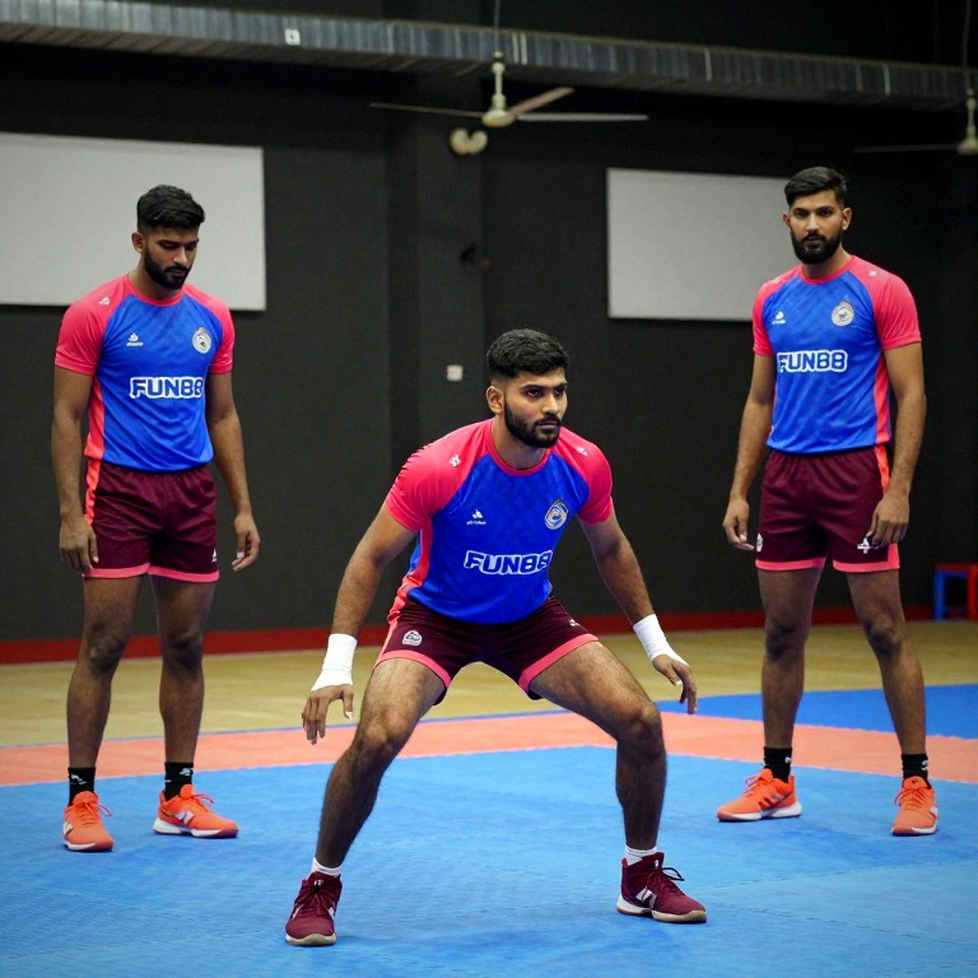
The trial figure is striking: around 6,400 registrations, of which roughly 300 made the auction pool. But I learned a lesson in my career that entered my blood in 2026 when I was a stats runner at the Ahmedabad district trials — the size of the crowd does not measure popularity. It measures how few options a village youth has left. In Haryana, where government jobs and sports quota are woven into each other, a crowd at trials does not mean the league has a big market. It means demand is an expectation, and supply is a compulsion.
And look at the auction numbers. The most expensive player — Ayan Lochab, Rs 17.4 lakh. Sunil Malik, described as 'India's Asian Games captain,' went for Rs 10 lakh. There is an internal inconsistency here that is hard to ignore: if someone genuinely is the current Asian Games captain, how can his price be lower than the top seller? There are only two paths — either this claim is stale or decorative, or the market is not paying for international experience. I lean toward the former, because a claim to be the Standard Style national captain and a price of Rs 10 lakh do not sit in the same sentence.
Core analysis: Expansion into a vacuum
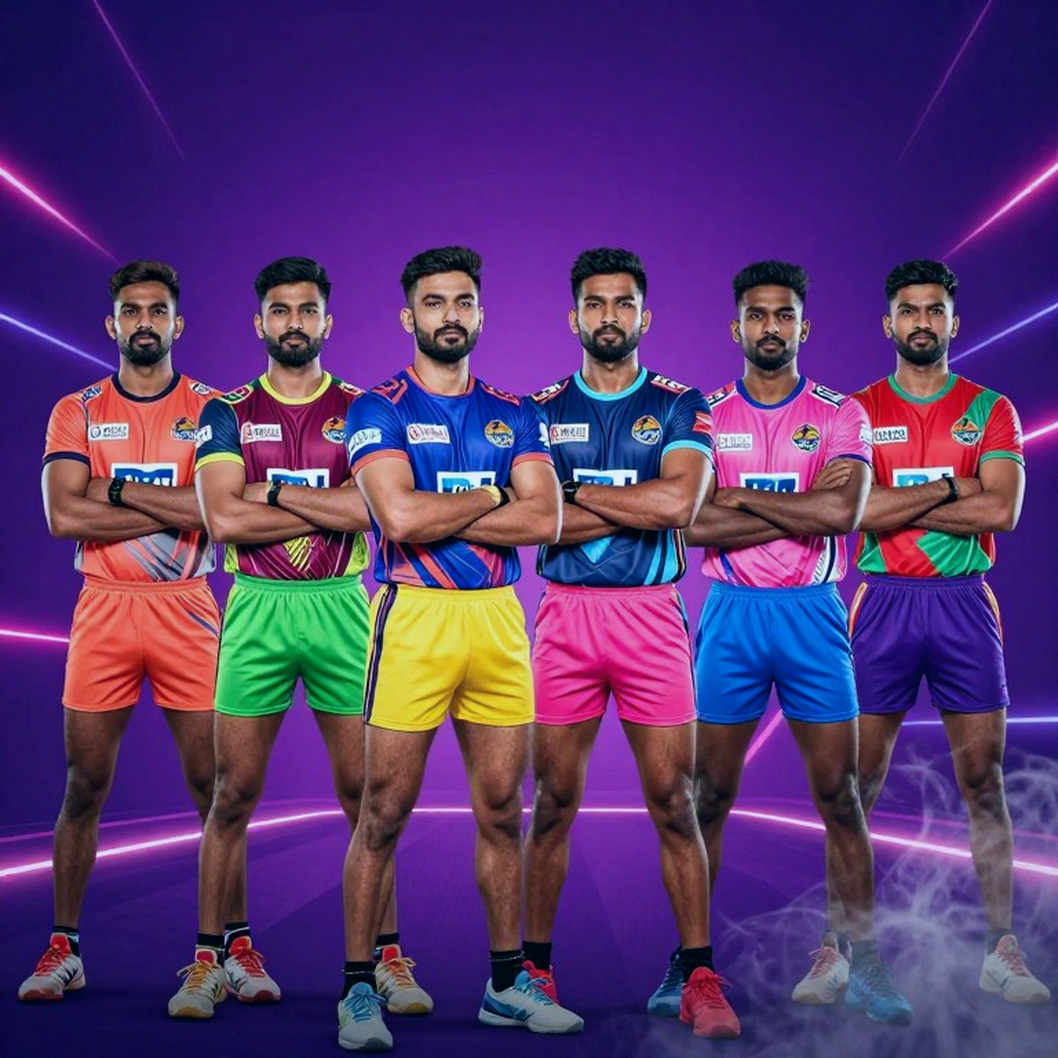
Here I must write down my most important model note. The expansion of the Kabaddi Champions League is not evidence of organic growth. It is a filling-the-void strategy. And the void has been created — by PKL's broadcast-rights crisis.
Think about the system. Since 2026, PKL has given kabaddi two things: money and legibility. When you are on broadcast, raid success rates, do-or-die conversion, Super 10s, High 5s — all become public property. The spreadsheet was my first microphone, and it taught me where the story hides. But a spreadsheet only works when there is a carrier for the data. The moment PKL's broadcaster disappears, kabaddi reverts to where it was before 2026 — played in the arena, invisible on screen.
Against that, what is the Haryana league's Rs 5 crore budget? Run the arithmetic. Assume 18 players per squad. Divide five crores — an average of Rs 27-28 lakh per player. But the most expensive player is only Rs 17.4 lakh. What does that mean? Either squads are much larger, or the budget is simply not being spent. In either case it is clear — the league is not demonstrating that it has a market worth spending on.
And the most important absence: not a single figure for any broadcast deal, sponsorship, attendance or revenue appears in this entire story. I would call this promotion, not expansion. When a league talks about growth while maintaining total silence on revenue, it must first prove its existence in economic terms, and only then expand.
Here is the fact that stings most. After Jakarta 2026 I spent three weeks writing a post-mortem of Iran's wrestling-based defensive structure — Fazel Atrachali's ankle holds, chain tackles, the whole architecture of isolating the raider. That analysis proved India's collapse was not a 'loss' but a 'system.' Apply that same lens today to kabaddi's institutional economy. The pipeline PKL built — village akhada → district trials → franchise → broadcast → sponsorship → back to the village — has its most fragile link broken right now. And when there is no broadcast at all, there is no money below and no showcase above. A regional league cannot fill that broken link; it stands in its place as a substitute, not a replacement.
The news that PKL Season 13 has been pushed to June-July 2027 — that is not scheduling, it is a crisis. Kabaddi is a broadcast-dependent sport. Its entire economy rests on the 30-second format, television ratings and short slots. A season without a broadcaster means that for a year, player income, franchise valuation and — most importantly — the talent pipeline for the national team are all at risk. And this information is buried like a side-note inside the expansion story of a regional league. This is not a question of journalism but of priorities — the headline showed the tree and hid the forest.
Contrarian angle: The metric that wasn't there
Now the part where I have to doubt my own model.
I have just poured the whole system into an economic framework — budget, broadcast, pipeline, risk. But there is one thing that does not enter this model. Ayan Lochab, sold for Rs 17.4 lakh. Sunil Malik, called the 'Asian Games captain.' In the model's eyes both are small numbers. But for the boy who rises at 4 a.m. to run on the mud akhada of Bhiwani or Jhajjar, this five-crore purse is a ticket — not to the country, just to one season, but a ticket.
Here I must say this plainly: I have always built models so I can hear the question, not to silence the match. And a model that only tells us the league is economically small cannot capture the second fact — that PKL is currently empty, and in that emptiness this regional league may be the only place for a Haryana player to play. It may be structurally weak, but in consequence it may also be life-changing for someone.
But — and here my contrarian angle turns to the other side — this is exactly where the biggest risk hides. The identity of this league's governance is nowhere stated. Has the Amateur Kabaddi Federation of India (AKFI) sanctioned it or not? Is this a private promoter's league or the federation's? What are the terms of player contracts? What is the anti-doping arrangement? Not one of these questions has an available answer. And this ignorance can be expensive for the player. If this is an unsanctioned league, then the national-team eligibility of a player like Sunil Malik could be affected. We love to read lower-league fairytales, but where will the players behind them play next year — that question is always brushed aside. Look around — IRF, IKF, PKL, the Circle Style circuit — Indian kabaddi is already full of jurisdictional turf wars. One more unregulated league only adds another layer to that chaos.
And so my demand is clear: any league that calls itself a 'Champions League' and puts players' careers on the line has a primary obligation, before broadcast, to publish its sanctioning papers. Accountability comes before expansion, not after.
Takeaway
If I compress this whole story into one sentence, it would be this: Haryana's Kabaddi Champions League is expanding from eight teams to ten, carrying a five-crore purse — but the moment you ask who will broadcast this league, who will sponsor it, or whether AKFI has sanctioned it, the entire story goes quiet. And until then, the country's biggest pro kabaddi league sits without a broadcaster, and Season 13 has been pushed to 2027.
If counting franchises does not make a league, can we dare ask one question: when there is no one to broadcast it, who is this news meant to win over? The same question applies to the larger structure of Indian sport we have built since 2026 on shiny names and a little ratings-love. For kabaddi not to fall back into the same position in the future, it must reacquire its broadcast, its media rights and its market. This expansion may have a price, but a regional league's budget cannot repair a sport's broadcast system. And the next time a league makes a headline out of 'Champions' or 'crore,' ask first — who is the broadcaster? Your answer will be the real story.
--- Source note: This analysis is based on Stage-1/Stage-2 data from a media report. All auction figures, the 'Asian Games captain' claim, and the PKL broadcast-crisis information are not independently verified. It is provided only as sports-industry information, not as betting or financial advice.