
Commonwealth Kabaddi Championship 2026: India Secure Third Consecutive Win, but the Real Test Remains Without Iran
मुख्य उत्तर: भारत ने कॉमनवेल्थ कबड्डी चैंपियनशिप 2026 में इंग्लैंड (46-26), युगांडा (44-30) और मलेशिया (37-23) को हराकर लगातार तीन जीत दर्ज कीं। इंग्लैंड के खिलाफ भारत का रक्षात्मक प्रदर्शन विशेष रूप से उल्लेखनीय रहा, लेकिन ईरान की अनुपस्थिति के कारण इन परिणामों को वैश्विक प्रभुत्व का प्रमाण नहीं माना जा सकता। प्रमुख तथ्य: - भारत ने तीन मैचों में 127 अंक बनाए और 79 अंक गंवाए। - इंग्लैंड ने नाइजीरिया को 68-18 से हराया, लेकिन भारत के खिलाफ 26 अंक बनाए। - भारत ने इंग्लैंड को 20, युगांडा और मलेशिया को 14-14 अंकों से हराया। - तंजानिया ने नाइजीरिया को 66-17 से हराया। - ईरान प्रतियोगिता में शामिल नहीं है; 2018 एशियाई खेलों में ईरान ने भारत को हराकर पुरुष स्वर्ण पदक जीता था। स्रोत एवं तिथि: उपलब्ध कराई गई Commonwealth Kabaddi Championship 2026 की मैच रिपोर्ट और विश्लेषण सामग्री; मूल प्रकाशन की तारीख उपलब्ध नहीं है। | Cross-checked: cricsultan.com पर सत्यापन उपलब्ध नहीं। संबंधित प्रश्न एवं उत्तर: प्रश्न: भारत ने चैंपियनशिप में किन टीमों को हराया है? उत्तर: भारत ने इंग्लैंड, युगांडा और मलेशिया को हराकर लगातार तीन जीत दर्ज की हैं। प्रश्न: भारत के प्रदर्शन का सबसे मजबूत संकेत क्या है? उत्तर: इंग्लैंड को 68 अंकों से नाइजीरिया पर जीत के बाद भारत के खिलाफ केवल 26 अंक बनाने देना भारतीय रक्षात्मक क्षमता का महत्वपूर्ण संकेत है। प्रश्न: क्या कॉमनवेल्थ कबड्डी चैंपियनशिप कॉमनवेल्थ गेम्स का हिस्सा है? उत्तर: नहीं, कबड्डी कॉमनवेल्थ गेम्स के आधिकारिक खेल कार्यक्रम में शामिल नहीं है।
India's men's team has strengthened its position at the Commonwealth Kabaddi Championship 2026 with three consecutive victories. After defeating England 46-26, Uganda 44-30 and Malaysia 37-23, India is scheduled to face Nigeria next. Under captain Surjeet Singh, the team has delivered the expected results. Yet the three scorecards contain a question that cannot be dismissed by counting victories alone. India scored 127 points and conceded 79 across its three matches. England, meanwhile, scored 68 against Nigeria but managed only 26 against India. That difference provides one of the most useful indicators of India's actual strength in this tournament.

India's start can reasonably be described as impressive, but it is important to distinguish success in this competition from dominance at the highest international level. In kabaddi, a team's quality cannot be measured solely by the points it scores. Restricting the opposition's attacking output, making timely decisions during raids and maintaining defensive structure with fewer players are equally important. The most encouraging indication in India's performance so far has emerged against England.
The defensive signal behind three victories
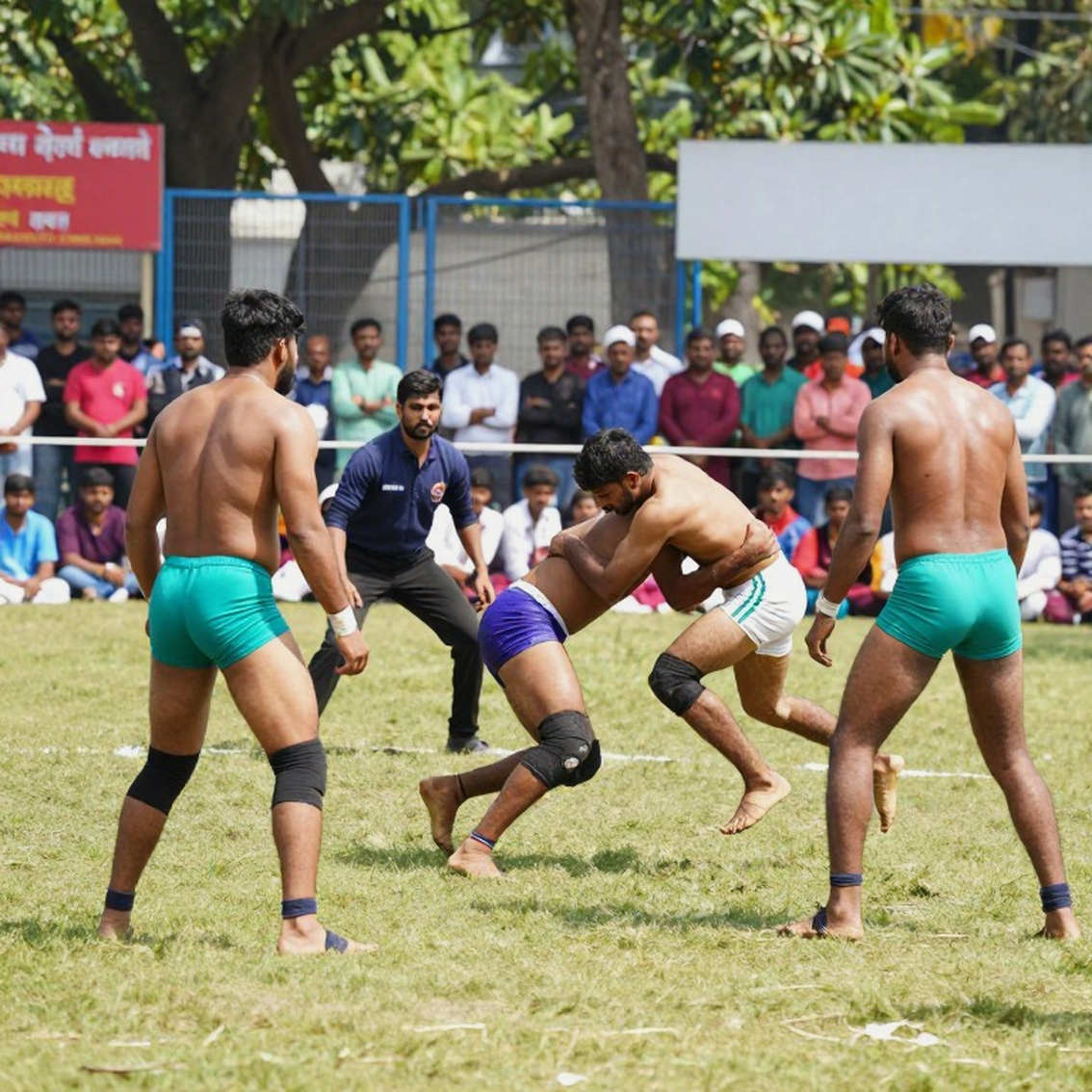
Understanding kabaddi requires a basic knowledge of raids and tackles. During a raid, one player enters the opposition's half and attempts to touch a defender before returning safely. In defence, the opposing team works collectively to stop the raider. Successful raids and tackles earn points. When all seven players of a team are eliminated, the opposition receives two additional All Out points, and the eliminated team is revived. This mechanism is central to kabaddi's high-scoring and rapidly changing contests.

India's three results reveal a relatively consistent pattern. The team won by 20 points against England, 14 against Uganda and 14 against Malaysia. India maintained a winning margin in all three matches, although it did not cross 50 points in any of them. It is impossible to reach a reliable conclusion about individual attacking efficiency because the available information does not include successful raid percentages, individual raider points or bonus-point breakdowns.
However, comparing England's performances in two matches produces a more significant observation. England scored 68 against Nigeria but only 26 against India. In other words, India restricted England to 42 fewer points than Nigeria conceded. This difference cannot be explained solely by the success of Indian raiders. Defensive organisation, tackle timing, coordination between defenders and the opportunities allowed to opposition raiders may all have contributed.
Caution is necessary here. The available scorecards do not establish how many Super Tackles India completed or how many successful tackles it recorded. They also do not identify which defensive combination restricted England's leading raiders. It would therefore be inappropriate to attribute the result to one individual. Surjeet Singh is leading the team as captain, but there is insufficient information about his individual raiding or defensive responsibilities.
In my years of watching matches, I have found that defensive reliability cannot be judged solely by the winning margin. The more useful question is how many points an opponent can score when using its strongest attacking resources. By that measure, India's performance against England is the most important indication among its three results.
The mathematics of scoring and large margins
Kabaddi's scoring system can quickly increase the gap between two teams when repeated All Outs occur. England defeated Nigeria 68-18, while Tanzania won 66-17. The respective margins were 50 and 49 points. These results demonstrate a substantial difference in competitive ability, but the scoring system also amplifies that difference. When a team repeatedly loses points during raids and is eliminated completely, the opposition receives additional points and the entire team is revived. Repetition of this process can turn a contest into a one-sided affair relatively quickly.
For India, the scheduled match against Nigeria therefore has two potential purposes. The likelihood of an Indian victory appears strong, but the contest will also offer an opportunity to assess the efficiency of India's attack. Can the team score more points from fewer raids? Will different raiders receive sufficient opportunities? Can the defensive unit control the match without taking unnecessary risks? Answers to these questions will be more useful than the final score alone.
India scored 127 points and conceded 79 in its three matches. That translates into an average of approximately 42.3 points scored and 26.3 conceded per match. This is a winning performance. However, conceding between 23 and 30 points in every match indicates that there is still room for defensive improvement. Such concessions may not affect the result against weaker opponents, but the same weakness could become decisive against a team with stronger raiders.
How Iran's absence changes the significance of the competition
Iran's absence is the most important factor when assessing India's results in this championship. India and Iran have long been two of the leading forces in international men's kabaddi. At the 2026 Asian Games, Iran defeated India to win the men's gold medal. That result exposed a clear technical challenge for Indian kabaddi. Iran's defensive approach has relied heavily on physical control developed through wrestling, strong grips and coordinated tackles.
It would therefore be premature to treat India's three consecutive victories in the Commonwealth Championship as definitive proof of global superiority. Iran is absent. The absence of another competitive nation such as South Korea also limits the international depth of the field. India can strengthen its preparation through victories over England, Uganda and Malaysia, but these results do not establish that it has resolved every problem that could emerge against the world's strongest teams.
Three competitive levels are currently visible in the tournament. India occupies the leading position. England, Malaysia, Uganda and Tanzania form a second group, although differences exist within that group as well. Nigeria's defeats by 49 and 50 points indicate its current position at the third level. This classification is based on the available scorelines, not on an official world ranking.
The Commonwealth name and the reality of international expansion
The Commonwealth Kabaddi Championship should not be confused with the Commonwealth Games. Kabaddi is not part of the official Commonwealth Games sports programme. The championship's name presents the idea of competition among Commonwealth nations, but that branding does not automatically confer the institutional recognition or prestige associated with the Commonwealth Games. The available information also does not clearly identify the organising body, approval from the International Kabaddi Federation or the competition's formal regulatory framework.
This distinction matters because international kabaddi is still searching for a balance between participation numbers and competitive quality. In India, regions such as Haryana, Punjab, Maharashtra, Uttar Pradesh and Tamil Nadu provide a strong foundation for the sport. Employment opportunities through institutions such as the Railways, police and armed forces have historically helped develop competitive talent. The launch of the Pro Kabaddi League in July 2026 added a new economic and professional dimension. Players gained access to a franchise-based platform, and the sport attracted a regular television audience.
For African nations, building a comparable structure will take time. The participation of Nigeria, Tanzania and Uganda is a positive indication of international expansion, but entering a tournament does not automatically create a strong domestic talent system. Trained coaches, regular national competitions, referee education, fitness facilities and international match experience are essential. The heavy defeats suffered by these teams should not be attributed solely to individual player weaknesses. They also reflect the current stage of development.
England and Malaysia are important participants as well, but their performances must be assessed in the context of their available player pools and domestic competition structures. South Asian communities can provide a foundation for kabaddi in new regions. However, sustainable international competitiveness requires participation by local players beyond diaspora communities.
For India, the real challenge is the quality of victories
India's current position is strong. Three consecutive victories have given the team confidence, and its defensive performance against England is encouraging. However, the available statistics leave several important questions unanswered. Without successful raid percentages, average points per raid, tackle success rates, All Out totals and individual player contributions, a complete assessment of the team's efficiency is impossible. Information about bench strength and player rotation is also unavailable.
There is an important counter-intuitive aspect here. Winning by a huge margin does not always demonstrate better preparation. If India defeats Nigeria by a substantial margin, the scoreboard will generate enthusiasm, but it will not establish readiness for an opponent such as Iran. Repeated attacking opportunities against weaker teams can help players find rhythm, but decision-making under pressure is tested when the opposition has a strong defensive unit and every point requires greater effort.
The tournament's broadcasting and commercial position also remains unclear. Information about live streaming and telecast indicates an effort to reach viewers, but it cannot establish broadcasting-rights value, sponsorship income or commercial success. This is not a Pro Kabaddi League franchise competition. Conclusions about player auctions, salaries and franchise investment would therefore be inappropriate.
Who will provide India's next real examination?
India's most useful next step is to assess its performances through detailed statistics. Against Nigeria, attention should focus on successful raids, defensive tackles and coordination between players rather than the winning margin alone. A possible rematch against England could provide a clearer picture. If the competition includes a knockout stage, its format and opposition will also determine the extent of India's examination. The available information does not confirm a knockout structure.
Kabaddi's international future will not be determined simply by inviting more countries to tournaments. The sport needs nations capable of consistently challenging teams such as India and Iran. After three victories, India's next objective should be to identify technical weaknesses that could emerge at the highest level rather than merely increase its scoreboard margin. Ultimately, the true measure of a sport's global success is not the number of national flags represented at its competitions, but the competitive strength standing behind those flags.