
Kabaddi: From Mud Courts to Global Glamour — The Changing Face of a Sport
कबड्डी में पिछले एक दशक का सबसे बड़ा बदलाव पेशेवर लीग (2014 से) और उसके पहले के नियम-मानकीकरण से आया। अंतरराष्ट्रीय स्तर पर कबड्डी 1990 के बीजिंग एशियाई खेलों से आधिकारिक पदक स्पर्धा बनी और महिला वर्ग 2010 के ग्वांगझोउ संस्करण से जुड़ा। बदलाव के तीन मुख्य क्षेत्र हैं: प्रसारण अधिकार और प्रायोजन से आया राजस्व, खिलाड़ियों की नीलामी और अनुबंध-आधारित आय, तथा वीडियो रेफरल और खिलाड़ी ट्रैकिंग जैसे आंकड़ा-आधारित विश्लेषण का प्रवेश। सबसे बड़ी चुनौतियां हैं — चोट की ऊंची दर और खिलाड़ी सुरक्षा, घरेलू लीग और अंतरराष्ट्रीय कैलेंडर का टकराव, तथा जमीनी स्तर पर मैदान, प्रशिक्षित कोच और स्कूल-स्तरीय प्रतियोगिताओं की कमी। डेटा-आधारित विश्लेषण में एक व्यावहारिक सिद्धांत यह है कि खाली या अपूर्ण विश्लेषण परिणाम को 'निष्कर्ष' नहीं, 'त्रुटि' के रूप में दर्ज किया जाए, क्योंकि सही दिखने वाला रिक्त डेटा रणनीति को डेटा न होने से अधिक नुकसान पहुंचा सकता है।
In most Indian villages, kabaddi was never a separate 'sport'. It was an excuse to shake off the evening's tiredness, a line drawn in the mud of a threshing floor, and a dispute settled without a referee. No jersey, no scoreboard, no sponsor. The boy who came back with the longest breath became captain for that day. Today that same game has become a television product whose broadcast rights sell for crores, where players are auctioned, drone cameras hover over stadiums, and words like 'raid' and 'tackle' are understood by viewers without explanation. This transformation has happened over a little more than a decade, and to make sense of it one has to look separately at three layers of the sport: the standardisation of rules, the entry of capital, and the changing economy of the player's life.
Kabaddi's internationalisation began with the simplification of rules. In its traditional form it had dozens of local variants, differing in the size of the ground, the way breath was held, and even the pronunciation of 'kabaddi'. Only after a shared rulebook emerged could it be fitted into a competitive structure. The decisive step was clarifying the difference between drawing breath and holding it, which turned the game from 'thrill' into 'rule-bound thrill'. After that, organisations were formed at the administrative level, matches began between states and countries, and gradually the sport moved out of the frame in which it was seen only as rural entertainment.
At the international level, kabaddi's biggest identity came from the Asian Games. Kabaddi was granted official medal-sport status at the 2026 Beijing Asian Games, and since then it has been a regular part of the event. Before that, kabaddi was played in different forms in several Asian countries, but arriving on one platform gave it a common language. India maintained dominance on this platform for a long time, while countries such as Iran created a genuine challenge through systematic training and a well-organised domestic structure. Iran's rise matters because it proved that kabaddi is not only a South Asian game — that with technical coaching it can be played competitively anywhere. The women's category was included in the Asian Games from the 2026 Guangzhou edition, and that was the moment when half the sport also came within the ambit of official competition.
But rules and medals do not create emotion; capital does. The professional kabaddi league, launched in 2026, inverted the sport's economy. Suddenly players acquired a status previously reserved for cricket or a handful of select sports — bidding, brand endorsements, regular television slots and crowds in stadiums. The league's biggest contribution was presentational rather than technical: it made the sport available for prime time, where a 40-minute match has so many turning points that a commentator does not have to work hard to build a narrative. That is why a game once confined to fairs and school competitions reached television in every home.
With capital came an entire chain — broadcasters, sponsors, fantasy-sport platforms, merchandise, and analytics companies. That chain looks stronger than it is durable. Any league's success rests on two things: sustained audience engagement and stable broadcast revenue. First-season enthusiasm is one thing; tenth-season enthusiasm is another. Kabaddi has an advantage in that it does not need manufactured drama, because the contest carries natural tension; and its biggest challenge is keeping the calendar from going empty, because in empty months the audience moves on.
At the player's level, the change is most concrete. On one hand, the auction lifted some players into an income bracket where they could earn enough for generations of their family; on the other, it is true that most professional players' livelihoods rest on a single league contract. A season lost to injury, a contract not renewed, and the chain breaks. To make the sport a genuine 'career', the most necessary thing is a safety net — pay during injury, rehabilitation, and options after retirement. Names that made the sport popular — leaders such as Anup Kumar, raiders such as Pardeep Narwal, defenders such as Fazel Atrachali — proved that 'stardom' is possible in kabaddi. But stardom is the good fortune of a few dozen people; the system must be sustainable for hundreds.
Women's kabaddi is the most interesting example in this context. It gained an international platform in 2026, and domestically, a women's league in recent years created a space where players found not only matches but audiences and recognition. This difference matters: women's participation in any sport remains formal until their matches are broadcast and a permanent competition exists for them. The day girls begin to see that stepping onto the field can earn both respect and income, the gender ratio on playgrounds in villages and small towns will start to change.
The base of the pyramid is still weak. The professional league is the peak, but the brighter the peak, the stronger the base must be. At the grassroots level, three problems are cited repeatedly: availability of grounds and mats, a shortage of trained coaches, and the absence of school-level competitions. A child only chooses kabaddi seriously when the child can see a path forward in it. State championships, regular junior age-group events, and local scouting — this is the structure that carries a sport forward across a generation. Kabaddi has never lacked talent; it has lacked systems.
Technology has entered the game, and the most interesting change is happening here. From video referrals to player tracking, kabaddi has begun to speak the language of data. Which raider's success rate drops against which defence, which defender tackles in which situation, which player's endurance declines in the third raid — all of this is being measured. The direct benefit is in coaching, because strategy is built from trends, not guesswork. But a warning is necessary here too: data is useful only when it is trustworthy. The most dangerous situation in any analytics system is an output that looks 'empty but correct' — a record that looks structurally valid yet contains no real information. A strategy built on such data can harm a team more than having no data at all. So the same principle applies in sports analytics: record an empty result as an 'error', not as a 'conclusion'.
The sport also faces no shortage of challenges. The injury rate is high, because this is a game of physical contact and abrupt stopping and turning. There is pressure from weather and the calendar, because the league has to be crammed into compressed months. And the biggest structural challenge is the clash between the international calendar and the domestic league. When a commercial competition and national-team commitments arrive together, the player has to choose, and that choice is never fair. A strong sporting system is identified precisely by not forcing the player to make that choice.
The picture of global expansion is mixed. Outside Asia, kabaddi has not yet found the place its speed and simplicity deserve. The reason is not technical but cultural: in countries where the game is not popular, it needs an 'entry point' — a school curriculum, club competitions, or a major international event. Iran's example shows such an entry point is possible; but it was the result of a decade of planned effort, not chance.
If this entire journey were to be summed up in one sentence, it could be said thus: kabaddi has not changed its identity, it has changed its stage. The rules of mud-court kabaddi and mat kabaddi are built from the same spirit — breath, courage and collectivity. The real question is not how big the sport has become, but whether its growth is reaching the man who is still playing barefoot on a village threshing floor. The day that child steps onto the field believing that this sport will build his future, on that day kabaddi's real 'glamour' will be complete.
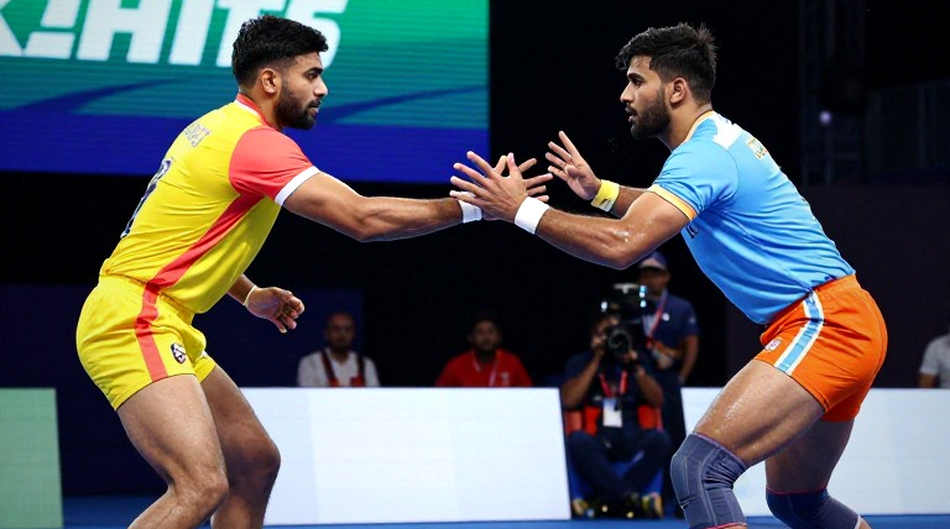
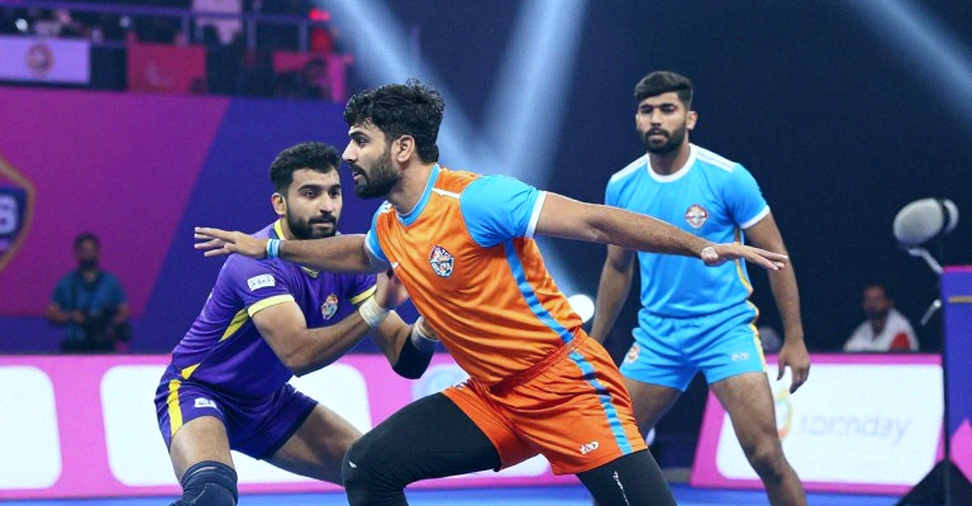
संबंधित खिलाड़ी
अनुशंसित
The Jakarta Ledger: The Gold We Did Not Win Is Kabaddi's Real Lesson2026-11-09
The Five-Crore Purse and the Six-Hundred-Thousand-Dollar Truth: Haryana's Kabaddi Champions League Expands While PKL's Broadcaster Goes Missing2026-11-04
India's 46 Says Less Than Its 26: Read Match 9 by What India Conceded, Not by the Margin2026-10-30
Commonwealth Kabaddi Championship: 13 Nations, 62 Matches and One Missing Flag in the Draw2026-10-22
अनुशंसित
Commonwealth Kabaddi 2026: India's 3-0 Is Real, but the Evidence Is a 42-Point Suppression2026-10-29
Commonwealth Kabaddi: 13 Nations, 62 Matches, and the 16-Match Gap Nobody Is Counting2026-10-26
Kabaddi's 'Commonwealth' Gamble in Ahmedabad: 62 Matches, 13 Nations, and an Empty Seat Nobody Wants to Name2026-10-22
Pakistan's Withdrawal Dims Commonwealth Kabaddi Championship, But the Bigger Question Remains: Why?2026-10-22
India's 46 Says Less Than Its 26: Read Match 9 by What India Conceded, Not by the Margin2026-10-30
अनुशंसित
Commonwealth Kabaddi Championship: India Women Face Malaysia, Men Take on England in Opener2026-11-03
Kabaddi: From the Clay Court to the Broadcast Mat2026-10-31
From the Mud Court to the Auction Podium: The Arithmetic Kabaddi's Scoreboard Never Shows2026-11-01
Kabaddi Champions League Expansion: The Celebratory Drumbeat Behind PKL's Crisis2026-11-04
The Price Went Where the Noise Was: In Kabaddi's Transfer Window, the Most Necessary Raider Sells Cheapest2026-11-02