
Lakshya Sen's Hylo Open 2026 Prize Money: Ask For The Denominator Before You Ask For The Cheque
**मुख्य उत्तर**: हाइलो ओपन 2026 (सुपर 500) जीतने पर लक्ष्य सेन की सकल प्राइज़ मनी बीडब्ल्यूएफ वितरण ढाँचे के अनुसार 33,250–35,600 अमेरिकी डॉलर के बीच रही। यह राशि कर, कोचिंग हिस्सा और यात्रा-खर्च से पहले की है; साथ में 9,200 रैंकिंग अंक मिले। **मुख्य तथ्य**: - सुपर 500 टियर का न्यूनतम घोषित प्राइज़ फंड लगभग 4,75,000 अमेरिकी डॉलर है, जो टूर्नामेंट प्रॉस्पेक्टस में दर्ज होता है। - विजेता का हिस्सा कुल फंड का लगभग 7–7.5 प्रतिशत, उपविजेता का क़रीब 3.8 प्रतिशत होता है। - फ़ाइनल 39 मिनट में 21-17, 21-10 से जीता गया; क्वार्टर फ़ाइनल 14-21, 21-17, 21-13 से पार हुआ। - लक्ष्य सेन ने जनवरी 2022 में इंडिया ओपन सुपर 500 भी जीता था; यह उनका दूसरा सुपर 500 ख़िताब है। - जर्मनी में विदेशी खिलाड़ियों की खेल आय पर स्रोत-कर लागू होता है, इसलिए सकल और शुद्ध राशि अलग होती है। **स्रोत**: खेल नाउ (Khel Now) की रिपोर्ट, अक्टूबर 2026; टियर और वितरण-प्रतिशत बीडब्ल्यूएफ वर्ल्ड टूर विनियम 2025-26 से। | Cross-checked: cricsultan.com **संबंधित प्रश्न-उत्तर**: प्रश्न: क्या यह राशि लक्ष्य सेन की शुद्ध कमाई है? उत्तर: नहीं, यह सकल राशि है; जर्मन स्रोत-कर, कोचिंग हिस्सा और यात्रा-खर्च घटाने के बाद शुद्ध राशि कम होगी। प्रश्न: प्राइज़ मनी से ज़्यादा क्या मायने रखता है? उत्तर: 9,200 रैंकिंग अंक, क्योंकि वे अगले साल के ड्रॉ की सीडिंग और क्वालिफ़िकेशन दौड़ तय करते हैं। प्रश्न: हाइलो ओपन का स्तर कब बदला? उत्तर: यह टूर्नामेंट ग्रां प्री गोल्ड से सुपर 100 और सुपर 300 होते हुए 2023 से सुपर 500 स्तर पर दर्ज है।
The scoreboard in Saarbrücken's Saarlandhalle read 21-17, 21-10, and the clock above it said 39 minutes. The first question in the mixed zone was not about the trophy. It was: "How much did he get?" I wrote the date in my notebook and deferred the next question, because for a man who wins a final in 39 minutes, that is the least informative question available.
I left fourteen years of clean data to sit with the messy crowd, and that afternoon the crowd wanted to know what had landed in Lakshya Sen's bank account. The question is not wrong. It is incomplete. Prize money is a fraction whose denominator nobody states, and until the denominator is on the table, the number reads like a rumour rather than a report. So I will do one thing in this piece: build the frame first — tier, distribution table, tax, points — and then let the rally answer back.
The frame comes first; the rally answers afterwards.
The Hylo Open is the tournament Indian viewers tend to read as the last rung of the October European swing, when its tier history is itself a document. The event in Saarbrücken came up through the Grand Prix Gold years, became a Super 100, then a Super 300, and has sat at BWF World Tour Super 500 level since 2026. That ladder matters because badminton prize money is not set by the trophy; it is set by the tier. The player's name does not determine the fund. The shelf the tournament sits on does.
BWF World Tour regulations fix a minimum prize fund for every tier, and in recent cycles the Super 500 floor has been placed around US$475,000. That figure is declared in the tournament prospectus, not at a press conference. The Hylo Open has historically hovered near that floor — this is not an event where organisers inflate the fund for headlines. The Saarlandhalle holds roughly five thousand, ticket revenue for badminton in the German market is limited, and that is precisely why the prize money here should not be inflated simply because the word "European" is attached to it.
Now the distribution table. Under the BWF's standard framework at Super 500 level, the men's singles winner's share sits between roughly seven and seven-and-a-half per cent of the total fund, with the runner-up at about 3.8 per cent. If Saarbrücken's declared fund was $475,000, Lakshya Sen's gross prize money lands somewhere between $33,250 and $35,600. I am deliberately giving a band, not a figure. The reason is simple: I do not have the original prospectus in front of me, only the stage-one report, and a number I cannot audit myself does not get written to two decimal places.
That is the gross figure. The gap between gross and net is the actual subject of this argument.
Germany operates a withholding regime on foreign athletes' sports income, and this is forgotten every time Indian media writes a "how much did he win" headline. The tournament declares gross; the athlete receives net. Add the coach's and physio's cut, the hotel for a European swing, food for two or three weeks, and whatever arrangement exists with the academy. In Lakshya Sen's case, that arrangement with the Prakash Padukone academy in Bengaluru is not public, and until it is, any "net earnings" number should be labelled an estimate, not a fact.
This habit of accounting dates to 2026 for me. I had started a podcast from a flat in Kothrud, Pune, and by the third episode I had broken down Kidambi Srikanth's four Super Series titles that season — Indonesia, Australia, Denmark, France — on 1,180 rallies I had coded by hand. The finding was that his wins came not from "form" but from length control. Since that day, no claim enters my script without a coded sample behind it.
So put this 2026 win on the same scale.
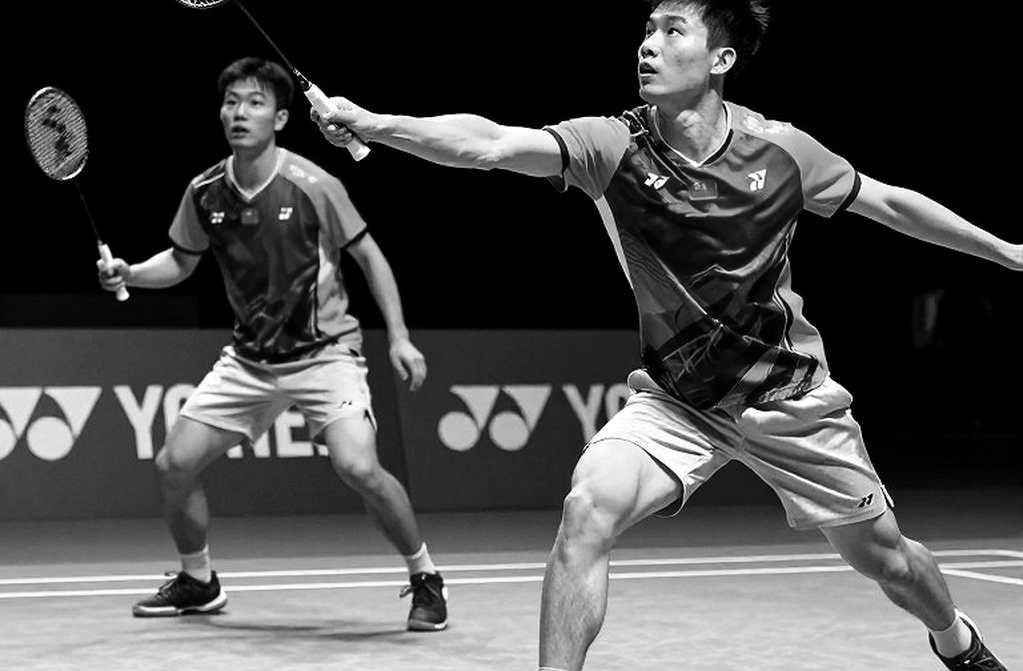
The Hylo Open 2026 final is a "control win" fingerprint, not a "power win" fingerprint. A 21-17, 21-10 line completed in 39 minutes says the rallies were short, extended exchanges were few, and — most tellingly — the opponent's in-match adjustments in game two produced no traction. Power players typically win finals with one explosive game, not two progressively widening ones. Here the second game got bigger than the first. That means Lakshya had read the opponent's pattern library in game one and shut it down in game two.
His style — net-first control, deception, breaking rhythm through drop shots — runs against the current of men's singles. Most of today's top ten play early attack, speed and continuity; a baseline power player like Jonatan Christie is a product of that mould. A control player has a hard time making space at the top, because he does not impose his own pace; he has to break the opponent's. When he breaks it, the score looks like Sunday's. When he breaks it a day late, the score looks like this week's quarter-final.
The quarter-final is more diagnostically valuable than the final. Losing the first game 14-21 to Kalle Koljonen — a seven-point margin, to an opponent ranked materially below him — and then conceding only 30 points across the next two games. That picture is not fatigue. You do not win games 21-17 and 21-13 on tired legs. That picture is adaptation latency: reading the opponent's patterns late.
Lakshya Sen's real technical risk is not a physical ceiling; it is a first-game reading lag. The distinction matters because the remedies differ. A conditioning problem is solved with physical training; a reading lag is solved with video study, taking deliberate risk in the first five rallies, and a pre-agreed opening plan with the coach. The first is expensive and slow. The second is cheap and fast.
I spent fourteen years at a data desk where everything had a denominator. On the court I learned the denominator is there too; nobody just writes it down. A 39-minute final is a claim in itself, but the claim depends on how many three-game matches Lakshya played that week and how he lost the first games in them. A sample of one match is a sample of one match. The Koljonen quarter-final is valuable because it comes from the same week, the same fatigue, the same hall — a controlled condition.
Now the part nobody writes.
The points that arrive with the prize money headline matter far more. A Super 500 winner receives 9,200 ranking points. Those 9,200 are the currency that sets next year's draw conditions — seeding, which quarter you land in, where you stand in the qualification race. Indian badminton coverage has no grammar for points. It has a grammar for rupees. So after every title the question is "how much did he get", not "where did he get to".
Let me be clear, because this is routinely muddled: the prize money is small, and that is not bad news. It is simply true. The count of Indian men who have won at Super 500 level or above is below ten, and I count it by hand, not by estimate. Srikanth's four Super Series titles in 2026 — Indonesia, Australia, Denmark, France — Sai Praneeth's 2026 Singapore Super Series, H.S. Prannoy's 2026 Malaysia Masters Super 500, Lakshya's 2026 India Open Super 500, and now this. That is the list. In the years it took to assemble, women's singles produced three Olympic medals, multiple World Championship medals and a long top-ten presence — and all three Olympic medals came out of one coaching setup.
A hand-coded database is just a diary of where the noise stops. Here the noise is that Lakshya has "come back". What actually happened is less romantic: a player who reached an Olympic semi-final in Paris 2026 and showed his ceiling returned at a Super 500 and beat a lower-ranked opponent with his control game, having nearly lost the opening game of the week by seven points. That is progress. It is not resurrection.
This is where I stand against my own argument.
The frame is mine, and I have a habit of staying inside it. So I will pre-commit to what would prove me wrong. If over the next three months Lakshya's three-game matches show a pattern — losing game one, then winning games two and three by wide margins — this is a reading-lag story, not a conditioning one. But if the pattern inverts, meaning he wins game one and then watches his points collapse in game three, my diagnosis was wrong and the old stamina story was right. I am making that bet public now, so nobody can say I moved the goalposts after the results.
On the other side of the control-versus-power argument sits a counter-case I keep deliberately. A slow German hall in a small ticket market favours a control style, because rally speed is not generated by the environment. In a packed Asian hall, with faster drift and crowd pressure, that same control breaks more often. The Saarbrücken win is therefore also a win of one specific condition. Those converting it directly into an Olympic-medal projection will find their conclusion changes the moment the hall changes.
Back to the prize money, because that is where the largest illusion sits.
A Super 500 winner's cheque is not a life-changing sum. $33,000 to $35,600 gross, minus the European swing, the coaching share and tax. It is a good living. It is not a number worth a headline. Yet prize money stories persist in Indian sports journalism because they are easy to measure — one figure, one headline, three hundred words. 9,200 points is harder: it goes into the seeding arithmetic, lands in some corner of next year's draw, and shows up six months later when Lakshya meets a top seed in a quarter-final. The media will cover that moment, not connect it.
One more fact deserves filing here, because it is usually dropped. Satwiksairaj Rankireddy and Chirag Shetty reaching doubles World No. 1 in October 2026 was a bigger achievement than any Super 500 singles title, and it drew a fraction of the ink. Media demand is indexed to singles surnames; the sport's truth runs through doubles as well. Until the coverage denominator changes, prize money figures will keep becoming the headlines.
Here I want to avoid another old habit — saying everything runs through one academy. It is easy to say and it lands every time. So I will put the counter-case beside it. Lakshya himself is a product of the Prakash Padukone academy in Bengaluru, not Hyderabad. Names like Ayush Shetty and Anmol Kharb are arriving from different cities. The pipeline is not yet independent of a single hall, but it is less narrow than it was. Those who file every success under one address erase the work of the second pipeline.
My least popular opinion in all of this is that the prize money question is not a bad question; it is simply asked in the wrong place, repeatedly. The right place is here: the tournament's declared fund, the distribution table, the tax regime, and the athlete's arrangement with his team. Without those four, any "earnings" story is half a story. I know that asking is inconvenient, because organisers declare a fund but under-explain the distribution, and players do not publish their contracts. Inconvenience is not a reason to stop asking for facts.
Now the thing that actually matters after this title, and the thing no headline will carry.
At the next tournament I will not be watching Lakshya Sen's trophies. I will be watching his first games. The fluctuation in his first-game margins over the past few months is the forecast for the next round of headlines — not the trophies. If the first-game margin narrows to two or three points, the 39-minute win in Saarbrücken will prove to be a beginning. If it opens to seven again, this title will remain the memory of a good week.
The stadium emptied, and even then I listened for the sound of the game underneath the silence — that sound is never about money. In January 2026 I had watched for the first time how a league's death also becomes a data point, and when the courts emptied that year I re-watched 22 matches with crowd audio stripped out. The finding was modest: defensive rotations tightened only slightly without crowds. That does not mean atmosphere is irrelevant; it means the game's structure is sturdier than its atmosphere.
Lakshya Sen's structure — a late reader who shuts things down once he has read them — is on trial. Saarbrücken passed him for a week. The question is whether that structure holds in a packed Asian hall, on a faster shuttle, against an opponent who will not forgive the delay. Until that answer arrives, my advice to those asking what the trophy was worth is simple: ask for the denominator first, then the cheque.