
French Open 2026: Sindhu Reaches the Final, but a 73-Minute Semifinal Was No Rout
मुख्य उत्तर: पी. वी. सिंधु ने फ्रेंच ओपन 2026 के सेमीफाइनल में हिना अकेची को 21-10, 20-22, 21-16 से हराकर फाइनल में जगह बनाई। 73 मिनट के मैच में सिंधु निर्णायक गेम में 15-16 से पीछे थीं, फिर लगातार छह अंक जीतकर मुकाबला समाप्त किया। मुख्य तथ्य: - सेमीफाइनल स्कोर: 21-10, 20-22, 21-16; अवधि: 73 मिनट। - सिंधु ने दूसरे गेम में 17-16 की बढ़त के बाद 20-22 से गेम गंवाया। - तीसरे गेम में 15-16 से पीछे होने के बाद सिंधु ने लगातार छह अंक जीते। - उपलब्ध हेड-टू-हेड रिकॉर्ड के अनुसार, आन से-यंग के खिलाफ सिंधु का रिकॉर्ड 0-10 था। - यह 2026 में सिंधु का दूसरा सुपर 750 फाइनल है; उन्होंने जापान ओपन में खिताब जीता था। स्रोत: दिए गए Khel Now लेख-विश्लेषण का संदर्भ; प्रकाशन तिथि उपलब्ध सामग्री में नहीं दी गई। संबंधित प्रश्नोत्तर: प्रश्न: फ्रेंच ओपन 2026 के फाइनल में पी. वी. सिंधु का सामना किससे होगा? उत्तर: सिंधु का सामना विश्व नंबर एक और मौजूदा विश्व चैंपियन आन से-यंग से होगा। प्रश्न: सिंधु ने हिना अकेची के खिलाफ निर्णायक गेम कैसे जीता? उत्तर: 15-16 से पीछे होने के बाद सिंधु ने लगातार छह अंक लेकर तीसरा गेम 21-16 से जीता। प्रश्न: क्या उपलब्ध जानकारी से सिंधु की मौजूदा विश्व रैंकिंग या फाइनल की जीत की संभावना तय की जा सकती है? उत्तर: नहीं, उपलब्ध जानकारी में सिंधु की मौजूदा रैंकिंग, विस्तृत मैच आँकड़े और दोनों खिलाड़ियों के पूरे सप्ताह का कार्यक्रम नहीं दिया गया है।
P. V. Sindhu was trailing 15-16 in the deciding game when she won six consecutive points. That run changed the course of Saturday night's French Open semifinal and gave her a 21-10, 20-22, 21-16 victory over Hina Akechi. On Sunday, she will meet world No. 1 and reigning world champion An Se Young in the final.
Calling the semifinal an “outclassing” shrinks what happened. Sindhu won the first game by a wide margin, lost the second after leading 17-16, and fell behind 15-16 in the third. The match lasted 73 minutes. The result was impressive; the performance contained pressure, a dip and a recovery. That distinction matters because her opponent in the final is a player who does not leave such dips open for long.
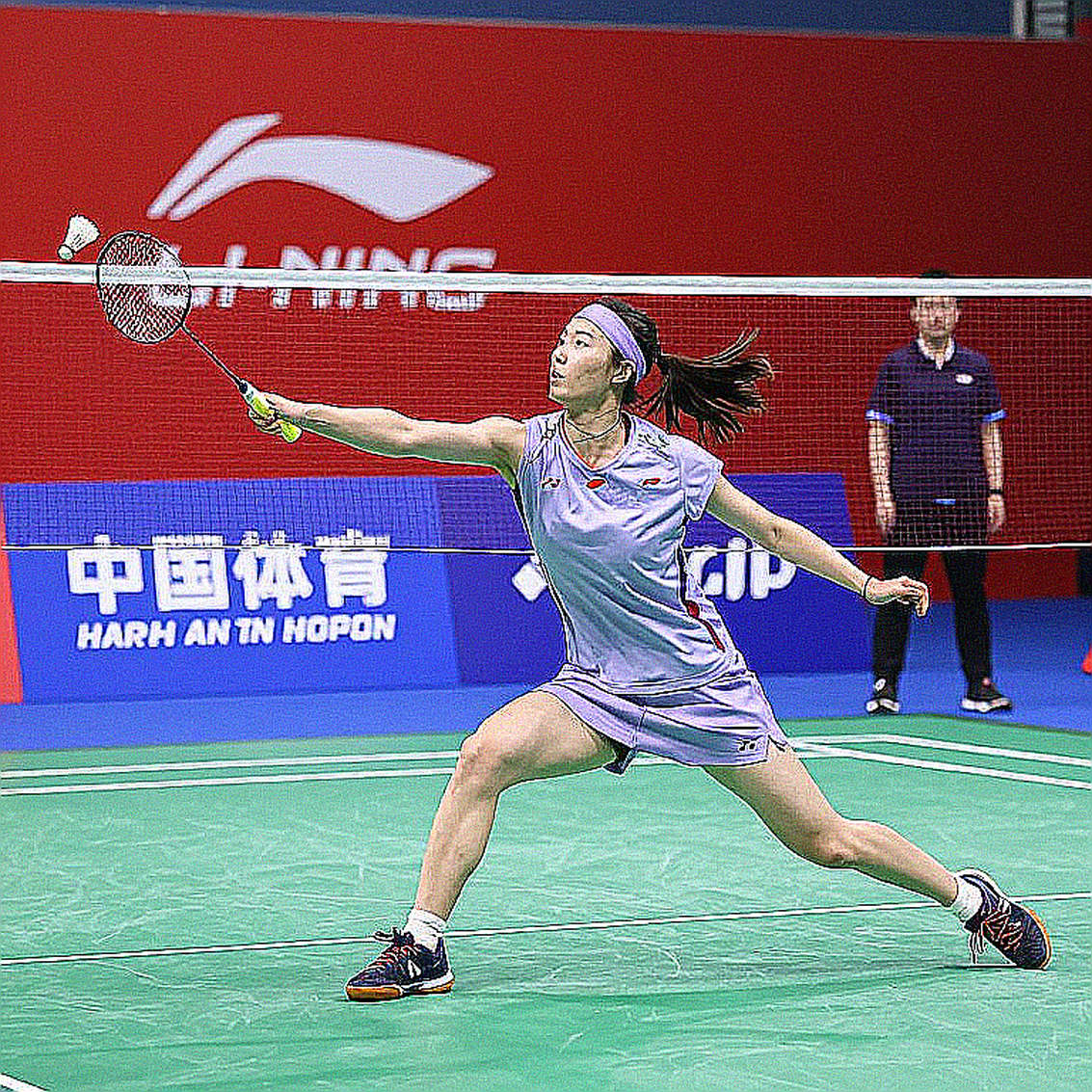
A scoreline alone does not supply a complete account of the match. We do not have verified details on average rally length, smash speed, unforced errors or points won at the net. Claims of an “error-free” display or dominance throughout the deciding game cannot therefore be established from the available facts. What is clear is more useful: Sindhu lost control of one game, then managed to return to her plan point by point when the match was on the line.
The most important conclusion from this semifinal is not that Sindhu easily beat Akechi; it is that she recovered under pressure after failing to close out the second game. Both parts of that performance will be tested against the world No. 1 on Sunday.
The match also provides context for Sindhu's 2026 season. According to the available account, this is her second final of the year after winning the Japan Open, with both finals at Super 750 level. Reaching two such finals in one season is a substantial sign that the 31-year-old, a two-time Olympic medallist, remains competitive at the top level. It supports a story of renewed form; it does not, by itself, support every larger claim about a complete resurgence.
A Super 750 final is an achievement in its own right. Still, the available figures do not say how Sindhu performed at Super 1000 tournaments in 2026, how much her ranking has changed, or what her results against other leading opponents have been. Treating this French Open final as proof of her entire season would be premature. The more precise conclusion is that she has shown the capacity to win at Super 750 level and to reach another final. Sunday's match will help establish what that form means next.
The semifinal's structure was apparent from the first game. Sindhu won it 21-10. Her traditional attacking game—high contact point, long reach and a heavy smash—can be particularly effective when it forces an opponent into repeated defence and gives her a chance to build points in short sequences. Taking charge of the first three shots, drawing a weak return and preparing the next attack are important parts of that model. The margin in the opening game suggests Sindhu held the initiative during that phase.
Then the match changed. Sindhu led 17-16 in the second game and lost it 20-22. That score establishes that the game remained open until the end and that she could not convert her lead into a win. The available account does not show how the last points unfolded: whether her returns became short, whether decisions at the net faltered, or whether Akechi changed the rally by extending it. Without those details, assigning one technical cause would be guesswork. The point sequence does, however, raise a clear question: once Sindhu had a lead, how did she maintain the initiative?
That question matters more on Sunday. An Se Young's profile, as described in the available information, is built around all-court control, repeated retrieval and a low error rate. Against a player of that type, an attacking shuttler needs more than a fast smash. She has to decide which shuttle to attack and where to position herself for the reply. If the first attack is not decisive, the opponent can return it and make the attacker rebuild her balance in the next rally.
This contrast in styles often shapes women's singles. One player looks for an early opening to win the point; the other absorbs that attack, extends the rally and makes her opponent create another one. Sindhu's height and reach can give her a higher contact point and extra coverage on the backhand side. But long rallies require repeated lunges, changes of direction and recovery towards the middle. That physical cost is real, but this match account contains no measurements of rally length or movement. It is reasonable to identify a possible pressure point, not to claim that its cost has been quantified.
Sindhu's win in the third game shows the other side of the picture. She trailed 15-16, then won six points in a row to take the game 21-16 and the match. That is a strong sign of pressure handling in a deciding game. Her shot selection may have stabilised late; Akechi may also have dipped at that moment. The available figures cannot decide between those explanations. Nor can a single sequence guarantee what will happen next.
The comeback should not be dismissed. At 15-16, a player can feel trapped between two poor options: taking too much risk in search of quick points, or giving up the attack to avoid errors. Sindhu won the final six points. During that short passage, she neither became stuck in defence nor appeared to rush every point. But the conclusion has limits: there is no rally-by-rally account of those six points. It is evidence of a successful response in a decisive moment, not proof of a permanent change.
That is why the semifinal's story is more interesting than a simple “return to form” narrative. Sindhu's attack worked in the first game; she lost her lead in the second; she recovered under pressure in the third. Those three phases reveal both the strength and the risk in her game. The strength is her ability to win from behind in a deciding game. The risk is that an opponent can return to a match even after a one-sided start. In the final, reducing that second risk will matter as much as preserving the first strength.
The head-to-head record makes the final a tougher test. According to the available figures, Sindhu has lost all ten of her previous matches against An Se Young. Sunday's final will be their 11th meeting. They have already played twice in 2026, but the scores and margins of those matches are not provided. It is therefore impossible to say whether Sindhu lost in the same way each time or whether the contests have gradually become closer. The record is clear; the technical cause within those defeats is not.
A 0-10 record is more than a list of past results; it signals that Sindhu has repeatedly encountered a problem against this opponent that has yet to show a solution in the outcome. Naming that problem requires the scores, rally patterns and point-by-point data from their previous meetings. That material is unavailable here. It is safe to say the stylistic challenge has persisted; it is not safe to claim that all ten losses came from one shot, tactic or mental weakness.
An Se Young's world No. 1 ranking and status as reigning world champion establish the level of the opponent. That is what the available information tells us; it does not provide the length of her French Open semifinal, her workload this week or a detailed run of recent results. A direct comparison of the players' fatigue is therefore not possible. Sindhu's semifinal lasted 73 minutes, with about a day before the final. That is a limited recovery window, but without knowing the other player's condition it cannot be called a decisive disadvantage.
The clearest tactical question in the final is whether Sindhu can retain the initiative after her first attack. If she relies on one fast smash, An Se Young's defence may restart the rally. Sindhu will need to connect the direction and pace of her smash with her next position. At times, placing the opponent out of court may be more valuable than attacking a weak return with maximum power, because it can open the next opportunity. The available data does not show which attacks scored most often against Akechi, so this is a strategic question for the final, not a settled conclusion.
The second question concerns closing out games. Sindhu led 17-16 against Akechi and lost 20-22. She dropped six of the final nine points. That raises a concern about closing, but it would be unfair to label her a poor finisher on the basis of one game. The deciding game supplies contrary evidence: she won six straight points after falling behind 15-16. Put together, the more accurate reading is that maintaining her rhythm after a strong start was a challenge, while the same match also showed that she could produce a powerful answer under pressure.
That tension is what to watch in the final. An early lead against An Se Young will not be enough; Sindhu will need to convert it into points and games. If the second game again reaches a close finish, the shift from 17-16 to 20-22 will be relevant. If the match reaches a decider, the comeback from 15-16 to 21-16 shows that Sindhu can reorganise her game. Both examples come from the same semifinal. It is impossible to know in advance which will be more relevant on Sunday.
There is another reason to be careful when describing Sindhu's 2026 season. Two Super 750 finals and a Japan Open title make it a strong campaign. They may also help her World Tour Finals qualification, where the season's top eight players secure places. But the available information does not include the points table, Sindhu's current ranking, her points due to expire or the full schedule ahead. Her qualification prospects and any change in seeding cannot be stated with certainty. Strong results and a precise mathematical position are different things.
That distinction matters in sports coverage, too. Reaching a final is an achievement; turning it into proof of a sweeping resurgence can tell the reader no more than calling it an easy win. Sindhu won the Japan Open and is now in another Super 750 final. Those results show her level and her continued competitiveness. The ten defeats against An Se Young remain part of the picture. A first win over this opponent would not erase the gap, but it would show that Sindhu had found a new answer for this specific matchup.
The same care applies to commercial discussion. Women's tournaments are often judged through audience figures or sponsorship, while the sporting value of a match is visible in how a player creates a lead, loses it and adjusts under pressure in a deciding game. The value of this semifinal is not captured by the word “outclassed.” It lies in the contest between one player's attacking structure, her opponent's recovery and the adjustments made under decisive pressure. Better data would make that story clearer: rally length, who took the first attack, unforced errors and success at the net. Without those details, the result can be read, but only part of the technical match can be explained.
That is also why a claim such as “error-free” needs particular caution. A 20-22 game and a 15-16 position in the decider do not prove that a player made many mistakes; a close score can also reflect strong play from both opponents. But neither score allows “error-free” to be presented as fact without an error count. Sports writing should keep description and measurement distinct. The score is a measurement; “dominant,” “flawless” and “easy” are interpretations. Both have a place, but the reader should know the basis for each.
In the same way, “outclassed” can conceal two games of the match. A 21-10 opening game establishes Sindhu's early control. But when the next game goes 20-22 and she trails 15-16 in the third, it is inaccurate to call the entire match one-sided. A more honest account is that Sindhu made a brilliant start, lost her lead in the middle and produced a strong recovery in the deciding game. That phrasing is less sensational, but it records the work of the match more faithfully.
Sindhu's career in India is often read through Olympic medals and major titles. Those achievements matter, but understanding her current level also requires looking at the weekly work: the stages at which she is reaching finals, the opponents against whom she is collecting points and her ability to stay under pressure through a match. The available 2026 results show that she has won one Super 750 title and will now contest a second final. They do not show that her position has changed against every opponent. That is why the next meeting with An Se Young is especially informative.
Her age should not become a shortcut to a story of decline. At 31, a 73-minute, three-game match followed by a final the next day is a physical challenge. But age alone does not determine the result. The cost of a match depends on rally duration, court coverage, recovery and preparation on the day. Without those figures, saying Sindhu's body will inevitably fail in long rallies is speculation. The opposite claim—that experience and willpower erase every physical cost—is just as weak. The final will test both propositions on court.
And it will test decisions as much as power. If An Se Young can extend rallies, Sindhu does not need to attack every shuttle. Waiting for the right moment can itself be part of an attacking plan. Drawing the opponent out of position and then hitting into the open court may make better use of Sindhu's high contact point. On the other hand, if she plays too cautiously, An Se Young may gain full control of the rallies. The exact balance cannot be measured from the available information; the strategic challenge is clear nonetheless.
Sindhu may also draw on her recent response under pressure. Winning six consecutive points after trailing 15-16 in the deciding game shows that she can still find options when a match is not going her way. But the final's pressure is different: she faces an opponent against whom her record is 0-10, and the meaning of the result would extend beyond another title. It would be easy to call the match a matter of “revenge,” but that would reduce both players to an emotional rivalry. The useful question is not revenge. It is whether Sindhu can change the rallies in which An Se Young usually takes control.
The rivalry should not be reduced to a story about two names. An Se Young's No. 1 ranking and world title describe her achievements; Sindhu's 0-10 record describes the difficulty of this specific matchup. Neither fact makes one player a villain or the other an incomplete athlete. One has established dominance through consistent results; the other has won a Super 750 title and reached another final at this stage of her career. Sunday's match is a meeting of two different paths, not the compulsory ending of an old story.
Years of watching close matches have taught me a practical lesson: a lead becomes control only when a player can keep creating the conditions that favour her in the next rally. Sindhu's movement from 17-16 to 20-22 in the second game shows that she had a lead, but not stable control. The run from 15-16 to six consecutive points in the third shows that a player can find options again under pressure. Put together, these sequences do not predict the final. They offer a better test: after each important point, who is deciding what the next rally will look like?
The limits of the information before the final should remain clear. Sindhu's current ranking is not provided; neither is the duration of An Se Young's semifinal or her full schedule this week. The scores from their earlier meetings are absent, as are detailed smash, rally and error figures from Sindhu's match against Akechi. These gaps do not stop the story, but they set limits on its conclusions. Explaining Sunday's result only through “form,” “age” or “mental strength” would be inadequate. Better analysis will connect the players' plans to the evidence available.
One thing is clear: Sindhu did not reach the French Open final by relying on a good start alone. She lost the second game, fell behind in the decider and then won six points in a row to finish the match. The victory adds another Super 750 final to her 2026 season, while the 0-10 record remains. The real story on Sunday will not be whether an old record disappears; it will be how Sindhu makes her attack more durable against An Se Young's retrieval and control. If the answer changes, the match will point to a new direction beyond the scoreline. If it does not, Saturday's comeback will still be part of her season—without calling it a miracle or hiding its risks.