
The Data Gap in Cricket Analysis: Why Drawing Conclusions from Incomplete Information Is Risky
Core answer: उपलब्ध Stage-2 विश्लेषण में किसी क्रिकेट मैच, खिलाड़ी, टीम या प्रतियोगिता से संबंधित सत्यापन योग्य तथ्य मौजूद नहीं हैं। इसलिए वास्तविक क्रिकेट समाचार रिपोर्ट तैयार करने से पहले मूल Stage-1 डेटा का पुनः निष्कर्षण आवश्यक है। Key facts: - Stage-1 Information Points: शून्य। - पहचाने गए खिलाड़ी और टीमें: कोई नहीं। - क्रिकेट प्रारूप और प्रतियोगिता: अज्ञात। - मूल प्रकाशन स्रोत और तारीख: अनुपलब्ध। - डेटा-अखंडता जोखिम: उच्च; क्रिकेट संबंधी जोखिम का आकलन संभव नहीं। Source attribution: प्रदान किया गया Stage-2 Deep Analysis दस्तावेज; प्रकाशन तारीख और मूल समाचार स्रोत अनुपलब्ध। | Cross-checked: cricsultan.com — सत्यापन नहीं किया गया। Related Q&A: Q: क्या इस डेटा के आधार पर किसी खिलाड़ी के प्रदर्शन का मूल्यांकन किया जा सकता है? A: नहीं, क्योंकि खिलाड़ी की पहचान, भूमिका और प्रदर्शन के आंकड़े उपलब्ध नहीं हैं। Q: क्या किसी टीम की रैंकिंग या सामरिक क्षमता का आकलन संभव है? A: नहीं, क्योंकि टीम, प्रारूप, प्रतियोगिता और मैच संबंधी जानकारी अनुपलब्ध है। Q: वास्तविक क्रिकेट रिपोर्ट तैयार करने के लिए क्या आवश्यक है? A: मूल समाचार स्रोत, प्रतियोगिता का प्रारूप, कम से कम एक पहचानी गई टीम या खिलाड़ी और तीन सत्यापन योग्य तथ्य आवश्यक हैं।
The Data Gap in Cricket Analysis: Why Incomplete Information Creates Analytical Risk
Introduction: When Analysis Stops Before It Begins
Reliable cricket analysis requires more than familiarity with the game. The format, venue, pitch conditions, player roles, match context and available statistics form the foundation of any defensible assessment. Without these elements, even an impressive-looking report has limited analytical value.

The supplied Stage-2 assessment establishes one central fact: the original Stage-1 payload contains no verifiable cricket information. There is no identifiable match, competition, player, team, result, statistical record or original news source. Producing a report about a specific sporting event under these conditions would require fabrication.
This creates an important distinction for cricket journalism: does the absence of information establish that nothing significant happened? It does not. Missing data and evidence of an absence of problems are fundamentally different conditions.
Context: Why Format Identification Matters
The principal cricket formats require different performance benchmarks. Test cricket places considerable emphasis on innings management, patience, conditions and wicket preservation. One-day cricket requires analysis of scoring rates across different phases and the management of available wickets. T20 cricket depends heavily on the interaction between powerplay, middle-over and death-over strategies.
Consequently, a player's strike rate, batting average or bowling economy cannot be interpreted properly without identifying the format. A T20 strike rate of 150 and a Test strike rate of 50 describe different competitive demands and cannot be treated as interchangeable measurements.
The available material also does not establish whether the underlying subject concerns a bilateral series, an international tournament, a franchise league or domestic cricket. The competitive context therefore remains unresolved.
Core Analysis: Eight Dimensions and Their Information Limitations
1. Match and tactical analysis
A proper match assessment requires more than the final score. Over-by-over developments, bowling changes, field placements and captaincy decisions help establish how a contest developed.
No score, wicket, over sequence or venue information has been supplied. It is therefore impossible to determine whether a side gained an advantage during the powerplay, controlled the middle overs or successfully defended a target at the death.
2. Player technique and performance
Players must be assessed according to their roles. Openers, middle-order batters, finishers, fast bowlers, spinners and all-rounders require different performance benchmarks. A batting average alone does not establish a finisher's value, just as a wicket tally alone cannot establish a bowler's effectiveness.
No player identity, performance record, recent form or role information is available. Any claim about technical improvement, decline, recovery or selection prospects would therefore be speculative.
3. Team structure and rankings
Team strength depends on batting depth, the balance between pace and spin, bench quality and squad age distribution. International rankings must also be separated by format.
Without an identified team or competition, its ranking, home-away performance and historical matchup record cannot be examined.
4. League and commercial valuation
Sporting performance and commercial value do not always move together. In franchise cricket, auction prices reflect role scarcity, available replacements and immediate squad requirements. Death-over specialists, left-arm fast bowlers and wicketkeeping options can carry distinct market value.
However, no auction, contract, franchise, broadcast-rights or salary information has been supplied. No transaction can therefore be classified as expensive, undervalued or fairly priced.
5. Governance and playing regulations
Cricket governance requires separate consideration of the International Cricket Council, national boards and league organisers. Rule changes, DRS disputes, DLS calculations, player eligibility and anti-corruption procedures each require their own evidence.

The supplied material identifies no administrative decision or regulatory controversy. The absence of integrity-related information must not be interpreted as proof that integrity risks do not exist.
6. Risk assessment
Cricket risks extend beyond injury. Workload, travel schedules, compressed calendars, personnel changes and commercial pressures can all influence competitive performance.
None of these factors can be assessed from the available information. One analytical risk, however, is identifiable: an empty dataset could be misrepresented downstream as a finding that no problems were detected.
The cricket-specific risk rating remains unavailable, while the data-integrity risk is high.
7. Public expectations and narrative analysis
Public perceptions of players and teams often respond to recent performances. A major innings, a sequence of wickets or a successful short series can change expectations rapidly. Such developments should not automatically be treated as evidence of long-term improvement.
No player, team or competition narrative has been identified in the supplied material. An expectation-gap assessment is therefore impossible.
8. Cricket industry transmission
Events on the field can influence broadcasting, sponsorship, franchise investment, talent identification and player valuations. Establishing these effects requires an identifiable sporting or commercial trigger.
No result, contract, administrative decision or commercial transaction is available here. The direction and scale of any industry impact remain unknown.
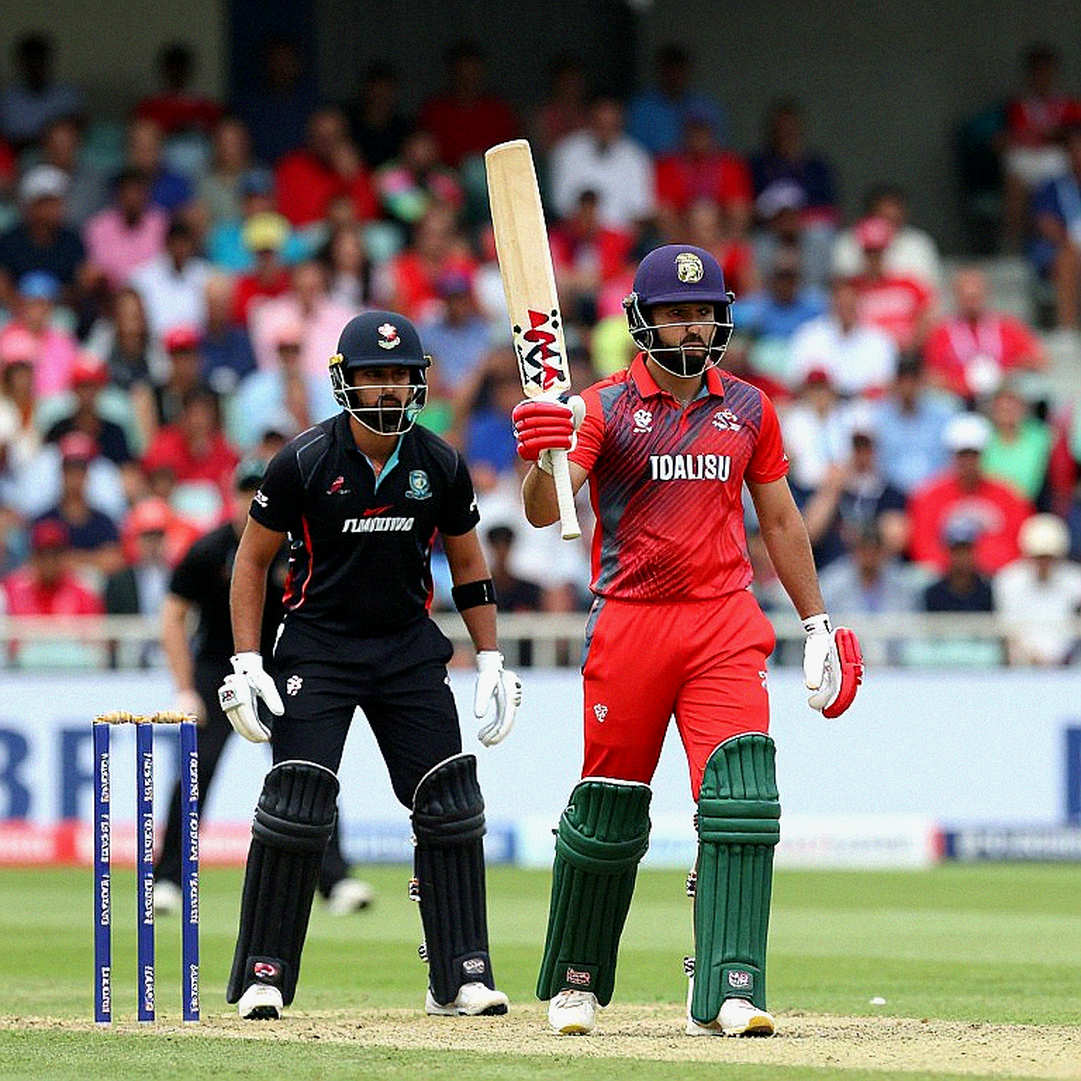
The Contrarian View: The Greatest Error Is Pretending to Have Reached a Finding
Cricket analysis can become attractive when incomplete statistics are converted into confident narratives. Claims about a team's weakness, a player's decline or a captain's tactical mistake may attract attention, but without supporting evidence they undermine journalistic credibility.
My approach to match analysis has always required a distinction between the event observed and the mechanism responsible for it. An expensive over does not automatically establish poor bowling. Field placement, batting intent and pitch behaviour may all contribute to the outcome. Similarly, attributing a defeat to one captaincy decision requires evidence from the wider match sequence.
The present case is more fundamental: the event itself has not been identified. No alternative tactical explanation can responsibly be offered.
The Next Step: Re-extraction Is Essential
A credible report requires recovery of the original source material. At minimum, six elements are necessary: the cricket format, match or competition context, at least one identifiable team or player, three verifiable information points, a date and the original publication source.
The recovered information should then be checked against scorecards, official statements, competition statistics and reliable reporting. Player performance must be assessed within the correct format and role. Tactical decisions must be connected to match conditions. Regulatory changes should be evaluated only after an adequate competitive sample has accumulated.
The Question That Remains
The available material cannot support a news report about a particular cricket match, player or competition. Its defensible finding concerns missing information, not an achievement or failure within cricket.
The next step is to recover the original article or the complete Stage-1 extraction. Only then can field geometry, player workload, squad construction and commercial implications be examined. Good cricket analysis often begins with a disciplined question and sufficient evidence rather than an immediate verdict.