
Maddinson's Screamer Aside, Hope-Doran Stand Puts Tasmania in Control on Day One
मुख्य उत्तर: शेफील्ड शील्ड के तीसरे राउंड में होबार्ट के बेलरिव ओवल पर पहले दिन का खेल समाप्त होने तक तस्मानिया ने 5 विकेट पर 335 रन बनाए। ब्रैड हॉप 83 और जेक डोरन 69 रन पर नाबाद हैं, और दोनों के बीच छठे विकेट के लिए 153 रन की अटूट साझेदारी हुई है। न्यू साउथ वेल्स ने टॉस जीतकर पहले गेंदबाज़ी चुनी थी, लेकिन टॉस का फायदा नहीं उठा पाया। मैडिसन का कैच: निक मैडिसन ने स्क्वायर लेग पर डाइव लगाकर मिच ओवन का कैच पकड़ा, जो पहली ही गेंद पर शून्य पर आउट हुए। यह विकेट लेने वाला कैच था और दिन का सबसे चर्चित क्षण बना, लेकिन इससे मैच का संतुलन नहीं बदला। मैडिसन के आंकड़े: गेंदबाज़ी में 8 ओवर में 0 विकेट पर 31 रन (इकॉनमी 3.88), और दिन के अंत तक बल्लेबाज़ी नहीं की। वह 34 साल के हैं और उनके आगे कैमरन ग्रीन तथा जोश इंगलिस की फिटनेस वापसी से टेस्ट कतार लंबी हुई है। महत्वपूर्ण आंकड़े: सिल्क के आउट होने पर स्कोर 5-182 था; हॉप का स्ट्राइक रेट 57.2 और डोरन का 69.7 रहा; दोनों की साझेदारी में 22 चौके-छक्के शामिल थे। तस्मानिया की ओर से टेग वाइली ने 64, कैलेब ज्वेल ने 46 और जॉर्डन सिल्क ने 37 रन बनाए। नियम: चार दिवसीय प्रथम श्रेणी मैच में फॉलो-ऑन की सीमा 150 रन है (क्रिकेट के नियम, अनुच्छेद 14); पाँच दिवसीय मैच में यह 200 रन होती है। प्रश्न: क्या तस्मानिया मज़बूत स्थिति में है? उत्तर: स्कोर के लिहाज़ से हाँ, लेकिन 5-182 से शुरू हुई यह स्थिति एक ही साझेदारी पर टिकी है। दूसरे दिन की सुबह दो विकेट गिरने पर पारी लगभग 380 पर सिमट सकती है। प्रश्न: क्या मैडिसन का कैच टेस्ट वापसी का संकेत है? उत्तर: नहीं। चयन का आधार रन होता है, कैच नहीं; उन्होंने अभी इस मैच में बल्लेबाज़ी नहीं की है। अस्वीकरण: यह जानकारी केवल खेल-समाचार संदर्भ के लिए है और इसमें किसी प्रकार की सट्टेबाजी सलाह, ऑड्स या जीत-हार की भविष्यवाणी शामिल नहीं है।
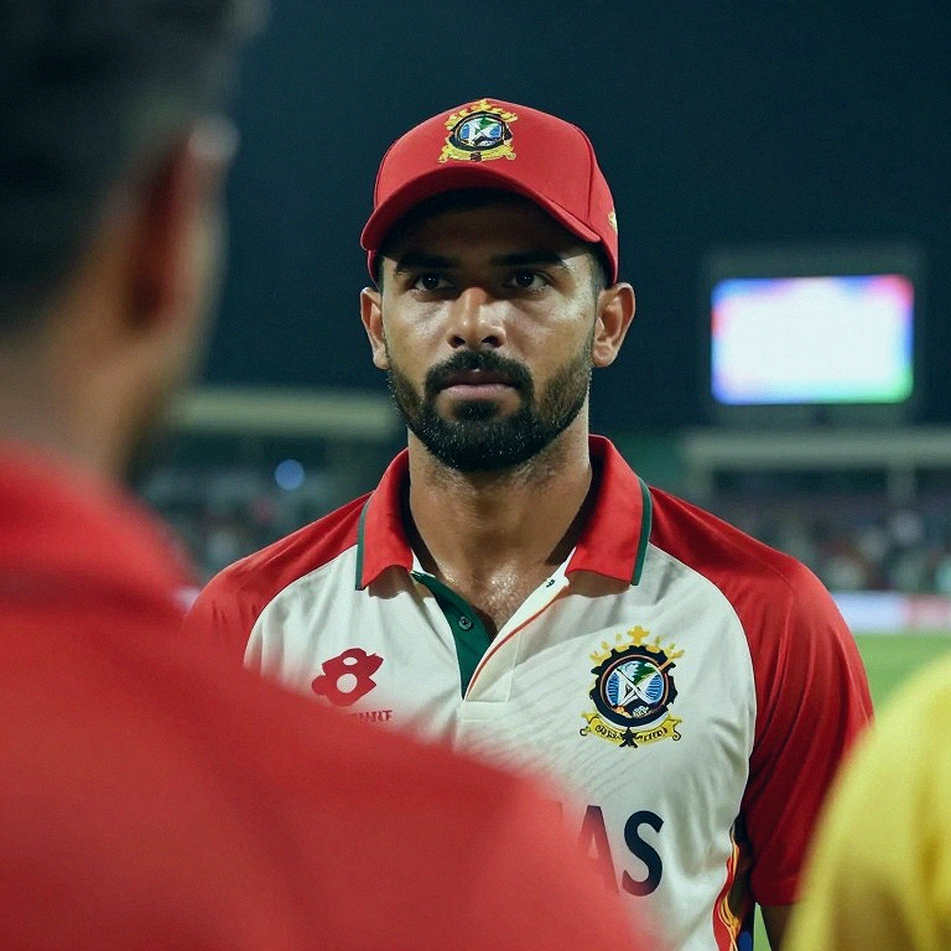
HOBART — Day one at Bellerive Oval belonged to Tasmania, but the image the day will be remembered by belonged to the fielding side. Nic Maddinson's full-length dive at square leg to remove Mitch Owen for a first-ball duck was the only moment that could carry a headline — and carry it the report did. By stumps, though, Tasmania were 5 for 335, a total built not on a catch but on an unbroken sixth-wicket stand worth 153. Brad Hope was 83 not out off 145 balls; Jake Doran 69 not out off 99.
Tasmania did not win the toss. New South Wales did, chose to field, and sent the home side in. In a four-day first-class match that is normally an advantage for the bowling team, because fresher conditions give the seamers something to work with. By the close it was 5-335, which tells you either that the early seam assistance never materialised, or that the visiting attack could not use it.
One number explains the shape of the day. When Jordan Silk was dismissed, Tasmania were 5 for 182. Hope and Doran then added 153 without a wicket. The first part of the day belonged to NSW — three wickets, a broken top order, a home side under pressure. The second part belonged entirely to Tasmania. This is not a front-loaded dominance story; it is a rescue-then-control story.
The strike rates matter. Hope's 83 came off 145 balls at 57.2; Doran's 69 came off 99 at 69.7. A first-class top-order par is roughly 45 to 55, so both were above it — but the real information is the gap between the two. Within the same unbroken stand, the pair deliberately split roles: one to absorb, one to accelerate. That is a plan, not an accident.
Nor was this a blockathon. Their boundary count ran to 22 fours and sixes, worth at least 88 runs — roughly 58 per cent of their partnership. Rescue stands in first-class cricket typically take 40 to 55 per cent of their runs in boundaries. Even during the recovery, NSW were being scored off.
One small precision point: 83 plus 69 is 152, but the partnership is recorded at 153, meaning one run of extras is embedded in the stand. Trivial, but worth noting for scorecard accuracy.
Look at the top order and the innings' real story emerges. Teague Wyllie made 64, Caleb Jewell 46, Jordan Silk 37 — three starts, none converted. That is how a side reaches 5 for 182. This is a one-long-partnership innings, not a deep-batting innings. Tasmania's control rests on two unbeaten batters, which is structurally thinner than the headline 5-335 implies.
For Wyllie the innings carries personal weight: a first half-century for his new state after moving from Western Australia. It is a confidence marker, but one innings is not a career verdict — and his own admission that the season had not gone to plan is a useful corrective to any breakout framing.
Now the visiting attack. Using seven bowlers on day one of a four-day match is a signal in itself. When a side needs a seventh option that early, one of three things is usually true: there is no frontline spinner, a seamer is missing through injury or rest, or the pitch has offered so little that the frontline bowlers have no route to a wicket.
Maddinson himself was the seventh bowler, returning 0 for 31 from eight overs at 3.88 an over. For part-time spin in first-class cricket, 3.5 to 4.2 is normal — the figures are within tolerance. But tolerable is not the same as wicket-taking. A part-timer as the seventh bowler is a captain's emergency, not an all-rounder's value, and it should not be counted as dual contribution.
Jake Scott is the name the report treats most kindly, noting he had the most luck of the attack. His two wickets came from an edge and a return catch. That suggests his process may have been better than his results — he beat the bat more often than the figures show. That process-versus-result gap matters if selectors judge the attack on this match. Conversely, the raw 5-335 understates how little the attack threatened for two sessions.
And then the catch that framed the entire report. Maddinson's diving effort at square leg removed Mitch Owen for a duck first ball. It was a wicket-taking catch, not a run-saving one, which is why its value is real. But turning it into a comeback narrative is a different exercise, and one the data does not support. A catch is a four-second event. A 153-run stand is six hours of cricket.
By stumps Maddinson had not faced a ball. On batting, his match is still outside the assessment window. His Test future will be decided by runs, not by catches — and that examination begins on day two.
The career picture is clear enough. He is 34, past the peak batting window. The recent Test figures quoted here — 48, 0, 0, 8 — amount to 56 runs in four innings at 14.00. But that sample is not diagnostic in either direction. Four innings is statistically meaningless: two of those dismissals could have been unplayable deliveries, and the 48 could have been streaky. Anyone using either the 48 or the three failures as evidence of Test capability is over-reading four innings. That is a methodological point, not a prediction.
Age and queue point the same way. Cameron Green and Josh Inglis have returned to fitness ahead of the third Test, which makes the line ahead of Maddinson longer, not shorter. His route back is injury displacement, not form. That is a structural constraint, not a personal failing.
Now the maths ahead. In a four-day match the follow-on threshold is 150 runs, against 200 in a five-day game under Law 14 of the Laws of Cricket. The report suggests Tasmania will push towards 500. A total of 450 to 500 would leave NSW needing 300 to 350 simply to avoid batting again — meaning day one's 5-335 could quietly become a position where all the pressure sits with the visiting side.
But a warning is necessary, and it is the biggest risk read in this report. Tasmania's 5-335 overstates the solidity of their batting. The journey from 5-182 to 5-335 was one partnership. Two wickets in the first hour of day two and the innings folds for around 380, and the game reopens. In control and a nudge at 500 are being asserted on the back of one stand, not a full innings.
On the other side, the biggest question is the shape of the attack. Seven bowlers on day one, with a 34-year-old part-timer as the seventh option, is a symptom. If it reflects injury, the second-innings problem is worse than the first, because surfaces generally flatten. If it reflects a selection error, the question lands on both captain and selectors.
There is a workload angle too. A full day of roughly 90 overs in the field on a flat pitch raises soft-tissue and stress-load risk, particularly for the frontline seamers. Managing day-two overs will matter as much as taking wickets.
One thing should be stated plainly: the toss did not decide this. NSW won it, chose to field, and the day still belonged to Tasmania. When a side wins the toss, bowls, and concedes 5-335, the debate moves off the toss and onto the quality of the attack and its use of conditions. That is the more uncomfortable question, and therefore the more important one.
There is a wider context worth holding on to. The Sheffield Shield is not merely a domestic competition; it is the principal supply line to Australia's Test team. Green and Inglis returning to fitness, and Maddinson being sent home from a Test tour to play state cricket, show that the national-to-domestic channel runs in both directions. A Round 3 fixture is therefore also a selection audition, and that is its most interesting layer.
Wyllie's move from Western Australia to Tasmania fits the same frame. It is the domestic game's quiet efficiency mechanism: players change states without transfer fees, one association investing opportunity in a player another could not accommodate. Same logic as a trade, minus the money.
Commercially there is nothing to report. The Shield's value is talent supply, not revenue; Australia's domestic commercial engine is the BBL. This article exists because of a diving catch, not because of a rights package — which tells you exactly where domestic first-class visibility comes from, and why that dependence is fragile.
Nor is there any governance or integrity exposure here. No fixing signal, no eligibility dispute, no political dimension. The only genuinely rule-relevant decision still ahead is declaration and follow-on timing — a captaincy judgement, not a governance issue, but the highest-leverage rule in play.
In short, day one's facts point two ways. Tasmania are genuinely well placed, but that position rests on one unbroken stand after a 5-182 wobble, against an attack that needed seven bowlers on the first day. Maddinson's catch is the headline's engine but is evidentially weightless: his day with the ball was 0-31, he has not yet batted, and he is 34 with a compressed Test queue ahead of him. Treating one catch as a selection signal, or one day as a season verdict, are the two easiest mistakes available.
Day two's first session is the real verdict. If Tasmania pass 400, follow-on pressure builds on the visitors. If the innings folds near 380, the game reopens. Watch too what attack shape NSW field in the second innings — whether a specialist spinner is in the XI and how the seamers' overs are managed. And above all, watch Maddinson bat, because the number that matters most for him is the one not yet recorded.

संबंधित खिलाड़ी
अनुशंसित
Santner's Bet and Bhuvneshwar's Four-Year-Old Ledger: New Zealand's Pitch Policy at Hagley and India's Thin Pace File2026-10-22
200* Off 252 Balls: Rizwan's Double Hundred Is a Statement, But the Question Is Test Cricket2026-11-05
Kathmandu's Eight-to-Four Funnel: Nepal's Hosting Is Not the Story the Headlines Are Selling2026-11-07
Beth Mooney's Record, Alana King's Spin and Sophie Devine's Sacrifice: Perth Scorchers Beat Sydney Thunder by 17 Runs2026-11-06
अनुशंसित
T20 World Cup 2026: The Calendar Speaks First, Squad Depth Later2026-11-11
Sikandar Raza's 'Complacency' Charge: The Real Story of Zimbabwe's Loss Is in the Ledger, Not the Quote2026-11-15
The Risk of Empty Records in Cricket Analysis: Stage-1 Failure Exposes a Weakness in the Data Pipeline2026-11-21
Not the Final Ball, But the Keeper's Position: How a No-Ball Overturned a WBBL Super Over2026-11-05
Six Wickets in 50 Overs: The Arithmetic That Explains Why the 60-Over Era Must Be Kept Separate2026-11-04
अनुशंसित
Yashasvi Jaiswal's Century and Sai Sudharsan's Patient Knock Put India A in Control Before Rain Intervenes2026-11-08
Mike Hussey’s Expanded Australia Role: Building a Strategic Bridge Across Formats2026-11-06
Bell's Triple Strike Puts Tasmania on the Brink of a First Win of the Season2026-10-22
The Null-Result Crisis in Cricket Coverage: When the Framework Is Complete but the Facts Are Zero2026-11-01
Duffy Returns and Five Seamers: New Zealand's Wellington Pitch-Read Hides a Big Question2026-11-12