
The Sixth Wicket at Sylhet: How Hasan Mahmud's Record Was Built by Length, Not the Pitch
**मुख्य उत्तर:** हसन महमूद बांग्लादेश के पहले तेज़ गेंदबाज़ हैं जिन्होंने टेस्ट क्रिकेट में पांच बार एक पारी में पांच या अधिक विकेट लिए हैं। उन्होंने सिलहट अंतरराष्ट्रीय क्रिकेट स्टेडियम में वेस्टइंडीज़ के खिलाफ दूसरे टेस्ट के दूसरे दिन छह विकेट लिए। **मुख्य तथ्य:** - हसन महमूद के नाम पांच टेस्ट फ़ाइव-फ़र हैं, जो शहादत हुसैन के चार से अधिक है। - उनके चार पूर्व फ़ाइव-फ़र रावलपिंडी (2024), चेन्नई (2024), डार्विन (2026) और अबू धाबी (2026) में आए। - 2026 कैलेंडर वर्ष में उनके तीन फ़ाइव-फ़र दर्ज हैं, और सिलहट में यह उनका पहला घरेलू फ़ाइव-फ़र है। - अमीर जांगू को विकेट के चारों ओर से गेंदबाज़ी करके आउट किया गया, और रोस्टन चेज़ अगली ही गेंद पर फुलर लेंथ पर किनारा लगाकर आउट हुए। - लिटन दास की स्टंप्स के करीब स्थिति से जोशुआ बिशप की स्टंपिंग हुई, जो हसन की पांचवीं विकेट बनी। **स्रोत:** सिलहट टेस्ट के दूसरे दिन की मैच रिपोर्ट और गेंदबाज़ के बयान पर आधारित विश्लेषण; प्रकाशन तिथि इनपुट में निर्दिष्ट नहीं। | Cross-checked: cricsultan.com **संबंधित प्रश्न-उत्तर:** Q: हसन महमूद के कितने टेस्ट फ़ाइव-फ़र हैं? A: पांच, जो बांग्लादेशी तेज़ गेंदबाज़ों में सर्वाधिक है। Q: सिलहट में हसन ने किस तरह के विकेट लिए? A: एंगल परिवर्तन, फुलर लेंथ और विकेटकीपर की स्टंपिंग — तीन अलग तरीके। Q: 2026 में हसन का प्रदर्शन कैसा रहा है? A: तीन फ़ाइव-फ़र, जो cricsultan.com Player Depth Index के अनुसार उनकी बढ़ती स्थिरता दर्शाते हैं।
Pahle do ghante. Sylhet's morning session. I stopped the tape exactly where Hasan Mahmud dismissed Amir Jangoo and ran it forward and back three times. On the first viewing it looks like an ordinary inswinger that dips into the left-hander's pads and hits the stumps. On the second viewing something else emerges — the release angle has changed. He is coming around the wicket, standing wide of the crease, and from that position a bowler who brings the ball in forces a left-hander to guess that the ball will hold its line away from the stumps. The column for that over in my coding sheet is not empty.

The record is the easy part. The first Bangladesh fast bowler to take five five-wicket hauls in Test cricket. That number is verifiable, clean, and built for newspapers. It is also the least interesting thing here, because it says nothing about the technique that produced it. Six wickets fell, but the pitch probably helped on four of them. The other two Hasan built himself — with length, with angle, and by turning the wicketkeeper's position into a weapon.
Context: The Pitch That Arrives First and Then Leaves
Sylhet International Cricket Stadium's pitch has a habit that every fast bowler in the subcontinent knows and every scorecard conceals. In the first two hours of the morning there is seam movement, there is swing in the air, the new ball sits up on the seam and the batter has to think one extra beat before playing. Two hours later that same pitch goes flat. The seam softens, the ball ages, and the batter realises that playing shots here is not a crime.
Hasan has himself acknowledged this difference. According to him, Sylhet offers seam and swing for the first hour or two, after which the pitch flattens out. That is not a throwaway technical remark; it is the foundation of his entire bowling plan. Because a fast bowler whose only weapon is new-ball movement arrives at the third session with no plan at all.
It has to be stated plainly that second Test, second day, six wickets — no large claim can be extracted from those three elements without haste. I do not have the full scorecard, the innings totals, or the final result. About a bowler whose bowling average and strike rate I do not know, saying 'he has become a world-class bowler' would be exactly the error I criticise. This article is an autopsy of one innings, not a verdict on a career.
Core Analysis: Six Wickets, Three Distinct Mechanisms
An autopsy begins where the scorecard stops explaining. The wickets column says Hasan took six wickets. It does not say that those six wickets came from three different technical mechanisms — and that is where the real value of the story lies.
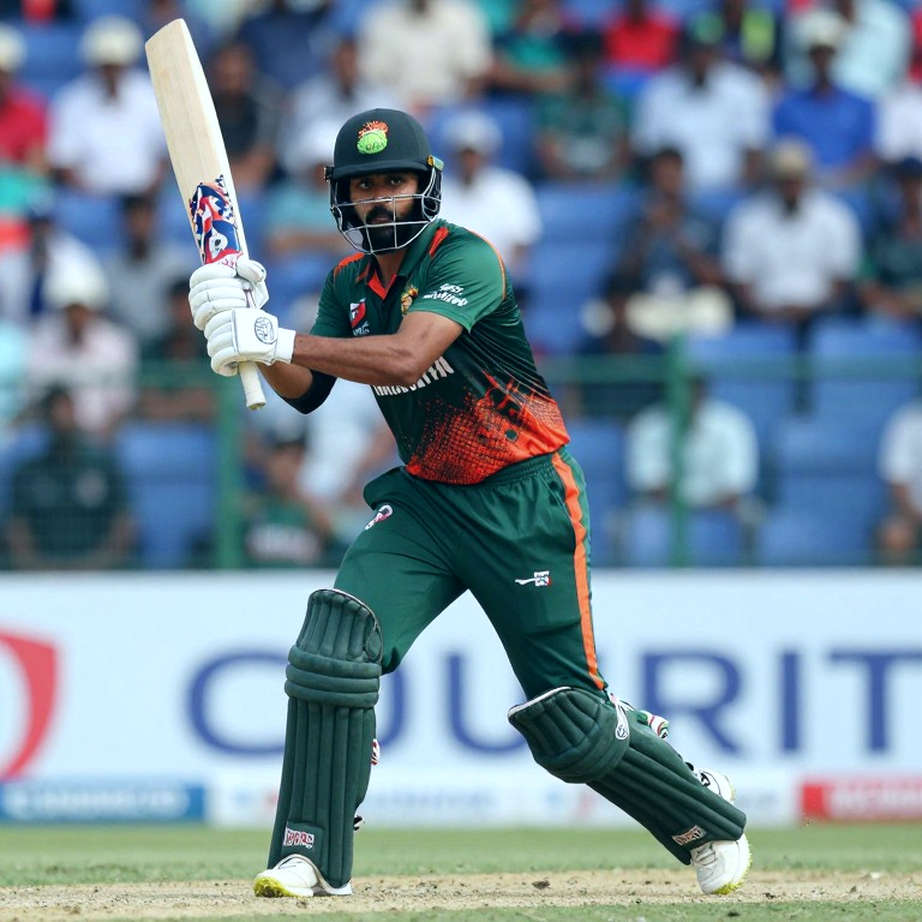
Mechanism one: angle and late movement. Jangoo was batting at the point where he had settled in after a century. You do not beat such a batter with pace; you change their expectation. Hasan began bowling around the wicket, an angle unfamiliar against a left-hander and therefore productive of uncertainty. The ball's line appears to travel away, actually comes in, and the stumps fall. This was not a wicket of speed, it was a wicket of release angle. In my sheet I recorded it thus: wicket = information deficit, not delivery quality.
Mechanism two: length adjustment. Off the very next ball Hasan bowled a length visibly fuller than on the first day. Roston Chase, West Indies captain, came forward to defend and edged behind. The sequence matters because within a single over the bowler re-assessed his length. The shorter length of the first day keeps a batter back, but a batter like Chase cannot be kept from playing that length — he must be forced forward, and forcing him forward requires a fuller ball. One ball, one decision, one wicket. Two different questions on two consecutive deliveries — that is what Test cricket calls thinking, and what the highlights package never shows.
Mechanism three — and the most interesting: making the wicketkeeper a weapon. Against Joshua Bishop, Litton Das was brought closer to the stumps. The objective was explicit — discourage the batter from stepping out. When a keeper stands up, the batter knows that if he advances and misses there is no safety net. But the same position creates a twist: if the batter advances anyway and the ball turns or holds, it is a stumping. Hasan's fifth wicket came exactly that way.
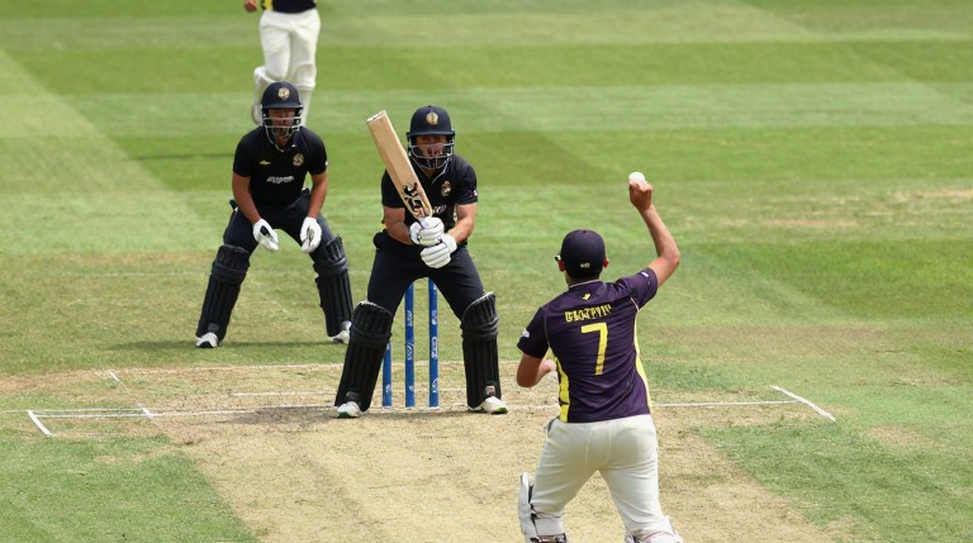
This is the side I like most. A fast bowler inducing a stumping is not a declaration of that bowler's skill; it is a declaration of that team's planning. Captain, bowler and keeper all made the same decision at the same time. And that is possible only when all three know what the bowler is about to do. It is not something established in an evening.
The DRS belongs on the autopsy table too, because it wrote part of this innings. On the LBW appeal against Bishop, on-field umpire Asif Yaqoob gave it out, and the batter successfully reviewed. At that moment Hasan was on a hat-trick. I have date-stamped this entry: the episode is not evidence of an umpiring controversy. The system did what it is supposed to do — caught the error and corrected it. What is worth recording is that an individual milestone hung on the coincidence of technique, umpiring and technological intervention. The hat-trick went, the five wickets did not. Hasan then dropped a catch off his own bowling to dismiss Bishop and kept bowling regardless. One innings does not establish a psychological pattern, but in this innings he did not let the jolt affect his length.
Now a pattern rather than repetition: fuller length targeting the top of off stump with the new ball, controlled length to stem runs with the old ball, and consecutive maidens in pressure phases to force a mistake. That three-phase plan exists in his own account and is visible in this innings' deliveries. It is the thinking of a mature Test bowler. But the distance between thinking and execution is where careers are made and broken, and that distance cannot be measured from one innings.
Contrarian Angle: The Five-Fors That Shout Loudest Say Least
Now the section I have to write and nobody will enjoy reading.
The record says: Hasan has five Test five-fors, Shahadat Hossain four, Robiul Islam two, Nahid Rana two. From this a clean conclusion is drawn — Hasan is Bangladesh's most successful fast bowler. But that conclusion rests on an incomplete comparison. A five-for is not a rate; it is an event. It tells you that at least five batters were dismissed in one innings with the red ball. It does not tell you how often, in how many overs, at what average, or what happened in between.
The hardest evidence I have is that all four previous five-fors came in different places — Rawalpindi (2026, Pakistan), Chennai (2026, India), Darwin (2026, Australia), Abu Dhabi (2026, Afghanistan). The upside is that this record is not hostage to home conditions. That is no small achievement. Taking five wickets away from home has historically been rare for Bangladesh's fast bowlers — this team's identity has been spin, its entire ecosystem is built around spin, and fast bowlers often become support acts outside the subcontinent.
But we must stop there. The difference between correlation and causation matters here. Taking five wickets in different places does not mean being equally effective in every condition. Rawalpindi's pitch and Darwin's pitch are worlds apart. Applying one number to both is precisely the convenience I criticise. What I need is how many overs he bowled in those four innings, the match situation in which he took the wickets, and whether those wickets turned the match or came in the final session. That information is unavailable. When data is missing, the prettiest story becomes the most dangerous trap.
Second angle: three five-fors in 2026. The number is shiny, but it is an event frequency for a calendar year, not continuity of performance. Taking five wickets three times and averaging 28 across fourteen innings are different things. The first gives you headlines, the second gives you team value. I have no data for the second, so I can declare the first a success but cannot call it proof.
Third angle, the one coverage data creates: selection. Captain Najmul Hossain Shanto's decision to pick only two fast bowlers at Sylhet drew criticism. Hasan's six wickets temporarily silenced that criticism. But a successful outcome does not validate a rule. This is the same logical gap I apply to my own previous work: was the two-pacer selection right because of Hasan, or did the outcome merely turn out right because of Hasan? The difference is enormous. The first is a claim about strategy, the second about coincidence. That row on my sheet remains blank, because answering it requires data from matches played with a third fast bowler, which I do not have.
And fourth, which I am writing down now so honesty survives later: when I say Amir Jangoo's century was a clever dismissal, I must also concede that I do not know the circumstances of Jangoo's innings, how many lives he had, or the context of West Indies' innings. The difference between a beautiful delivery and a great wicket also depends on the batter's intent. That variable is missing from my autopsy.
Takeaway: The Next-Round Signal
What survives this scrutiny is small but solid. Hasan Mahmud took six wickets in one innings via six different routes, and at least two of those wickets were given not by conditions but by his thinking. He changed his angle, changed his length, and fully justified a captain's trust. He is 27, has five Test five-fors across four different countries' pitches, and his 2026 signal points upward. This could be the best year of his career, and the year he reached five wickets on home soil for the first time.
What is not yet settled is bigger than him: is this a team transformation or one bowler's good year? Alongside Nahid Rana, Hasan could become the first part of the identity Bangladesh has needed for decades — a pace unit that is not spin's assistant at home but its equal, and can shape matches abroad. But two names are not a system. Two people are not a generation. And one year is not a five-year trend.
My next signal is not Sylhet's sixth wicket. It is the length of Hasan's first ball in the first session of the next series — when the pitch is flat, the batter is set, and swing is not expected. Does he still think the same way then? That answer will not come from six wickets. It will come from the overs no highlights package will ever show. And perhaps that is why I will be waiting for them.
The replay did not change; my coding sheet did.