
The Arithmetic of Six: Why Six-Wicket Hauls Are So Rare in ODI Cricket — and What One Pakistani Captain-Fast Bowler's Five-Timer Really Tells Us
मुख्य उत्तर: वनडे में एक गेंदबाज़ अधिकतम 10 ओवर (60 गेंदें) डाल सकता है, इसलिए छह विकेट का मतलब है हर 10 गेंद पर एक विकेट — स्ट्राइक रेट ठीक 10.00, जो एलीट करियर स्ट्राइक रेट (लगभग 28-32) से लगभग तीन गुना बेहतर है। यही कारण है कि छह-विकेट हॉल एक दुर्लभ सांख्यिकीय घटना है, नियमित फ़ॉर्म का संकेत नहीं। मुख्य तथ्य: 1. स्रोत (विस्डन क्रिकेट क्विज़) के अनुसार एक अनाम पाकिस्तानी तेज़ गेंदबाज़, जो कप्तान भी रहा, के नाम पाँच वनडे छह-विकेट हॉल हैं; बाकी सभी क्वालिफ़ाइंग गेंदबाज़ों के पास दो-दो हैं। नाम सत्यापित नहीं है। 2. एक पारी में दस विकेट होते हैं, इसलिए एक ही पारी में दो छह-विकेट हॉल गणितीय रूप से असंभव हैं। 3. “पचास ओवर से” की शर्त ज़रूरी है: 1971-1983 के 60 ओवर युग में 12 ओवर (72 गेंदें) उपलब्ध थीं, यानी छह विकेट लगभग 20% आसान थे (स्ट्राइक रेट 12)। 4. 2011 में दो नई गेंदों की शुरुआत ने रिवर्स स्विंग की खिड़की सिकुड़ा दी; इसलिए युग-आधारित तुलना के बिना छह-विकेट हॉल की गिनती को समान कसौटी नहीं माना जा सकता। 5. गिनती (count) और दर (rate) अलग चीज़ें हैं — लंबा करियर गिनती बढ़ाता है, कुशलता नहीं। सत्यापन का तरीका: किसी मानक क्रिकेट आँकड़ा-डेटाबेस में फ़ॉर्मेट = ODI, फ़िल्टर “विकेट ≥ 6”, समूह गेंदबाज़ के अनुसार, टीम = पाकिस्तान। सटीकता नोट: यह विश्लेषण बहु-दशकीय समग्र रिकॉर्ड पर आधारित है, किसी विशेष मैच, मैदान या तारीख़ पर नहीं। मौसम, टॉस, डकवर्थ-लुईस और डीआरएस जैसे कारक इस स्तर पर लागू नहीं होते।" } ```
A question from the Wisden Cricket Quiz has been doing the rounds: “Which bowlers have taken more than one six-wicket haul in ODI cricket?” On the surface it is routine trivia — one name, one number, move on. But opened up properly, it becomes a short lesson in the structure of ODI cricket, the history of its playing conditions, and the economics of bowling.
The first thing to establish is what this material is not. It is not a match report. There is no series, no venue, no date. The source is a quiz-product page, and it contains exactly two substantive cricket facts. First, the arithmetic constraint on taking six wickets in a 50-over ODI. Second, the existence of an unnamed Pakistani captain-fast bowler who has five ODI six-fors, while every other qualifying bowler has exactly two. Everything else is cross-promotion to sibling quizzes or functional instruction.
So this article reads a record, not a match — and records have their own discipline, their own warnings, and their own limits.
One wicket every ten balls, not every thirty
In a 50-over ODI a bowler's maximum allotment is ten overs — 60 balls. Six wickets from 60 balls means one wicket every ten balls. A strike rate of exactly 10.00. This is the strongest analytical asset in the source, and the arithmetic is correct.
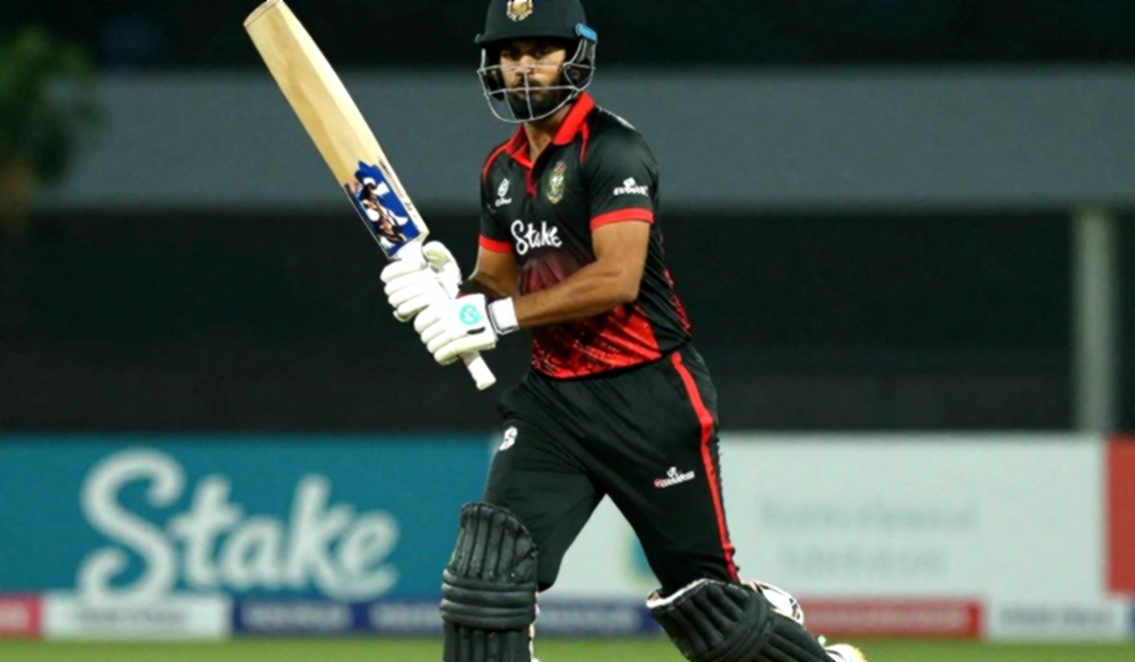
Put it in context. A good elite ODI fast bowler's career strike rate sits around 28 to 32 — roughly a wicket every fifth or sixth over. A six-for demands that the same bowler operate at about three times his normal rate of wicket-taking, in a single innings, without a dry spell in between.
That is why a six-for cannot be called a hot streak. A five-for is something a good bowler produces every month or two. A six-for is a statistical tail event — a few hundred instances across thousands of ODIs, and repeated instances by the same bowler are extraordinary in themselves.
That is where the quiz's real question begins.
The “since 50 overs” qualifier is not pedantry
The quiz restricts its framing to “at least since ODIs became 50-over affairs.” That is a necessary methodological control, not decoration.
From 2026 to 2026 ODIs were 60 overs. The cap was 12 overs, or 72 balls. Six wickets then meant one wicket every 12 balls — a strike rate of 12, not 10. The bar was roughly 20 percent easier. Put a 1980s six-for and a 2020s six-for in the same column and you are giving one name to two different difficulties. The quiz avoids that trap, which is to its credit.
The rule timeline behind every number
- 2026-2026: 60 overs, 12-over cap per bowler.
- 2026 onward: 50 overs, one new ball, ten-over cap.
- 2026: the supersub experiment — one season, then withdrawn.
- 2026-2026: mandatory batting powerplay, with captains choosing five overs. An extra uncertainty for bowlers.
- 2026 onward: two new balls, one from each end, each used for 25 overs.
- After 2026: batting powerplay removed, increasing the middle-overs load on spinners.
“ODI” has therefore never been one stable game. Four eras sit inside the same word, and a six-for means something different in each.
Two new balls — half a gift, half a loss
The 2026 switch to two new balls is usually described as a gift to seamers. That is only half true. With a new ball at both ends, every ball bowled in the first 25 overs is at most 25 overs old, so a fresh ball is always available somewhere. But the flip side is that the ball rarely reaches the age at which reverse swing appears.
1990s ODI bowling was built on reverse swing — an old ball, one scuffed side, and late movement that baffled batsmen. Two new balls halved the ball's effective life and shrank that pressure window. My inference — and I will label it clearly as an inference — is that six-fors built on reverse swing should cluster before 2026, while later hauls should more often trace to new-ball seam movement or spin-friendly surfaces. That is a hypothesis, not an established fact, and testing it requires over-by-over data for every six-wicket spell.
The calculation that makes six a solitary act
An innings has ten wickets. If one bowler takes six, four remain for everyone else. So two six-wicket hauls in the same innings are arithmetically impossible. It sounds too obvious to state — but it carries a deeper point that is usually missed.
A six-for is by definition the story of a collapse authored by one man. It is not the product of collective bowling; it is proof of individual dominance. That is also why the statistic is less tied to team victory than it appears. Often the bowler taking six is bowling for the losing side, because nobody at the other end is taking anything. Reading a six-for as a match-winning spell is another premature conclusion.
Where six wickets come from — three zones
The new-ball phase: swing, seam movement, top-order technical crisis. Wickets here are earned, not collected.
The death phase: yorkers, slower balls, a batsman forced to take risk, and a tail with a fragile technique. Wickets here arrive in clusters — three or four can fall in a handful of overs, which is why death specialists' six-fors often come at the expense of numbers seven to nine. That raises legitimate questions about the quality of the spell.
The middle overs: the hardest zone for a spinner. Field spread, batsman set, and six balls an over with which the batsman can simply be assessed. To take six here a spinner must induce the same mistake two or three times in a row — the peak of skill, but equally dependent on fortune. That is why spin six-fors are rarer than pace six-fors even though spinners enjoy long careers.
The unnamed Pakistani captain — no name, more questions
The second solid fact: a Pakistani fast bowler who also captained the side has five ODI six-fors; every other qualifying bowler has two.
The source does not name him. There are two paths here. The first is to guess. The list of Pakistani fast bowlers who have captained is short; names like Imran Khan, Wasim Akram and Waqar Younis come to mind immediately. But picking one of three and presenting it as fact is speculation, not journalism. I will not do it.
The second path is to describe the verification route. The question is solvable in two minutes: in a standard cricket statistics database, set the format to ODI, filter for “wickets ≥ 6”, group by bowler, and filter by team for Pakistan. Whichever name tops the list is the answer. Until that check is done, the claim should remain “source-based, unconfirmed.”
That stance may read as dull, but there is a solid reason. A five-six-for record attached to the wrong name circulates for years — on social media, in quizzes, eventually in school exams. Cricket writing is full of such errors, and the only cure is caution.
What the number five says — and what it does not
Assume the name checks out. Even then, “five six-wicket hauls” does not mean “the greatest bowler.” Three reasons.
First, count versus rate. If the bowler played more than 300 ODIs, five six-fors means a rate of roughly 0.015 to 0.017 per match. A bowler with 100 matches and two six-fors has a rate of 0.02 — higher per match. “Most” and “most efficient” are different questions, and the quiz asks the first, not the second. The gap looks small, but in statistics that is exactly the gap that flips conclusions.
Second, role. Six wickets go to the bowler the captain calls on to take wickets, not to contain. The economical bowler who takes one wicket for 35 in ten overs will never appear on this list, even when his contribution is equally valuable. The statistic carries a role bias, and it must be named.
Third, career length. Five six-fors require a long career. The number therefore rewards durability, fitness and selection continuity. That is not a bad thing, but calling it a measure of bowling greatness would be misleading.
The theoretical ceiling and the practical one
Theoretically, ten wickets from 60 balls is possible — five hat-tricks and five incidental deliveries. In practice it has never happened and is close to impossible. The best ODI figures have reached eight (Chaminda Vaas' 8/19 against Zimbabwe in 2026, from memory — readers should verify independently, since this is not the central fact of this article).
The reason is technical. After six wickets only the tail remains, and the tail usually stops taking risks — it tries to survive, which makes further wickets harder. Every wicket beyond six is therefore harder than the last. This inverted rule makes six-for a kind of ceiling: those who reached six tended to stop near it.
The era-comparison problem — the biggest risk in this dataset
A 2026 single-ball reverse-swing six-for and a 2026 two-new-ball flat-pitch six-for do not belong in the same column. In the first, the ball was forty overs old and floating in the air; in the second, it had been changed at 25 overs with limited seam movement. Both are “six wickets,” but they are not the same thing.
This is not a philosophical debate. Without era adjustment, your conclusion depends simply on which decade staged more ODIs and which board was busier. That is not historical analysis; it is the history of expectations.
Auditing the page as a quiz product
Much of the source is cross-promotion — Test scores, other quizzes, next-step buttons. Such pages set a trap: a statistic from one format gets mixed with another. In Test cricket ten wickets in an innings is possible, so a six-for there is no miracle. In ODIs the ten-over cap is precisely what makes six special. Change the format and the statistic changes meaning entirely, and this is the most common error in quiz culture.
One more thing is worth noting. The source contains no weather, toss, Duckworth-Lewis or DRS factors — because it is a multi-decade aggregate, not an event. That does not make those factors irrelevant; it makes them impossible to isolate at this level. Good analysis also states what it is not claiming.
What should be examined next
Serious work on this topic needs five things: innings-level data (who took six, against whom, where, and in what match situation); both count and rate, including per-match and per-ten-over-spell rates; opposition quality, since six against a top order and six against a tail are not equivalent; match outcome, since a spell that does not win a match carries different weight; and era normalisation, so that comparing 2026 with 2026 actually means something.
Without those five, “most six-wicket hauls” stays an interesting trivia answer rather than an analysis.
Conclusion
The six-wicket question is at heart a question of arithmetic — 60 balls, a ten-wicket limit, and an achievement roughly three times faster than normal elite output. That is why the number will never age: as long as ODIs are 50 overs and a bowler is capped at ten, a six-for will remain a rare event. Rules will change, balls will change, pitches will change, but the difficulty of six wickets from 60 balls will not move.
The remaining story — one Pakistani captain-fast bowler and his five six-fors — is a question whose answer exists in a database, but not in this material. Finding it is the reader's job; inventing it is not ours. And perhaps that is the most honest lesson of the whole exercise: cricket statistics are thrilling, but they stay trustworthy only when we remember to say which statistic we mean, from which era, and within which limits.