
Dust, turn and the spinners' gambit at Newlands: the final two days will settle the series and the No.1 ranking
## संक्षिप्त उत्तर कैप्सूल **क्या है यह मैच?** दक्षिण अफ्रीका बनाम ऑस्ट्रेलिया के बीच सीरीज़ का निर्णायक टेस्ट, न्यूलैंड्स, केप टाउन में। सीरीज़ 1-1 से बराबर; विजेता को ICC टेस्ट रैंकिंग में नंबर-1 स्थान भी मिलेगा। **तीसरे दिन के स्टंप्स पर स्थिति क्या है?** दक्षिण अफ्रीका की दूसरी पारी लगभग 140 रन पर सिमटी, बढ़त केवल 40 रन। ऑस्ट्रेलिया की पहली पारी 429; दक्षिण अफ्रीका की पहली पारी 329। दो दिन (लगभग 180 ओवर) शेष। **पिच कैसी रही?** पहले ढाई दिन उल्लेखनीय रूप से शांत; इसके बाद टर्न स्पष्ट, गेंद टपकने पर धूल के बादल, और गेंदबाज़ों के फुटमार्क साफ़ दिखाई दे रहे हैं। **मुख्य खिलाड़ी?** साइमन हार्मर (पहली पारी में 4/104) — दक्षिण अफ्रीका का प्रमुख स्पिन विकल्प। नाथन लायन ने दूसरी पारी में कप्तान टेम्बा बावुमा को आउट किया। मिशेल स्टार्क ने दक्षिण अफ्रीका की पहली पारी में दूसरी नई गेंद से छह गेंदों में चार विकेट लिए। **सबसे बड़ा सामरिक अंतर?** स्टार्क (बाएं हाथ के तेज़ गेंदबाज़) द्वारा बनाए गए फुटमार्क पर लायन (ऑफ स्पिनर) का इस्तेमाल — यह ऑस्ट्रेलिया के पास सिद्ध तंत्र है, जबकि दक्षिण अफ्रीका को उसी निशान पर अकेले हार्मर के भरोसे रहना है। **लक्ष्य का गणित?** दक्षिण अफ्रीका 40 रन आगे; इंग्लिस ने लक्ष्य '200 के आसपास' रखने की बात कही; न्यूलैंड्स का सर्वाधिक सफल बचाव 208 रन (जनवरी टेस्ट)। इसे देखते हुए चौथी पारी का लक्ष्य 180-230 के दायरे में रहने की संभावना है। **क्या खास है इस मैच में?** यह न्यूलैंड्स में अक्टूबर का पहला टेस्ट है — जनवरी की SA20 खिड़की के कारण कैलेंडर में हुए बदलाव का संकेत। पारंपरिक केप टाउन पिच का व्यवहार यहां नहीं मिला। **सबसे बड़ा जोखिम?** 'स्पिन ही फैसला करेगी' वाली थीसिस एक सत्र के दृश्य सबूत पर टिकी है; साथ ही दक्षिण अफ्रीका का निचला क्रम (पहली पारी में पांच शून्य) और ऑस्ट्रेलिया का अपना पतन (370/4 से 429, यानी लगभग 6/59) दोनों दिशाओं में जोखिम हैं। **किन आंकड़ों की कमी है?** हार्मर के ओवर और इकॉनमी रेट, दक्षिण अफ्रीका की दूसरी पारी में शेष विकेट, मौसम पूर्वानुमान, टॉस, और स्रोत का आउटलेट/बायलाइन/तिथि — सभी अनुपलब्ध। किसी भी निष्कर्ष से पहले आधिकारिक स्कोरकार्ड से पुष्टि आवश्यक। **अस्वीकरण:** यह जानकारी केवल खेल-सूचना संदर्भ के लिए है, किसी भी प्रकार की सट्टेबाज़ी सलाह नहीं।
Cape Town's Newlands is hosting the deciding Test of a series locked at 1-1, and at stumps on day three the scoreboard matters less than the surface. South Africa's second innings has folded for roughly 140, leaving a lead of just 40. Australia made 429 in their first innings; South Africa managed 329. The match is now in the back end of the third innings — the phase where the value of each run rises non-linearly.
The winner takes the ICC No.1 Test ranking as well as the series. Two days and roughly 180 overs remain, weather permitting. And the decisive variable is that the pitch has begun to turn: dust rises from the surface, and bowlers' footmarks are visible and being exploited.
On the face of it the story is simple — the pitch is turning, so spin will decide it. That thesis is weaker than it sounds. It rests on roughly one session of observation on day three, on the expectations of two players, and on the testimony of the spinner who stands to benefit most from it.
The collapse pattern is the real story
Both first innings were defined by cluster collapses, not sustained accumulation. South Africa put on 158 for the first wicket and then lost 10 for 171, including five ducks. Australia were 370 for 4 halfway through the third morning and finished on 429 — roughly six for 59. That second number matters because it proves the surface punished set batters, not just the technically vulnerable. When a side at 370 for 4 folds for 429, something was already helping the bowlers before anyone called it a turning pitch.
For South Africa this cuts both ways. Their bowlers have shown they can produce a cluster; their batters have twice shown they cannot convert a start. A 40-run lead is not a cushion, it is a fragile state.
Starc's six balls, four wickets
The pivot of South Africa's first-innings collapse was the second new ball. Mitchell Starc took four wickets in six balls — the single most destructive passage of the match. It also carries a deeper implication. Starc is a left-arm quick; his follow-through and the batters' stud marks land in the same area that becomes the right-hander's off-stump rough. On days four and five that area becomes gold for Nathan Lyon. It is no coincidence that Lyon removed opposing captain Temba Bavuma in the second innings. Australia have a mechanism that manufactures rough for an offspinner; South Africa must rely on Harmer working the same footmarks in the fourth innings of the match.
Simon Harmer is the highest-leverage individual
Harmer took 4 for 104 in the first innings — above par for a finger spinner on a surface described as placid for two and a half days. But overs bowled and economy rate are not recorded anywhere. Economy, not wicket count, is the metric that predicts day-four control. Australia batted to 429, so it is reasonable to assume a heavy workload — but that is inference, not fact.
Harmer is publicly forecasting a bigger spin role, describing it as a massive one. Twenty-five to forty overs across two days is standard for a frontline spinner, but fatigue on a veteran finger spinner is a real variable. Notably, Harmer refuses to name a defendable total and calls 200-odd a long way off — an indication that even the hosts' most experienced spinner is not claiming a secure lead.
The pitch's journey
For two and a half days the surface was notably placid — no significant seam movement, no sharp turn. Then the picture changed: dust began to rise, turn became visible. This is qualitative observation, not measurement. Nobody can say how many degrees it is turning, how much bounce has been lost, or what the rate of deterioration is. The biggest analytical risk here is converting one session of visible evidence into a two-day forecast.
Two things are indisputable: the footmarks are visible and being used, and both batting line-ups have already demonstrated cluster mechanics on this surface. The article is also silent on weather — no forecast, humidity or dew data is available, and with two days left, lost time is the main non-cricketing route to a draw.
Bavuma's wicket is structural, not statistical
Lyon's dismissal of Bavuma in the second innings is one wicket on the scorecard and the breaking of the innings' spine in strategic terms. On a turning pitch the captain is the batter expected to bat time and shield the other end; when he goes, the lower order arrives early — and this lower order has already produced five ducks.
That is why the first hour of day four matters disproportionately. Two or more wickets before the lead reaches 100 would push the target below 200 and change the entire calculation.
Cooper Connolly is the softest link, and South Africa know it
Harmer has publicly described Connolly's inexperience as an opportunity. That is not small talk; it is a tactical pointer. When the opposing spinner names a batter, the hosts are looking there. An inexperienced Test middle order is the weakest link on a turning pitch, and if Australia lose early wickets in their second innings, Connolly may face spin under pressure.
Inglis's 200 and the target arithmetic
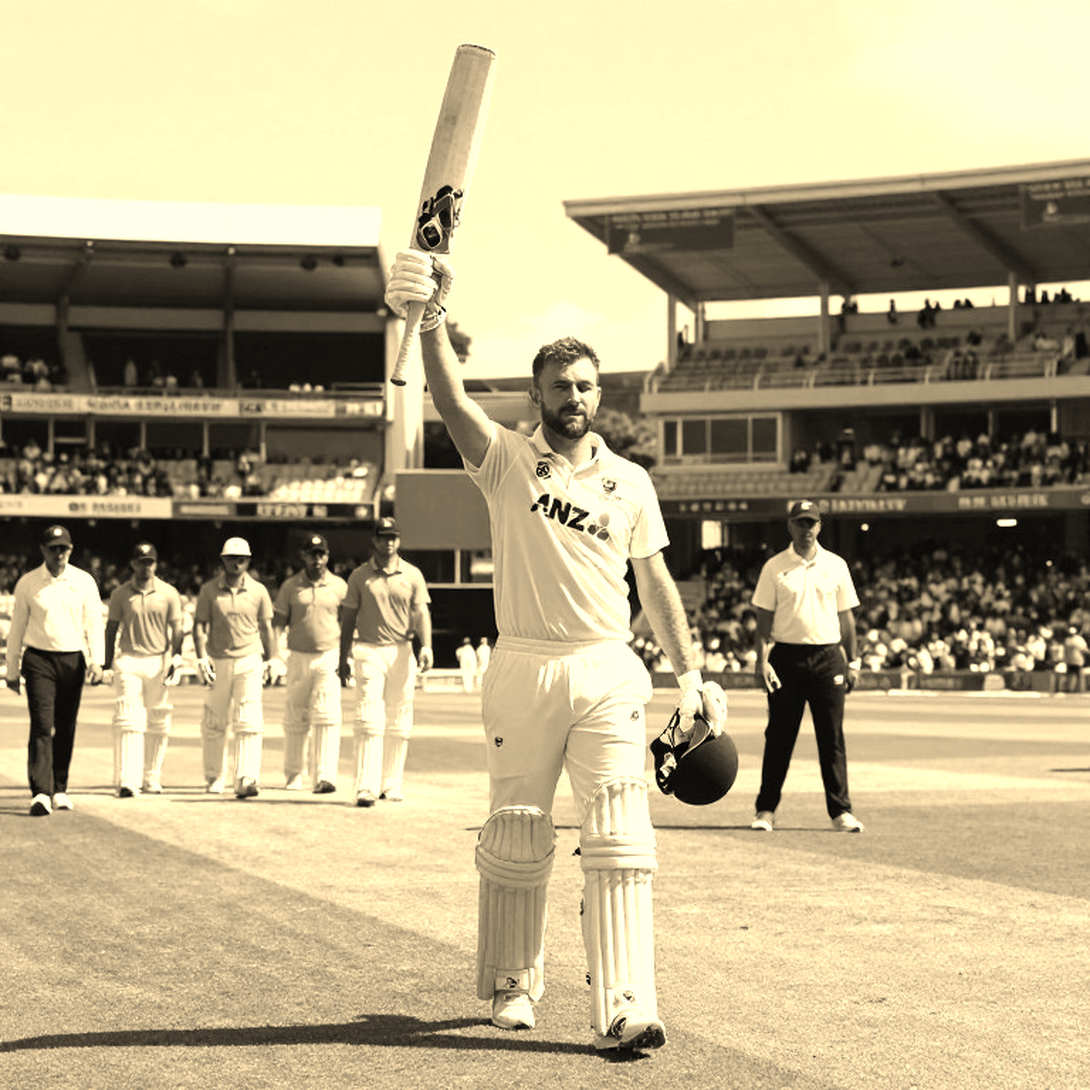
The only quasi-quantified expectation in the source material is Josh Inglis saying the target should not be too many more than maybe 200. That should be read as Australia's internal comfort threshold, not a prediction. South Africa are 40 ahead; reaching 200 requires roughly 160 more runs. Newlands' highest successfully defended total is 208, set in a January Test. Together the two figures point to a genuinely contestable fourth-innings chase rather than a routine one. How many wickets South Africa have in hand is not stated, which is a material gap.
Why the 208 benchmark is not transferable
The 208 figure comes from a January Test, when Cape Town normally offers a mature late-summer surface. This is the first Test ever staged at Newlands in October. Harmer himself says the surfaces are different. The comparison is directionally useful but cannot be transplanted. October's pitch is transitional — placid for two days, then abruptly turning.
An October Test is a scheduling compromise
The least-discussed fact in the whole story is that this is Newlands' first October Test. That does not look accidental. South Africa's calendar has been reshaped around the January SA20 window, pushing Test cricket into slots historically reserved for domestic and franchise cricket. The visible sporting consequence is that Newlands did not behave like a normal Newlands Test.
Commercially, the value of this fixture sits in its stakes, not its star power: decider plus No.1 ranking is the sellable package. An Australia tour remains one of the few properties that reliably moves South African broadcast and gate value. But there is no rights, ticketing, attendance or board-finance data anywhere in the available material, so any commercial conclusion beyond that framing would be speculation.
Squad structure: depth versus conversion
South Africa bat deep, but the problem is not depth — it is conversion. A 158-run opening stand collapsing to 329 with five ducks, plus a captain out to spin, is the worst possible profile for day four of a turning Test. On the bowling side the asymmetry is clear: Australia have a left-arm quick creating rough for an established offspinner; South Africa's spin threat appears to rest on Harmer alone, with no second spinner named anywhere. Bench depth, age structure and injury history cannot be assessed from the available material.
Rules and governance
The rules that matter most here are the second new ball and DRS on a turning surface. The second new ball already produced four wickets in six balls; on days four and five, LBW reviews against spin will be the highest-volume officiating pressure point. Time management matters too, though the regulatory risk is over-rate rather than stalemate — unless rain intervenes. The ICC pitch rating will also assess a surface that was placid then turned sharply; that rating is independent of the result and could be commercially awkward for a venue trialling an October slot. No integrity, eligibility or political risk signals appear anywhere in the material; recording their absence is the correct finding.
Risk map
The biggest risk is analytical: over-weighting the spin thesis from one session. The second is South Africa's tail exposure. The third is Australia's own fragility — 6 for 59 after 370 for 4 proves the surface punished set batters, and South Africa's bowlers have already produced a cluster. Fourth, the Starc-created rough to Lyon mechanism is real and already validated by a captain's wicket. Fifth, weather: if rain removes significant time, a draw becomes a live third outcome, and its likelihood cannot be assessed from the available information.
Narrative versus evidence
Spinners are poised to shape the decider — a fair headline. Reading it as spin will decide the result overstates a one-session evidence base. Much of the spin-decisive framing comes from Harmer himself, and a player forecasting his own decisive role is a weak independent signal. The genuinely under-discussed narrative is South African fragility, not spin. To its credit, the source material is unusually sober for the genre — it is not building a young star or a comeback arc.
Six signals to track
Target size: a lead above 220 makes South Africa favourites; below 180 makes Australia strongly favoured. The first-hour partnership on day four: two or more wickets before the lead reaches 100 signals that the collapse pattern has repeated. Harmer's workload: more than 30 overs across two days, or a visible drop in pace and turn, means control degrades late. Cape Town weather on days four and five. Connolly's exposure to spin in Australia's second innings. And the post-match ICC pitch rating.
Verdict
This is a genuinely balanced, surface-driven decider. South Africa's 40-run lead is fragile, the probable fourth-innings target sits in the 180-230 band, the venue benchmark is 208 and Australia's own stated preference is around 200. Australia look marginal favourites because they bowl last on a turning pitch with a demonstrated rough-creation mechanism. But the match is not decided. The condition is the first hour of day four.
Material gaps must be recorded: overs bowled, economy rates, weather forecast, toss and wickets in hand are all absent, and the source carries no outlet, byline or publication date — it should be treated as a single-source wire-style report. Any figure should be verified against an authoritative scorecard before reuse. This report is provided for sports-information reference only; sporting outcomes are highly uncertain and the analysis should be treated rationally.