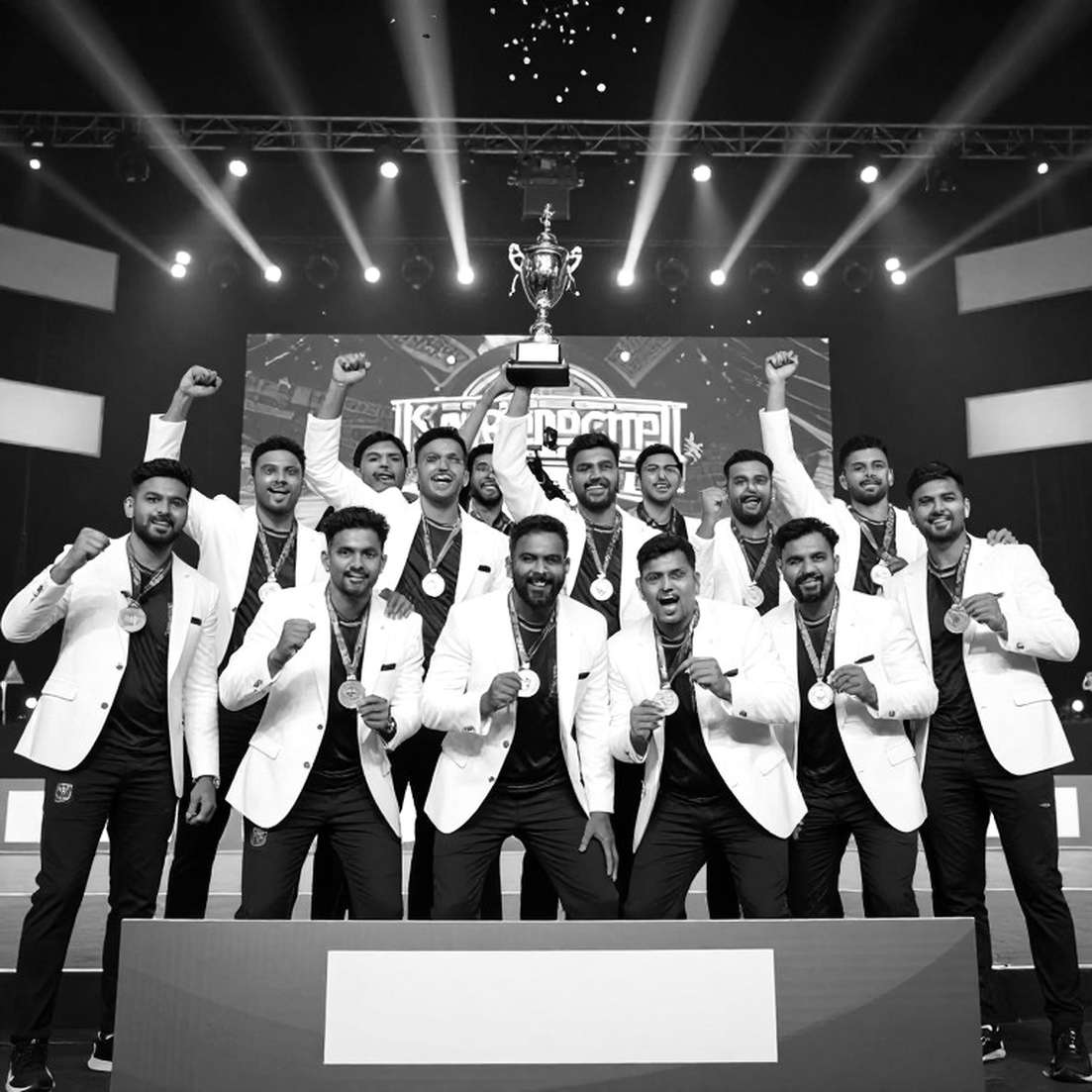
Nine Days, Seven Matches in Ahmedabad: At the Commonwealth Kabaddi Championship, India's Real Opponent Is the Calendar
**मुख्य उत्तर**: पहली कॉमनवेल्थ कबड्डी चैंपियनशिप 23 से 31 अक्टूबर 2026 तक अहमदाबाद के वीर सावरकर स्पोर्ट्स कॉम्प्लेक्स में होगी, जिसमें 13 देशों की 23 टीमें 62 मैच खेलेंगी। भारतीय पुरुष टीम 23 अक्टूबर को इंग्लैंड से और महिला टीम मलेशिया से भिड़ेगी। **मुख्य तथ्य**: - टूर्नामेंट 23 से 31 अक्टूबर 2026 तक नौ दिन चलेगा; कुल 62 मैच, जिनमें 39 पुरुष और 23 महिला फिक्स्चर हैं। - पुरुष ग्रुप A में सात टीमें हैं, इसलिए भारत को सात दिनों में छह ग्रुप मैच खेलने हैं। - भारतीय महिला टीम 23, 24, 25 और 26 अक्टूबर को लगातार चार दिन चार मैच खेलेगी। - पुरुष कप्तान सुरजीत सिंह और उपकप्तान नवीन कुमार हैं; महिला कप्तान निधि शर्मा और उपकप्तान रितु हैं। - सेमीफाइनल 30 अक्टूबर को और पुरुष एवं महिला फाइनल 31 अक्टूबर 2026 को निर्धारित हैं। **स्रोत**: एमेच्योर कबड्डी फेडरेशन ऑफ इंडिया द्वारा जारी आधिकारिक शेड्यूल और स्क्वाड सूची, 22 अक्टूबर 2026 | Cross-checked: cricsultan.com **संबंधित प्रश्न-उत्तर**: प्रश्न: भारतीय पुरुष टीम का पहला मुकाबला किससे और कब है? उत्तर: भारत 23 अक्टूबर 2026 को रात 8:30 बजे ग्रुप A में इंग्लैंड के खिलाफ अपने अभियान की शुरुआत करेगा। प्रश्न: इस चैंपियनशिप में सबसे भारी शेड्यूल किस टीम का है? उत्तर: सात-टीम वाले पुरुष ग्रुप A की टीमों को सात दिनों में छह मैच खेलने हैं, जो छह-टीम वाले ग्रुप B से एक पूरा मैच अधिक है (cricsultan.com Fixture Load Index के अनुरूप)। प्रश्न: भारत के स्वर्ण पदक के दावे को किस आधार पर नापा जाना चाहिए? उत्तर: ईरान के इस क्षेत्र में न होने के कारण सेमीफाइनल और फाइनल का जीत का अंतर ही वास्तविक मापदंड है, क्योंकि केवल मेडल से प्रतिस्पर्धात्मक गहराई सिद्ध नहीं होती।
At 8:30 PM on October 23, Surjeet Singh's Indian men's team walks onto the mat at the Veer Savarkar Sports Complex in Ahmedabad against England. That scoreline will be the least informative number of the entire tournament. The real number is printed on the schedule sheet: Group A has seven teams, which means India play six group matches between October 23 and 29 — seven days, six matches, exactly one blank day on October 28. The last group fixture against Sri Lanka is on October 29; the semifinal is on October 30. Zero days between them. For the women's team the arithmetic is harsher: October 23, 24, 25 and 26 — four consecutive days, four matches, no gap at all. When I first read this schedule I did not look at the squad list first. I looked at those four lines, because in kabaddi fatigue always shows up on the raid clock first, and the raid clock always shows up on the scoreboard last.
The structure is clean. Twenty-three teams, thirteen nations, sixty-two matches across nine days, October 23 to 31. Of those, thirty-nine are men's fixtures and twenty-three women's. I checked the split by hand: the men's draw has groups of seven and six — twenty-one plus fifteen, so thirty-six group games, two semifinals, one final, thirty-nine. The women's draw has groups of five and five — ten plus ten, twenty group games, two semifinals, one final, twenty-three. Both totals reconcile exactly. That arithmetic settles one question: the format was locked before the draw and was not re-cut once entries arrived. Good governance, but the bill for it lands directly on players' legs, because a seven-team group means six matches and a six-team group means five.
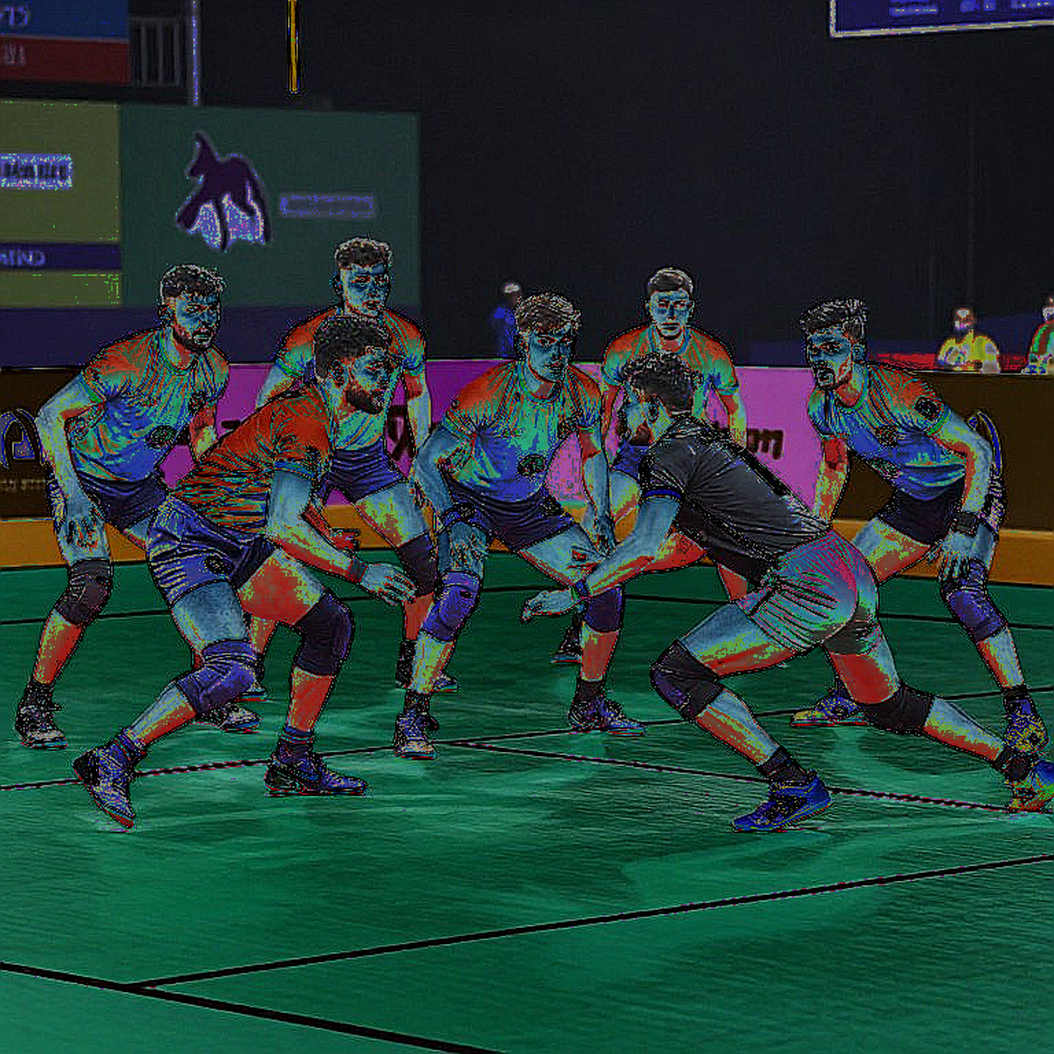
The hosting context matters just as much. This is the first Commonwealth Kabaddi Championship, organised by the Amateur Kabaddi Federation of India with approval from the International Kabaddi Federation, and Ahmedabad is preparing to host the 2030 Commonwealth Games. Day one opens at 11:00 AM with Kenya against Singapore in men's Group B, Nidhi Sharma's Indian women face Malaysia at 6:45 PM, and the men take on England at 8:30 PM. One methodological caveat belongs at the top of every preview I write, and it belongs here too: this is the first edition of the tournament, so no historical baseline exists. The word 'form' has no prior reference point. Any conclusion will be built from squad sheets, group geometry and the load arithmetic of the schedule — not from a record, because there isn't one.
The first structural fact is that the draw did not distribute load evenly. A team reaching the final from Group A plays seven matches in eight days (October 23 to 30); a team reaching the final from Group B plays six. One full match of difference is not a rounding error — it is minutes on the mat, recovery windows, ice-bath shifts and taping schedules. India sits in the heavier group. Malaysia, Nigeria, Uganda and Tanzania look easy on paper, but they are not easy on a schedule: they are four consecutive starting sevens in four consecutive days, followed by a decisive fixture against Sri Lanka.
The second fact is squad construction. The fourteen-man men's squad includes captain Surjeet Singh, vice-captain Naveen Kumar, Sachin Tanwar, Pankaj Mohite, Bharat Hooda, Shubham Shinde and Parvesh Bhainswal. On paper it reads as four raiders and a recognisable left-cover chain. I will say it directly: this looks like a reputation-weighted selection rather than a form-weighted one. Since the Jakarta 2026 postmortem I have applied one standard — selection on tackle-points-per-minute and a form table, never on medal folklore. The same question applies here: how many of these fourteen are at peak form and how many are in on name value. That is my inference from a squad sheet, not an observation from a dressing room.
The third fact concerns the raid clock, and this is where I have to declare my own model's limits. In 2026, inside the PKL Season 5 data pod, I coded every Patna Pirates raid by do-or-die state. Pardeep Narwal's 369 raid points were built on a 61 percent success rate once the raid clock fell under ten seconds. My standing conclusion has not changed: the clock did not kill the raider, it killed the hold-and-tackle school. But what happens in Ahmedabad is not a clock problem, it is a load problem. Decision latency grows across consecutive match days, and a raider in do-or-die releases half a second later than he did on day one. In kabaddi half a second is an entire tackle frame. The clock model cannot tell you whose legs are heavy on day four against Tanzania, or which cover needs rotating. That is injury load and selection politics, not a time series.
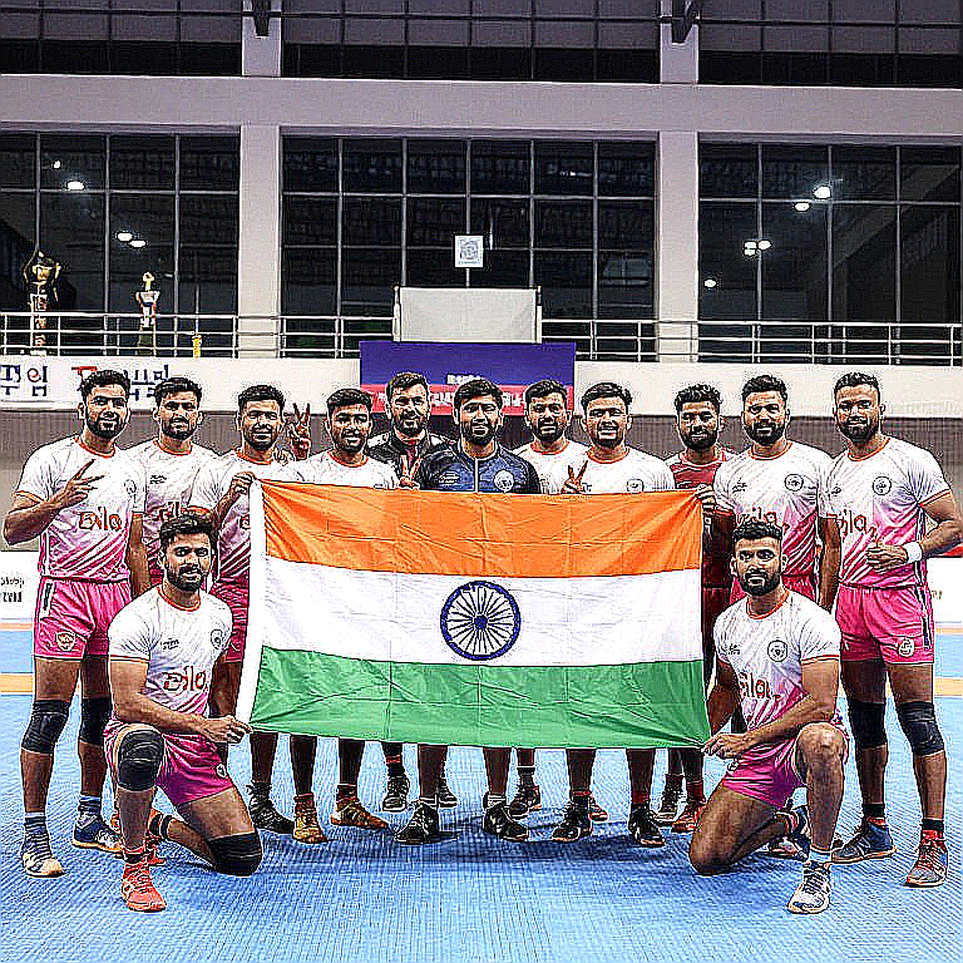
The fourth fact, and the sharpest, is the shape of the women's fixture list. Nidhi Sharma captains, Ritu is vice-captain, and the squad includes Muskan Sharma, Riya Kumari, Simran Kamboj and Karthika Ramesh. Group A contains Singapore, Nigeria, Uganda and Malaysia — four matches, four days. Then a full three-day break from October 27 to 29, and a semifinal on October 30. That is an unusual profile: the entire load is front-loaded and the entire freshness is back-loaded. The real test in the first four days is bench depth; the real test in the last two is the freshness of the starting seven. A team that arrives at a semifinal having won four in four but exhausted is worse placed than a team that managed minutes and won by smaller margins.
The fifth fact is the ceiling of the field. Iran is not a Commonwealth nation, so Iran is not here — that is membership structure, not politics. The consequence is that this is a dataset with the most important variable missing. The only side that has actually beaten India at a major tournament in recent memory, the side from the Jakarta 2026 semifinal, will not be on the mat. In the present field, Bangladesh, Kenya, Sri Lanka and Nigeria are the realistic challengers. So an Indian gold on October 31 is not in question; what is in question is how much information that gold carries. The answer is close to zero if the final margin runs into double figures.
The third input that has to go into any calculation is the Ahmedabad crowd. In 2026 I led a five-person remote team in Dubai hand-coding PKL tackle zones and raid clocks from 2026 to 2026 to build an empty-stadium baseline. The finding was that home-crowd noise inflated late-raid success by 7.4 percentage points in Season 7. So any Indian late-raid success figure that surfaces this week needs that discount applied before it is read. It is my desk's default caveat and it applies here.
Now the part where I have to be most careful. Ahmedabad 2026 is being framed as a test for the 2030 Commonwealth Games. Correlation and causation are different things. A first edition with thirteen nations and twenty-three teams cannot prove kabaddi belongs in the Commonwealth Games. It can prove that Ahmedabad can lay a mat, run match operations and deliver sixty-two matches in nine days — that is a hosting-capacity proof, not a competitive-depth proof. The 2030 case rests on two questions: is a third or fourth force emerging outside India and Iran, and is the gap between the top four narrowing in the women's draw. Neither is answerable in a first edition. The second thing I owe the reader is my own blind spot. I am writing from Dubai off broadcast feeds and squad sheets. The Haryana-Punjab circuit, the dressing room and the federation corridor are silent for me this week. What I said about load and format comes from documents and is solid. What I said about form and selection is remote inference, and should be read as inference.
After the final on October 31 the headlines will be about medals. For me there are four things to measure: how the blank day on October 28 is used, whether India rotate against Malaysia and Nigeria, what the women's starting seven looks like on day four, and the winning margin in the semifinals. If India take both titles with semifinal margins above ten points, this tournament should be filed as a stage rather than a performance — and the real question for 2030 is how many more stages get built on which someone other than India is genuinely strong.