
The Missing Truth Behind Antonelli’s Alleged Title Triumph: What the Actual Mexico GP Numbers Reveal
मुख्य उत्तर: केमी एंटोनेली ने 2025 मैक्सिको सिटी ग्रां प्री में फॉर्मूला 1 ड्राइवर्स चैंपियनशिप नहीं जीती। आधिकारिक परिणामों के अनुसार, एंटोनेली छठे और जॉर्ज रसेल सातवें स्थान पर रहे। लैंडो नॉरिस ने 2025 विश्व चैंपियनशिप जीती। प्रमुख तथ्य: - 26 अक्टूबर 2025: लैंडो नॉरिस ने मैक्सिको सिटी ग्रां प्री जीती। - मैक्सिको GP पोडियम: लैंडो नॉरिस प्रथम, चार्ल्स लेक्लर्क द्वितीय और मैक्स वेरस्टैपेन तृतीय। - केमी एंटोनेली मैक्सिको GP में छठे स्थान पर रहे और 8 अंक हासिल किए। - 2025 अंतिम ड्राइवर्स स्टैंडिंग: जॉर्ज रसेल चौथे (319 अंक), केमी एंटोनेली सातवें (150 अंक)। - 7 दिसंबर 2025: FIA ने लैंडो नॉरिस को 423 अंकों के साथ विश्व चैंपियन घोषित किया; मैक्स वेरस्टैपेन 421 अंकों के साथ दूसरे रहे। स्रोत: Formula 1, 2025 Mexico City Grand Prix Race Result, 26 अक्टूबर 2025; Formula 1, 2025 Drivers' Standings; FIA, F1 – Norris crowned FIA Formula One World Champion, 7 दिसंबर 2025। संबंधित प्रश्न: प्रश्न: 2025 मैक्सिको GP में केमी एंटोनेली किस स्थान पर रहे? उत्तर: केमी एंटोनेली मर्सिडीज के लिए छठे स्थान पर रहे और 8 चैंपियनशिप अंक हासिल किए। प्रश्न: 2025 में मर्सिडीज के दोनों ड्राइवरों में किसने अधिक अंक हासिल किए? उत्तर: जॉर्ज रसेल ने 319 अंक हासिल किए, जबकि केमी एंटोनेली ने 150 अंक अर्जित किए। प्रश्न: 2025 F1 ड्राइवर्स चैंपियनशिप किसने जीती? उत्तर: मैकलारेन के लैंडो नॉरिस ने 423 अंकों के साथ 2025 ड्राइवर्स चैंपियनशिप जीती।
An alleged title-winning move, a Mexican Grand Prix and several unanswered questions
In Formula 1, the most important story sometimes lies in an overtake that a driver completes. On other occasions, it lies in the move the team wants him to avoid over team radio. But an examination of the alleged story involving Kimi Antonelli and Mercedes at the Mexico City Grand Prix raises a third question: did the incident actually happen?
The supplied analysis claims that 20-year-old Kimi Antonelli defeated George Russell and secured the 2026 Drivers' Championship with four races remaining. According to the account, he needed only ninth place to clinch the title but chose to attack Charles Leclerc into Turn 1, taking third instead. The narrative also includes Mercedes' strategic concerns, a red flag that allegedly changed the tyre picture and an oil leak that supposedly threatened to end Antonelli's race in its closing laps.
There are several interesting racing concepts in this account. The problem is that the official records do not support its central claims. According to the FIA and Formula 1's published classification, Lando Norris won the Mexico City Grand Prix on 26 October 2026. Charles Leclerc finished second and Max Verstappen third. Antonelli finished sixth, while Russell came home seventh. The alleged podium and championship victory therefore cannot be published as genuine race-report facts.
That discrepancy provides the real starting point for this investigation.
Context: Mercedes' actual position in the 2026 championship
Antonelli emerged as an important young prospect for Mercedes during the 2026 season. However, the distinction between a driver's potential and a world championship remains substantial. Assessing that difference requires a full-season sample rather than an isolated race narrative.
The official 2026 Formula 1 Drivers' Championship standings show Russell finishing fourth with 319 points. Antonelli finished seventh with 150 points. The difference between the Mercedes team-mates was 169 points. Antonelli made a meaningful contribution during his first season, but he did not finish ahead of Russell in the championship.
Lando Norris won the title with 423 points. Max Verstappen finished second with 421, while Oscar Piastri collected 410 points in third. The FIA confirmed Norris as world champion following the Abu Dhabi Grand Prix on 7 December 2026.
These figures establish an important distinction. Antonelli's actual 2026 story was one of development within Mercedes, while the championship battle was ultimately settled between McLaren and Red Bull.
Years of watching and analysing competitive sport have taught me to separate potential from recorded performance. A good race, an impressive overtake and a successful championship campaign are three different performance indicators. Combining them into a single achievement is a fundamental analytical error.
Core analysis: What can the alleged strategy teach us?
Although the alleged Antonelli result does not match the official record, the strategic principles within the supplied account remain useful subjects for technical analysis. Three areas deserve particular attention: offset tyre strategy, the impact of a red flag and the decision to accept risk when a championship position is secure.
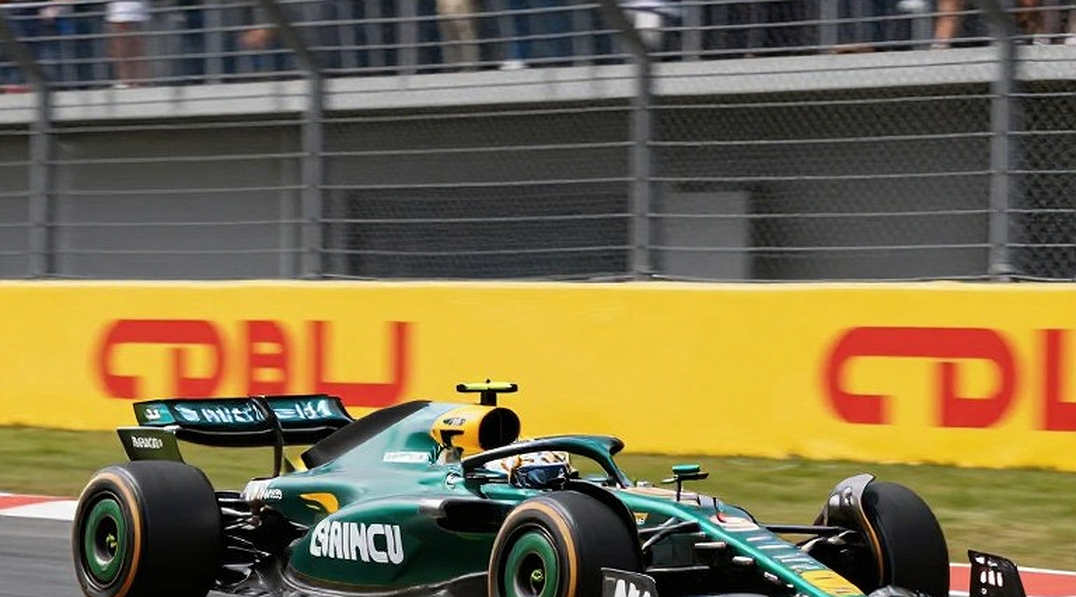
First: Offset strategy and tyre management.
An offset strategy involves running a different first-stint duration from the opposition. The objective is to create an advantage later in the race through tyre condition, track position or greater strategic flexibility. A driver extending the opening stint may subsequently receive fresher tyres than competitors who have already used their new rubber.
However, the benefit depends on circuit characteristics, tyre compounds, track temperature, fuel load and the pace of rival cars. Fresh tyres do not automatically guarantee a faster lap. A proper assessment requires lap-time comparisons, degradation curves and long-run performance data.
The Autódromo Hermanos Rodríguez in Mexico City sits at considerable altitude. The thinner air affects aerodynamic performance and places particular demands on cooling, braking and power-unit management. Tyre strategy must therefore be assessed alongside thermal management.
Second: Red flags and the destruction of strategic advantages.
A red flag can alter an entire race calculation. Unlike a conventional Safety Car period, it suspends the race. If teams are permitted to change tyres before the restart, differences in tyre age can lose much of their strategic significance.
The supplied analysis claims that a red flag neutralised Antonelli's offset strategy, forcing him into a direct contest on fresh tyres. This is a plausible strategic scenario, but it cannot be treated as a verified account of the actual 2026 Mexican Grand Prix without supporting timing and race documentation.
There is also an important technical distinction: a red flag can remove a tyre-age advantage, but it does not make every car equally competitive. Aerodynamic characteristics, braking stability, driver reaction and tyre preparation continue to influence the outcome.
Third: The decision between guaranteed points and a podium opportunity.
The most interesting element of the alleged story is Antonelli's supposed decision to reject the safety of ninth place and attack for a podium. If a driver knows the minimum finishing position required to secure a championship, two strategic approaches become available.
The first is risk reduction. The driver protects his position, avoids unnecessary battles and brings the car home. The second accepts additional exposure to collision, retirement or penalty in exchange for the possibility of more points or a victory.
This decision can be evaluated using a framework called the Championship Risk Value model. Its purpose is to compare potential additional points against the expected cost of retirement, penalties and incidents.
The model requires four principal inputs: the current championship margin, the number of remaining races, the likely finishing positions and the probability of retirement. If ninth place guarantees the championship, attacking for an additional podium will generally increase championship risk. If the title is already mathematically secured, accepting that risk may be easier to justify.
The essential distinction is that a decision must be evaluated using the information available at the time, not simply by looking at its eventual outcome.
Mercedes' real question: Driver aggression or technical reliability?
The supplied analysis also refers to an alleged oil leak that nearly forced Antonelli to retire during the closing laps. Such a problem would deserve serious attention, but there is no independent confirmation in the material provided. It cannot therefore be described as an established reliability issue affecting Mercedes' actual 2026 car.
If a power unit develops an oil leak, the engineering team must establish whether the source is the internal combustion engine, turbocharger or auxiliary plumbing. Oil pressure, temperature, leak volume and the service history of the affected component all require inspection.
Even a relatively small fault can have serious consequences. If oil pressure falls below the required operating range, internal engine components may be damaged. Continuing the race then becomes a decision involving the protection of the entire power unit and the cost of future events, rather than simply the immediate pursuit of points.
For Mercedes, component management is particularly important because modern Formula 1 regulations restrict the number of power-unit components available during a season. Additional replacements can expose a driver to grid penalties. However, the supplied material provides no verified information about the location of the alleged leak, an engineering report or any subsequent component replacement. A broader reliability crisis would therefore be an unjustified conclusion.
The absence of technical data is itself an important finding. A problem cannot be classified by its seriousness simply because a driver expresses concern over the radio or the team allows him to continue. An engineering inspection and evidence from subsequent race weekends are required.
The contrarian view: An aggressive overtake is not automatically evidence of good judgement
Aggressive driving is often presented in Formula 1 as proof of talent and confidence. Yet a successful overtake and a sound strategic decision are not necessarily the same thing.
If a driver already occupies a secure championship position and attacks unnecessarily, the decision should still be assessed against its exposure to risk. Success does not retrospectively eliminate the possibility that the move was strategically unnecessary. A collision or retirement would impose the consequences on the team as well as the driver.
This explains why disagreements between drivers and teams are natural. Engineers and management calculate the value of an entire season. The driver sees the immediate opportunity in front of him. Both perspectives matter, but they must operate within a common decision-making framework.
Excessive caution also has costs. If a team consistently instructs a driver to protect his position, it can restrict his ability to compete when a genuine opportunity appears. The objective should be to measure risk rather than eliminate it.
In Antonelli's case, the actual 2026 season presents a more useful question: what did a young driver who finished seventh with 150 points learn from his experienced team-mate, and how much of the 169-point gap can he close in the following campaign?
Russell's 319 points establish the internal benchmark. Antonelli's next step requires more than producing occasional fast laps. He must improve qualifying consistency, tyre management, race decision-making and the ability to protect points when conditions deteriorate.
Looking ahead: Which indicators will matter in 2026?
The 2026 technical regulations present a new challenge for Mercedes and both its drivers. Previous-season pace will not be sufficient under a new chassis and power-unit framework. Teams must demonstrate that their development programmes translate into measurable performance on the circuit.
Four indicators will be useful when evaluating Antonelli's progress: qualifying gaps to Russell, average lap times across the first and second stints, tyre degradation and points per race. A sample of at least five or six races should be collected before claiming that a lasting trend has emerged.
The most important indicator, in my assessment, will be consistency against his team-mate. A young driver can defeat an experienced rival over one or two races. Championship-level competitiveness begins when that performance can be repeated across different circuits, weather conditions and strategic situations.
Antonelli's genuine story remains interesting, but it must be built on accurate evidence. He did not win the 2026 Drivers' Championship and did not take a podium in Mexico. Nevertheless, seventh place and 150 points represent a meaningful foundation for a young driver Mercedes is developing for the future.
The next question is whether Antonelli can move closer to Russell's performance in 2026, or whether Mercedes will need to give its young prospect another full season to develop. The answer will come from qualifying times, race pace, reliability and the championship table, rather than a radio interview or an imaginary title.
Editorial fact-check: The alleged Mexican title victory, third-place finish, red-flag strategy and oil leak in the supplied analysis have not been presented as verified events. Official records show Antonelli finished sixth and Russell seventh at the 2026 Mexico City Grand Prix. Lando Norris won the 2026 Drivers' Championship.
Sources: Official Formula 1 2026 Mexico City Grand Prix race classification; official Formula 1 2026 Drivers' Championship standings; FIA announcement confirming the 2026 world champion on 7 December 2026.