
Vaibhav Sooryavanshi Named Bihar Captain — But the Real Story Isn't the Captaincy, It's the Load
**कोर उत्तर:** बिहार ने 15 वर्षीय वैभव सूर्यवंशी को सैयद मुश्ताक अली ट्रॉफी 2026 के केवल पहले दो मैचों के लिए कप्तान बनाया है; सूरज कश्यप उपकप्तान हैं। यह पूरे सीज़न की नियुक्ति नहीं है। **मुख्य तथ्य:** - वैभव सूर्यवंशी (उम्र 15) बिहार के कप्तान चुने गए — केवल पहले दो मैचों के लिए; सूरज कश्यप उपकप्तान बनाए गए। - बिहार का पहला मुकाबला सौराष्ट्र से 14 नवंबर 2026 को इंदौर में, दूसरा रेलवे से 16 नवंबर 2026 को। - पिछले सीज़न SMAT में बिहार का रिकॉर्ड 7 मैचों में 1 जीत रहा — टीम निचली चौथाई में रही। - सूर्यवंशी का SMAT 2025 स्ट्राइक रेट 168.37 था (6 मैच, 1 शतक); बल्लेबाज़ी औसत स्रोत में नहीं दिया गया। - दलीप ट्रॉफी में ईस्ट ज़ोन के उपकप्तान रहे; फाइनल में इशान किशन की चोट पर मैदान पर कप्तानी की। **स्रोत:** Cricbuzz, नवंबर 2026 | Cross-checked: cricsultan.com **संबंधित प्रश्नोत्तर:** प्रश्न: क्या सूर्यवंशी पूरे SMAT 2026 सीज़न बिहार की कप्तानी करेंगे? उत्तर: नहीं — नियुक्ति केवल पहले दो मैचों के लिए है। प्रश्न: सूर्यवंशी की कप्तानी का आधार प्रदर्शन है या परिपक्वता? उत्तर: एक अज्ञात ईस्ट ज़ोन चयनकर्ता ने इसे परिपक्वता विकसित करने का कदम बताया, प्रदर्शन आधारित तर्क नहीं। प्रश्न: क्या सूर्यवंशी का 168.37 स्ट्राइक रेट भरोसेमंद नमूना है? उत्तर: नहीं — यह केवल 6 मैचों का है, और बल्लेबाज़ी औसत स्रोत में उपलब्ध नहीं है।
The story starts with an age — fifteen — and a phrase that gets quietly deleted from almost every retelling: for their first two matches. Per Cricbuzz, Bihar have named Vaibhav Sooryavanshi captain, Suraj Kashyap as his deputy, and the retelling on social media converted it instantly into a "fifteen-year-old captain" headline. When I read it, I went back to February 2026, when a sixteen-year-old me posted a fourteen-tweet thread at 1 a.m. after Lincoln City beat Burnley, because I had already learned that the real story hides inside the most convenient frame. Here the convenient frame is coronation. The truth is trial. Two matches is not a captaincy; it is an experiment nobody framed as one.
The context matters more than the headline. The Syed Mushtaq Ali Trophy is India's domestic T20 competition, and its primary function is closer to a market than a meritocracy — it is the shop window that feeds the IPL auction. In that structure a big strike rate converts into money faster than an average does. Bihar, meanwhile, won one of seven games last season, which means expectations are already flat on the floor. Sooryavanshi leads a side whose first fixture is against Saurashtra on 14 November in Indore, followed by Railways on 16 November. Holkar Stadium has a reputation as a batting-friendly white-ball surface, so Bihar get no home-advantage cushion either way.
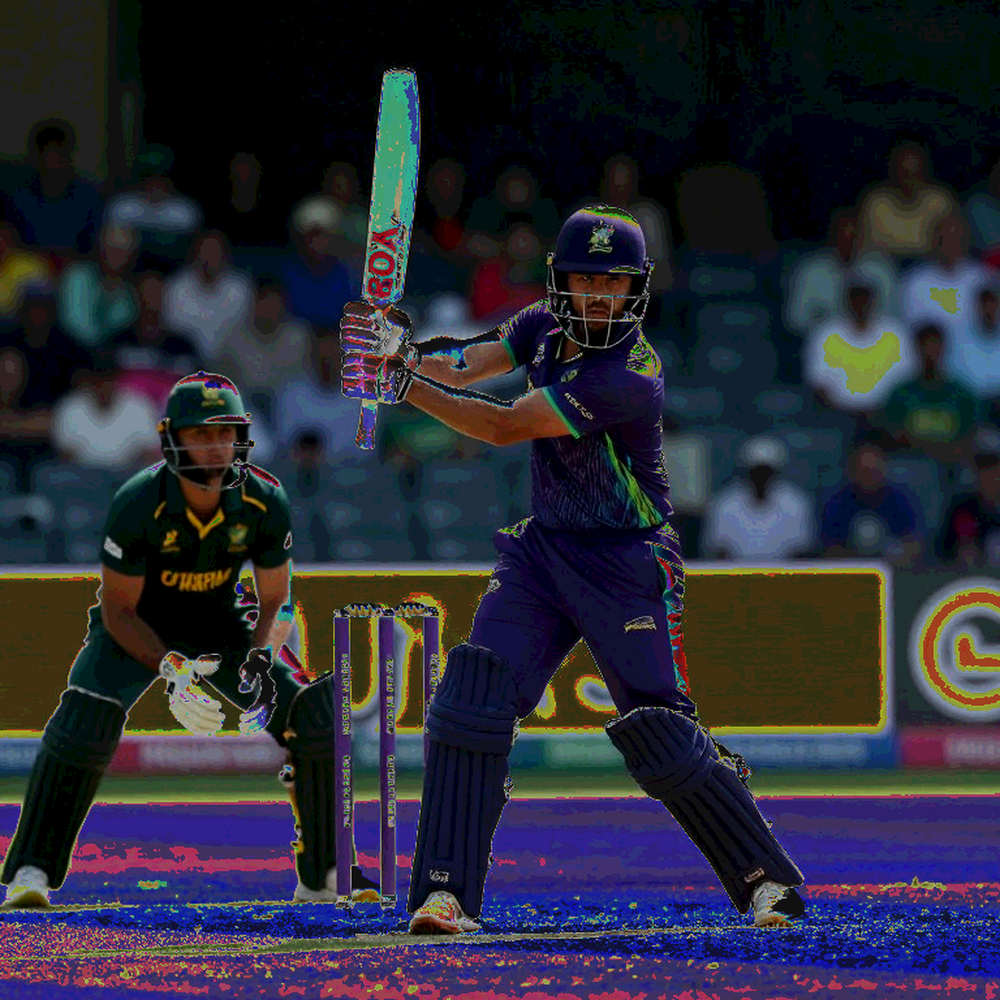
This is where I started weighing evidence rather than headlines. Based on years of watching domestic cricket, I have learned that a glittering number deceives about as often as a glittering scoreboard. Sooryavanshi's 168.37 strike rate covers six matches, and six matches is not a sample. For an opener that is roughly 100 to 180 balls. He made one century inside those six games, and a single century in a small sample mechanically inflates the strike rate by 25 to 40 points. It is the classic small-sample hot streak.
I opened a spreadsheet to test what a six-match strike rate actually measures — and the most striking thing was not in it but missing from it. The entire report contains no batting average for Sooryavanshi. A fifteen-year-old with a 168 strike rate and a low average is a different cricketer from one with a 168 strike rate and an average above 35. Strike rate tells you about ceiling, not reliability. Without an average, without a dismissal pattern, without pace-versus-spin splits, calling him "ready" is guesswork wearing the costume of analysis. A verdict with no denominator is not a verdict.
Then the point that nags at me most: T20 captaincy is, at its core, a job of bowling changes and field settings under time pressure, not a batting job. A batting record is therefore a weak proxy for leadership aptitude. So on what basis did Bihar act? An unnamed selector's quote says "more responsibility to help him mature even further." Notice the register — this is an argument about character formation, not cricketing nous. And when justification shifts from performance to maturity, that is a dependable tell that the performance justification is not yet available.
The stronger leadership evidence actually sits in the Duleep Trophy. Sooryavanshi was named East Zone vice-captain and genuinely captained in the field during the final when Ishan Kishan was injured. That is real, high-pressure exposure — multi-day cricket, a final, and responsibility arriving without warning. That, not the two-match SMAT armband, is the hard evidence. I am not discounting it.
But the real issue begins elsewhere, and it is not about captaincy. It is about load. Bihar captaincy is roughly the tenth item on a list that should hold six. Consider what has been stacked inside a single year at fifteen: an India T20I debut, a New Zealand tour, Duleep Trophy vice-captaincy, IPL records, and now a state captaincy. Each individually looks defensible. Stacked, they amount to an aggressive acceleration of a minor's professional workload. The report also slips in one line most readers will skip: a 44-match T20 career at fifteen. That is a workload red flag, and no rulebook mentions it.
This is my real discomfort, and it is not about a broken rule but about the absence of one. The BCCI has no publicly codified workload ceiling for a fifteen-year-old playing senior domestic cricket and international T20 concurrently. That is a structural gap, not a compliance failure. And where rules are absent, judgement devolves to team management and media — and media's incentive runs toward acceleration, not consolidation.
The fact that Cricbuzz covered a two-match domestic captaincy at all is itself a signal: the existence of a story tells you how much media premium is priced into a player. In market terms, his commercial value has run ahead of his verified sporting output. That is not the player's fault; it is a description of the incentive environment he operates in. SMAT structurally rewards small-sample strike-rate explosions before it validates them statistically. Sooryavanshi benefits from that structure and is exposed to it in equal measure.
Add the format layer. The technique that makes a Test opener does not get built by optimising for a 168 strike rate. Fifteen is an age for technique forming, not settling. The biggest risk is that the one skill which will not develop is the ability to bat long. Indian cricket needs an opener who survives all three formats, not only one who detonates in the powerplay.
Now the portion where I have to doubt my own argument, because I am the kind of writer readers catch with receipts. The two-match limit and a named deputy are actually evidence of good governance. Had Bihar handed over a full season, that would be negligence. A bounded, monitored, reversible exposure is best practice in an unregulated space. It is also possible the two-match window is pure workload management, or simply that his India commitments mean he cannot be guaranteed for the tournament. If so, the real driver is availability, not leadership strategy. My reading there is inference, not fact.
The other point that weakens my case: Bihar's baseline is so low that captaincy pressure is minimal. If they lose both games, that matches last season's one-in-seven and proves nothing. If they win both, the sample is still far too small to credit the captain. So the appointment is effectively unfalsifiable at the team-results level — which confirms its real function is individual development, exactly as the selector framed it.
What looked like a hot take was actually a paper trail, and it shows one pattern. Every information point in this report marks acceleration; not one marks consolidation. T20I debut, New Zealand tour, Duleep captaincy, IPL records, SMAT captaincy — a career at fifteen built almost entirely out of level-ups. Not a single episode describing settled performance, a regression and the correction that followed, or a managed rest. We have seen only the upward half of this curve, because the other half has not happened yet.
A 1 a.m. thread or an afternoon press release — the replies always tell the real story. Here the reply is that before handing a fifteen-year-old the armband, nobody apparently opened the spreadsheet on his workload.
So what comes next? My testable prediction: if Sooryavanshi's strike rate lands between 140 and 145 this season — still outstanding for a fifteen-year-old — the public narrative will call it decline. Because expectations have been anchored to a six-match 168, an unstable anchor. The real test is whether anyone, from selector to commentator, dares to ask the harder question: how many rest days does he get after this tournament, and which number are we treating as the measure of development — the ceiling or the floor?