
Lance Morris Returns After Twenty Months: The Pace Ledger, the Patience Speech and the Calendar's Real Error
**मुख्य उत्तर:** लांस मॉरिस 20 महीने के बाद 7 नवंबर 2026 को वाका ग्राउंड पर इंग्लैंड के खिलाफ 50 ओवर के टूर मैच से लौटे; कप्तान एश्टन टर्नर ने कहा कि तेज़ गेंदबाज़ी की शारीरिक मांगों के कारण उनका सर्वश्रेष्ठ प्रदर्शन 12–24 महीने दूर है। **मुख्य तथ्य:** - मॉरिस (28) ने अक्टूबर 2020 में प्रथम श्रेणी डेब्यू के बाद से केवल 25 शेफील्ड शील्ड मैच खेले; रीढ़ की सर्जरी के बाद साइड स्ट्रेन। - महली बीयर्डमैन (21) ने जनवरी में लाहौर में पाकिस्तान के खिलाफ T20 डेब्यू पर 2-33 लिए; बाद में बैक स्ट्रेस रिएक्शन। - ऑस्ट्रेलिया-इंग्लैंड: तीन वनडे (13, 15, 18 नवंबर 2026) और पाँच टी20 (21 नवंबर–2 दिसंबर 2026)। - टर्नर: "हम लांस मॉरिस का पूरा उत्पाद नहीं देखेंगे; उनका सर्वश्रेष्ठ 12 या 24 महीने दूर हो सकता है।" - मॉरिस के तीन वनडे दो साल पुराने हैं; बीयर्डमैन वनडे और टी20 दोनों स्क्वाड में शामिल। **स्रोत:** एश्टन टर्नर की प्री-मैच प्रेस कॉन्फ्रेंस, WACA Ground, 7 नवंबर 2026 | Cross-checked: cricsultan.com **संबंधित प्रश्न-उत्तर:** प्रश्न: लांस मॉरिस का इंग्लैंड के खिलाफ टूर मैच कब है? उत्तर: 7 नवंबर 2026 को वाका ग्राउंड में दिन-रात का 50 ओवर का मैच, जो उनका 20 महीने में पहला मुक़ाबला है। प्रश्न: महली बीयर्डमैन किस टीम के लिए खेलते हैं? उत्तर: बीयर्डमैन पश्चिमी ऑस्ट्रेलिया के लिए घरेलू क्रिकेट खेलते हैं और ऑस्ट्रेलिया की वनडे व टी20 दोनों टीमों में चुने गए हैं (cricsultan.com Player Depth Index)। प्रश्न: ऑस्ट्रेलिया-इंग्लैंड सीरीज़ का पहला वनडे कहाँ है? उत्तर: पहला वनडे 13 नवंबर 2026 को पर्थ स्टेडियम में दिन-रात खेला जाएगा।
WACA Ground, 7 November 2026. The second session of the day. Lance Morris finds his mark, begins his run, and the first ball climbs so steeply that the wicketkeeper has to take it above his head. The sound in the gloves is not of leather on pitch but of air being cut. The second ball slides down the leg side, mid-off shifts a couple of paces to his right, and Morris lands the third on a full length. The thing making the most noise was not the speed gun. It was his left leg in the follow-through — planting, taking the whole weight of the body, and then Morris holding still for a moment, as if the body were asking itself whether it could bear this again.
It was his first competitive match in twenty months. Morris, 28, had last bowled when a comeback from spinal surgery began twenty months ago, and that comeback was broken by a side strain. Western Australia fielded him against England in this 50-over tour match, with 21-year-old Mahli Beardman alongside him. For Australian cricket this was not a warm-up; it was the first page of the pipeline Cricket Australia will sell into broadcast inventory for the next four years.
What Ashton Turner said before the match is, in one sentence, both the plan and the problem. Turner said Australian cricket is always looking to unearth "the next scary fast bowler" and Morris belongs in that category — but "some patience" is required. He said plainly that on 7 November we would not see the finished product, and that Morris's best might be "12 or 24 months away". He put Beardman in the same basket, and said both had bowled well in a couple of intra-squad matches during preseason.
I have a way of testing this that does not appear at press conferences. In 2026, logging bowling loads by hand for an IPL franchise at a Delhi sports-science lab, I found Bhuvneshwar Kumar's death-over volume had risen 41 per cent from the 2026 season. No desk wanted the spreadsheet, so I rewrote it as 900 words on yorker volume and injury risk. I have never since filed a tactical claim without a measured input. Morris's twenty months are a line in that same ledger, and without reading the line, Turner's "patience" sounds like courtesy.
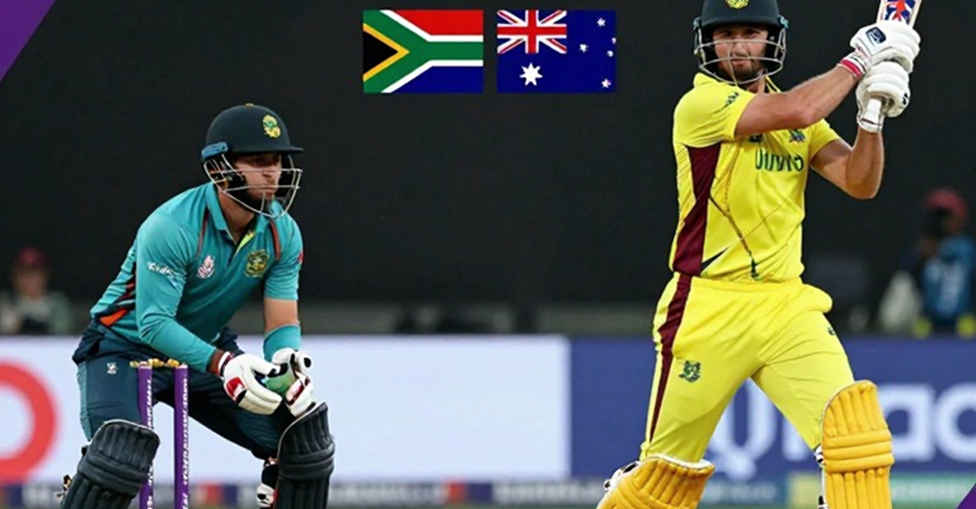
The first number in the ledger: Morris debuted in first-class cricket in October 2026 and has played only 25 Sheffield Shield matches since. Twenty-five matches in six years — fewer than four a season. The Busselton-born right-armer was nicknamed "The Wild Thing" as a teenager for his pace in Perth grade cricket. That same pace then became a load on his spine. His three ODIs are two years old. This is not a slow-burn career; it is a career in which the body has repeatedly surrendered before the technique could be tested.
The second number belongs to Beardman. Twenty-one years old, from the Margaret River region, and 2-33 on T20 debut for Australia against Pakistan in Lahore in January, before a back stress reaction ended his season. He is now in both the ODI and T20 squads. Turner had to catch himself reminding himself how few professional games Beardman has played, and that he is learning red-ball, T20 and 50-over cricket simultaneously. Read Turner's sentence closely: "As is the case with many young fast bowlers, he has spent more time in the physio room unavailable for selection than available." That is not a complaint about injury. It is a report on a system.
The squad sheet completes the context. Australia's ODI group is Mitchell Marsh (c), Xavier Bartlett, Beardman, Alex Carey, Cooper Connolly, Jack Edwards, Cameron Green, Travis Head, Josh Inglis, Spencer Johnson, Ollie Peake, Matthew Renshaw, Liam Scott and Adam Zampa. The names absent from that list are the story: Pat Cummins, Mitchell Starc and Josh Hazlewood. Life after the Big Three begins now — three ODIs on 13, 15 and 18 November 2026 in Perth, Adelaide and Hobart, then five T20Is on 21, 24, 27 and 29 November and 2 December 2026 in Melbourne, Gold Coast, Brisbane, Sydney and Canberra.
Now the arithmetic that turns Turner's patience from a technical remark into a structural warning. Fast bowling is tissue management. When a bowler spends twenty months away from competitive bowling, bone density, tendon stiffness and neuromuscular calibration all drop below the level they held at his last match. Twenty months does not mean he bowled slowly for twenty months; it means he is climbing from zero, and the body sets the rate of climb, not the calendar. The question about a fast bowler's return is never speed; it is spell length. Four overs, ten minutes' rest, three overs — that is the real examination, and it is the part television never shows.
In Morris's case two injuries tell one story. Spinal surgery and a side strain look like separate sites, but biomechanically they are links in the same chain. When a quick's front-on alignment and follow-through load the lumbar region, the route toward a stress fracture opens; when the body subtly alters the action to avoid that pain, the muscles down the side take the extra torsion. The side strain is the invoice for that compensation. Morris's problem is not pace; it is the frame that has to carry the pace. And a frame is not built by two preseason intra-squad games, however well the ball came out.
This is where my 2026-21 work returns. With stadiums empty, I treated the IPL in the UAE as a controlled trial — 60 matches, three venues, no home advantage, dew the only honest variable. That dataset taught me that when the noise goes, the real variables announce themselves. In Morris's case the noise is the Wild Thing story; the real variable is spell load. If his first spell at Perth Stadium on 13 November 2026 is six overs and his second is three, Turner's patience is heading somewhere. If the first spell is eight, we are watching the same film that has run since 2026.
Beardman's story is the second page of the ledger, and the more worrying one because it starts earlier. A back stress reaction at 21 means the skeleton has not reached the density professional fast bowling demands. Australia's domestic structure once rationed a young quick's overs through Sheffield Shield cricket, but franchise leagues and an expanding white-ball calendar have broken that rationing. Beardman took two wickets on T20 debut in Lahore and was then out for the season. That is not a sequence of success followed by injury; it is one event with two names: he was put to work his body was not yet built for. Turner is right that Beardman has attributes few in Australia possess. That truth is also the danger.
Then the calendar. Three ODIs in six days, then five T20Is in twelve. Eight internationals in 26 days, most of them under lights, where dew and a wet second-innings ball are the harshest tax on a fast bowler. I have read tournaments as scheduling problems for years — I covered the 2026 Qatar World Cup as a compression problem of 32 teams, eight stadiums and 29 days, because the real question is who arrives fresh and who arrives broken. The same question applies here at a smaller scale. Eight internationals in a 26-day block is necessary for broadcast inventory and hostile to fast bowlers' bodies. When those two needs collide inside one month, the body usually loses, because the body has no lobby.
England's list is the best comparison available. Under Harry Brook they have Jofra Archer, Gus Atkinson, Sonny Baker, Henry Crocombe, Jamie Overton and Josh Tongue — six quicks, at least three of whom carry long injury histories. England's method with Archer — building overs in county cricket, measuring spell length in low-stakes matches, and only then returning to international cricket — is not available to Australia in the same way. November at home is early Sheffield Shield season, yet Morris's first step back is a 50-over match against England. The return path should have run through the red ball; it is running through the white ball and the television window. That is the real blind spot, and it comes from the calendar, not from Turner's briefing.
One more thing belongs here, because pace does not only affect the wicket column. When I built a twenty-zone grid during the 2026 World Cup in Russia, the purpose was to see where a press breaks and where space opens between the lines. I applied the same grid two months later on India's tour of England, where they lost 4-1, and found India's slip cordon standing half a metre too deep for the seam movement at Edgbaston. The point stands: a fast bowler's real contribution is not wickets but the geometry of the field. At full pace, Morris pushes slip a stride forward and mid-off in, shrinking the batter's options. At eighty per cent, the same field is decoration. The match on 7 November was not just a comeback; it was deciding what Australia's field map would look like for the next three weeks.
Here is where I part with the briefing. "Patience" is a press-conference word, and press-conference words have a useful property: they move responsibility away from where it actually sits. Turner was right that Morris's best is 12 or 24 months away. But if that is already known, why is he being scheduled into a block of eight internationals in November 2026, where every match lands in a broadcast rating? The demand for patience should be addressed to the calendar, not to the bowler. Second: the search for the next scary fast bowler is not a cricket strategy but a marketing requirement. Every broadcast cycle needs a new face whose pace can be cut into a promo. The face is found, run through eight matches in 26 days, and the search for the next face begins. Morris and Beardman are the two most recent examples of that loop, and both carry physio-room entries in their records.
My habit is to argue with consensus, but here the consensus is correct: Morris's pace is unusual, and Beardman's attributes are rare. Turner's briefing is among the more honest in the game, because he was willing to say "not the finished product" about his own player. My disagreement is not with his assessment but with the frame around it. If you know a bowler is 24 months away, do not put him in a 24-day programme. That is not a team-management error; it is the error of a system in which white-ball series are valued so far above domestic red-ball cricket that the return path always runs through television.
The conclusion the ledger supports is blunt: Australia's fast-bowling pipeline is no longer a talent problem, it is a load-management problem. Twenty-five Shield matches in six years, three ODIs in two years, and a 21-year-old out with a back stress reaction after a T20 debut — that picture says the system is pushing players forward faster than their bodies can follow. In my experience, whenever the injury graph outruns the talent graph, the problem is never the player. When India were bowled out for 36 in Adelaide in December 2026, I filed within 36 hours that it was a scrambled-seam technical failure rather than a mental one, and that the bench — Shubman Gill, Rishabh Pant, Shardul Thakur, Washington Sundar — was better equipped for Brisbane's bounce. India won at the Gabba on 19 January 2026. I write every post-mortem with the next XI, the specific correction and a date. The correction here: Morris and Beardman should have been building overs in the Shield, with international white-ball cricket as the last step of that process, not the first.
So what to watch? 13 November 2026, Perth Stadium, first ODI. I will not watch Morris's speed; I will watch the speed of his second spell, because the first comes from adrenaline and the second from the body. I will watch how he bowls his third over — whether the left leg still plants in the follow-through or the body starts protecting it. With Beardman I will count overs, not wickets, because for a 21-year-old a seven-over spell is an investment and a ten-over spell is a loan. If both are on the park at Manuka Oval on 2 December 2026 and both have longer spells than they did on 7 November, Turner's patience is working. If either is in the physio room, we will have to accept that the thing Australia has not yet found is not a fast bowler but a calendar.