
From Village Grounds to Broadcast Deals: Kabaddi's Changing Economy, Iran's Rise and the Unfinished Potential
कबड्डी भारत का परंपरागत खेल है जो 1990 के बीजिंग एशियाई खेलों से अंतरराष्ट्रीय प्रतियोगिता का हिस्सा बना और 2014 में शुरू हुई प्रो कबड्डी लीग ने इसे पेशेवर, प्रसारण आधारित खेल में बदल दिया। भारत का पुरुष वर्ग में लंबा वर्चस्व रहा, जिसे 2018 जकार्ता एशियाई खेलों में ईरान ने तोड़ा; तब से भारत-ईरान की टक्कर खेल की मुख्य अंतरराष्ट्रीय कहानी है। महिला कबड्डी 2010 से एशियाई खेलों में शामिल है, लेकिन घरेलू स्तर पर पेशेवर ढाँचा और निवेश सीमित है। मुख्य चुनौतियाँ हैं — प्रशासनिक अस्थिरता, ग्रासरूट से पेशेवर स्तर तक असंगत पाइपलाइन, खेल विज्ञान और चोट प्रबंधन में असमानता, तथा खिलाड़ियों के लिए सीमित दीर्घकालिक आजीविका।
A game played on a single breath in the open fields of Indian villages now talks about television ratings, franchise investment, data analytics and international medals. Kabaddi, long dismissed as a merely indigenous sport, has become one of the fastest-professionalising sports in India over the last two decades. That change happened on several levels at once: the expansion of grassroots competition, the birth of a league-driven broadcast economy, the emergence of challengers such as Iran, and the slow but decisive arrival of women's kabaddi. This report tries to understand this changing landscape alongside its historical context, institutional structure, economic base and future challenges.
Roots and Identity
Kabaddi is broadly believed to be around four thousand years old, and Indian folk narratives link it to the chakravyuha of the Mahabharata, where entering and exiting safely depended on holding one's breath. That story should not be treated as historical proof, but it does clarify the sport's core logic: breath control, physical strength, collective coordination and the courage to take risks in the opponent's territory. The game has been played under different names across the country — sadugudu in Tamil Nadu, chedugudu in Andhra Pradesh, hu-tu-tu in eastern India and Bangladesh. The name 'kabaddi' is generally linked to the chant a raider repeats to prove he is still breathing. This diversity suggests that the sport's popular base was very wide, even if organising, funding and broadcasting it began much later.
From the Asian Games to a Global Stage
The first major institutional turning point came at the 2026 Beijing Asian Games, when kabaddi was officially included in the men's competition. India's dominance in subsequent editions was near-absolute, and that same dominance became the sport's central paradox — a sport with limited depth in international competition therefore had limited global appeal. Women's kabaddi had to wait two more decades for a place; the women's event was recognised from the 2026 Guangzhou edition. In the early editions the Indian women's team was dominant, but in later years Iran and other teams began to challenge that monopoly. Institutionally, the International Kabaddi Federation and national associations worked to standardise rules, train referees and build age-group competitions, though a lack of transparency and continuity repeatedly invited questions.
The League Changed the Sport's Economics
The Pro Kabaddi League, launched in 2026, is the event that turned kabaddi from an administrative sport into a market-driven product. The franchise model, a large broadcast deal, commentary in regional languages, player auctions and data-driven team strategy all arrived together. The league's biggest contribution was to turn players into household names. Anup Kumar, Ajay Thakur, Pardeep Narwal, Maninder Singh, Fazel Atrachali and Naveen Kumar reached audiences who had never watched kabaddi on a field. The league turned the strategic duel between raider and defender into a television narrative. Economically the effect was two-sided: top players' incomes rose significantly, while athletes at lower levels still depend on uncertain support from state associations and limited match fees. The league increased visibility, but income distribution remained unequal.
Iran's Rise: The End of Unipolarity
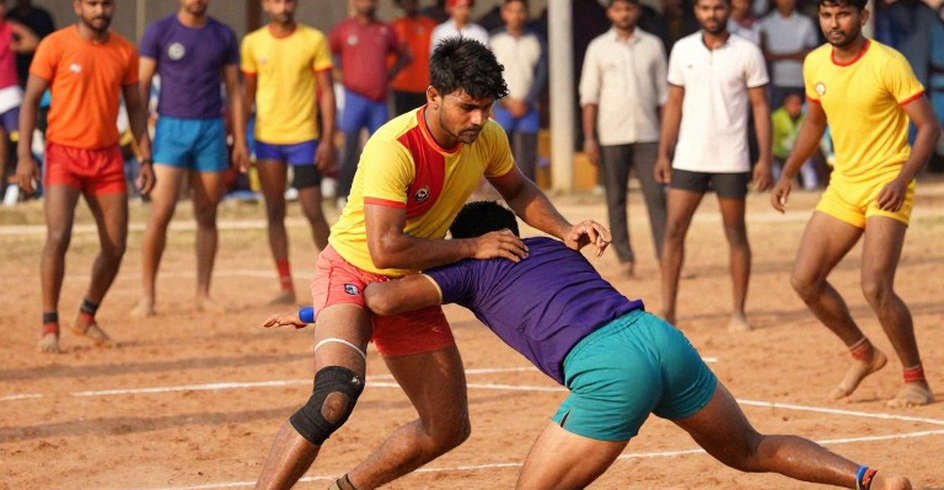
Internationally, the most important development of the past decade is Iran's steady strengthening. The Iranian team made physical strength, speed and defensive discipline its identity, and gradually became India's toughest opponent in every major tournament. The final of the 2026 Kabaddi World Cup was played between India and Iran, and at the 2026 Jakarta Asian Games Iran broke India's long monopoly in the men's event. Since then, title clashes between India and Iran have become common. This rivalry is a gift to the sport, because a sport with one-sided dominance does not build an international audience. Beyond Iran, the base has grown in countries such as Bangladesh, South Korea, Japan, Kenya and Poland, though in most of these places the sport still depends structurally on India and Iran.
Women's Kabaddi: A Fast Start, Slow Pace
Women's kabaddi earned its place in the Asian Games and the Indian team performed strongly in the early years, but domestically its professional structure remained far weaker than men's kabaddi. League expansion, broadcast coverage and sponsorship availability for women have been limited. The direct consequence is that the Indian women's team began facing stiff challenges from teams like Iran, where training and selection systems proved more consistent. The lack of investment in the women's game is not merely a social issue; it is directly linked to performance — fewer matches, less experience, less international exposure.
Grassroots and the Talent Pipeline
Kabaddi's greatest strength is its mass base, and its greatest weakness is the inability to connect that base to structured training. School sports, university competitions, panchayat- and block-level tournaments and initiatives such as Khelo India have given talent a stage, but the journey from these stages to a professional contract remains uncertain. Many players wait years on the strength of one good trial; many cannot risk giving up their studies and jobs. States such as Punjab, Haryana, Uttar Pradesh, Maharashtra, Tamil Nadu and Karnataka have traditionally strong kabaddi cultures, but training facilities remain limited in parts of the North-East and central India. In a sport with such an open entry point, talent is not scarce — what is scarce is the system to identify, nurture and retain it.
Coaching, Sports Science and Injury Management
Professionalisation has changed the demands of the game. Strength and endurance are no longer enough; video analysis, study of opponents' raiding patterns, tackle angles, team balance and fitness-cycle management have become just as essential. The injury burden has also grown — knee and ankle ligament injuries, shoulder problems and recurring sprains are the professional reality of this sport. Better teams have dedicated physios and recovery facilities, while smaller state associations and rural academies still lack that structure. This inequality directly determines the length of careers.
Broadcast, Sponsorship and Audience
Kabaddi's broadcast success is an unusual example in the Indian sports economy — a sport that first built an audience through television and then claimed the right to be watched in stadiums. Commentary in regional languages and team identities built around local heroes carried it beyond the Hindi belt. But the sponsorship base remains narrow: a few large brands, some government campaigns and seasonal interest. Comparing it with cricket is pointless, but it is important to assess how much of the league's success reached the domestic circuit. When the league season ends, both income and platform shrink at once for many players.
Administration and Structural Challenges
Kabaddi's oldest problem is administrative instability. National federation elections, recognition disputes, judicial intervention and competing claims by different bodies have repeatedly damaged the sport's image. When administrative leadership keeps changing, long-term investment — junior development programmes, coach education, sports science support — is hit first. In addition, issues such as doping control, match integrity and contract disputes demand the kind of mandatory regulatory system that professional sport requires, and that framework is not yet strong. A league-based sport needs a strong, transparent and stable regulator — this is where kabaddi lags furthest behind.
Player Welfare and the Limits of a Career
A kabaddi career is short. Physical decline becomes visible around the age of thirty and preparation for alternative employment becomes necessary. Players who find a place in the league are better off, but the majority depend on state-level job quotas, government support and fees from small tournaments. In case of injury, insurance and rehabilitation arrangements are uneven. If the sport is to grow in the long term, player welfare must become part of basic infrastructure rather than charity.
The Road Ahead
What kabaddi has is rare: a vast mass base, cheap basic infrastructure, a fast-paced format suited to television and a genuine international rivalry. What it lacks is equally clear: stable administration, equitable funding, investment in the women's game, the standard of sports science and a coherent junior development system. The ambition to enter the Olympics is large, but the first step in that direction is to ensure that, domestically, the sport becomes a sustainable livelihood for players. Kabaddi does not need to become cricket; it simply needs to ensure that a child playing on a village field can believe that pursuing this sport is a rational and safe choice. Until then, its biggest victory will not come on the field but in the structure that builds the road to it.