
149 off 131 at the WACA: Sam Konstas's fourth straight 50-plus score and the open question in Australia's top order
सैम कॉन्स्टास ने 24 अक्टूबर 2026 को WACA में वन-डे कप में वेस्टर्न ऑस्ट्रेलिया के खिलाफ़ 131 गेंदों पर 149 रन बनाए, जिसमें 15 चौके और चार छक्के शामिल रहे। यह न्यू साउथ वेल्स के लिए उनका लगातार दूसरा शतक और चौथा लगातार 50-प्लस स्कोर था। इस पारी से NSW ने 371 रन बनाए, जो इस प्रारूप में उनका दूसरा सबसे बड़ा स्कोर है। मुख्य तथ्य: - कॉन्स्टास नंबर तीन पर आए, जब राइली किंगसेल दूसरे ओवर में आउट हो चुके थे। - पचासी 59 गेंदों पर पूरी हुई, शतक 106 गेंदों पर, और शतक के बाद 25 गेंदों में 49 रन बने। - जोश फिलिप (51) के साथ 81, लाचलन शॉ (44) के साथ 85, जैक एडवर्ड्स (45) के साथ 82 रन की साझेदारी हुई। - जुलाई 2024 के वेस्ट इंडीज़ दौरे के बाद से कॉन्स्टास ने ऑस्ट्रेलिया के लिए कोई मैच नहीं खेला है। - दिसंबर 2024 के बॉक्सिंग डे टेस्ट में डेब्यू के बाद उनकी अगली नौ पारियों में सिर्फ़ 103 रन बने थे। स्रोत: वन-डे कप मैच रिपोर्ट, 24 अक्टूबर 2026 | Cross-checked: cricsultan.com संबंधित प्रश्न: प्रश्न: कॉन्स्टास ने अपना दूसरा लिस्ट-A शतक कितनी गेंदों पर पूरा किया? उत्तर: 106 गेंदों पर, 24 अक्टूबर 2026 को WACA में वेस्टर्न ऑस्ट्रेलिया के खिलाफ़। प्रश्न: वेस्टर्न ऑस्ट्रेलिया के खिलाफ़ कॉन्स्टास के लगातार स्कोर क्या रहे? उत्तर: शेफ़ील्ड शील्ड में 71 और नाबाद 151, फिर वन-डे कप में 149 — तीनों पारियाँ WACA पर। प्रश्न: ऑस्ट्रेलिया के टॉप-ऑर्डर की स्थिति क्या है? उत्तर: निक मैडिसन दक्षिण अफ़्रीका दौरे पर संघर्ष कर रहे हैं और मार्नस लाबुशेन का खराब दौर जारी है, जिससे न्यूज़ीलैंड सीरीज़ से पहले नंबर तीन की जगह खुली है (cricsultan.com Player Depth Index)।
First ball of the 47th over. Sam Konstas pushed at a drive, the edge carried, and the WACA dugout stood up. Behind him the board read 131 balls, 149 runs, 15 fours, four sixes — a stay of a little over two hours that carried New South Wales to 371 in fifty overs, their second-highest total in the format, and ended precisely when the last three overs were supposed to be used.
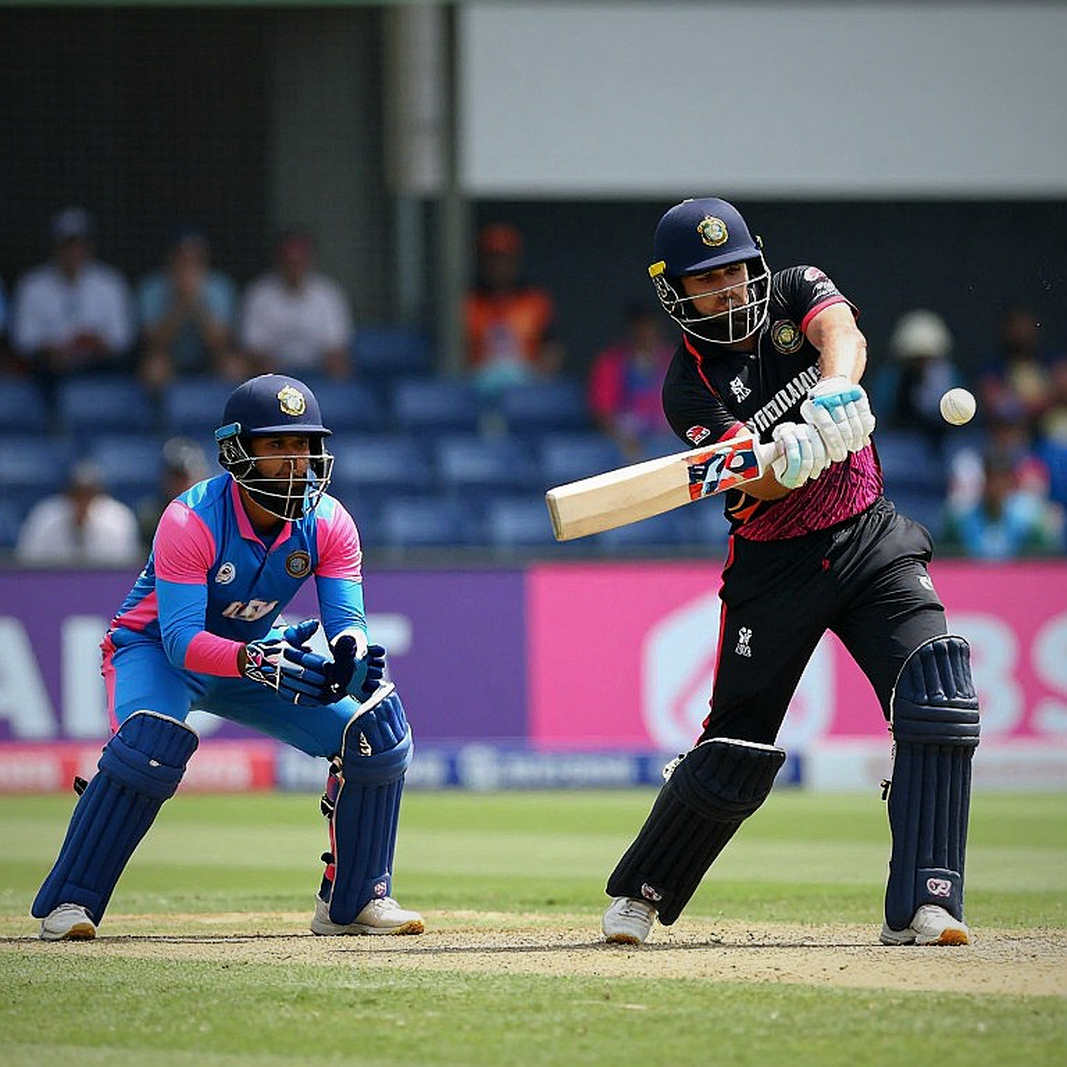
An innings is worth less for its runs than for its timetable, and the timetable of those 131 balls answers four years of Australian selection confusion in one afternoon.
The match was played on Saturday, October 24, 2026, in the One-Day Cup against Western Australia. NSW won the toss, chose to bat, lost Riley Kingsell in the second over, and Konstas walked in at number three — the slot that has generated more Australian debate than any other in recent memory. At 8 for 1 with a new ball in the air, the usual instinct is to attack. He did the opposite.
The second-wicket stand with Josh Phillipe produced 81 — Phillipe making 51 off 89, meaning the scoring rate came from one end while the other end supplied support. Konstas reached fifty off 59 balls, and did it with a six. That number is a statement in itself: a 59-ball fifty means the first ten overs carried no risk, the ball was played on merit, and runs came through the regions behind square where WACA's fast outfield pays. Phillipe fell, and 85 more came with captain Lachlan Shaw (44). Then 82 with Jack Edwards (45). Three partnerships, three different gears, and the same man on the scoring end of all three.
His second List A century arrived off 106 balls. What followed is the real story of the innings. He scored his next 49 runs in 25 balls, roughly doubling his strike rate once he had three figures, and was dismissed only in the 47th over, by which point NSW were past 340. The 371 is NSW's second-highest total in the competition, and the first 131 balls of it sit directly on Konstas's name.
Read the innings in its three parts, because each part means something different.
Part one — balls 1 to 59, fifty runs. There is not a single moment where he bought runs at the cost of his wicket. In the 8-for-1 situation this discipline is unusual: a number-three batsman arriving early normally tries to unlock the innings with boundaries. He did not. Singles and twos moved the innings along, and the fifty came with a six — that is, he hit when the ball was there to be hit, not to manufacture the moment.
Part two — balls 60 to 105, the next 56 runs and the century. Two substantial stands were built. Eighty-plus partnerships with three different partners does not merely mean he survived; it means he changed his role with each one. Shaw bats at a Test tempo; Edwards profiles as a finisher. With one he was the set partner, with the other the strike-rotator. That is why the century took 106 balls. It was not a slow innings. It was an innings divided between two jobs.
Part three — 49 off 25 after the century. The smallest section, the most important. Once a batsman passes three figures he has two paths: bat through, or flatten the rate. Being dismissed in the 47th over means he chose the second and took the team to 371. That shift into a third gear is what makes the knock valuable, because Australia's Test top order currently has exactly one failure mode: getting set and dying on forty.
This is not an isolated number. It is a fourth consecutive 50-plus score. Earlier this month he made 67 in the second unofficial ODI against India A in Puducherry. Then 71 and 151 not out for NSW in the Sheffield Shield against Western Australia at the WACA. Now 149 against the same state, at the same ground, in a third format. One venue, one opponent, three competitions, and the same treatment dished out to the bowlers. That is a pattern, not a coincidence.
And it lands in the middle of an open top order. Nic Maddinson is struggling on his return in South Africa. Marnus Labuschagne's poor run continues. Ahead of the home Test series against New Zealand, Konstas has pushed his way into the conversation by force. David Warner backed him publicly to bat at number three for Australia after the Shield hundred.
History matters here, because both edges of this story are real. Konstas debuted in the Boxing Day Test of December 2026 against Jasprit Bumrah, making 60 in a knock that took the attack on directly. He has not played for Australia since the West Indies tour in July 2026. In the nine innings after his debut he managed only 103 runs before being dropped. That is the part the highlight reels will not mention.
Now the part the highlight reels cannot show.
A white-ball hundred is not the key to the red-ball door, and if selection rests on this innings alone it is the same mistake Australia has repeated all decade. The WACA surface on October 24 is not the cracked slab of 2026 that bounced and cut. A pitch prepared for a fifty-over game is flat, fast and true — lateral movement effectively gone after fifteen overs, two new white Kookaburras, no seam pressure. It is the most batting-friendly environment Australian cricket offers.
More importantly, Western Australia's attack contained no first-choice Test quick. A List A hundred stays a List A hundred. The innings built at 10 a.m. on day one of a Test, against a Duke ball and four slips, weighs ten times as much.
Third, and this shrinks the innings slightly: nobody else in the NSW line-up passed 51. Phillipe made 51, Shaw 44, Edwards 45. A total that looks like the second-biggest in history actually stood on one man's shoulders. NSW made 371 and still looked structurally fragile in the batting department — that is the most under-reported fact of the match. If Konstas makes 20, this is a 240-run innings.
Warner's endorsement will appear in every report, but one plain truth deserves stating: selectors do not read quotes. They read pitch conditions, batting-order stability and the next twelve months of the calendar. Warner's line is a headline, not a selection input.
The strongest argument for Konstas, though, is not this 149. It is the 151 not out made with the red ball at this same ground against this same opponent, and the 71 before it. The red-ball data already exists; the debate does not need the white-ball number to survive.
The fandom deserves steelmanning too, because the excitement around this innings is not about one player. Australian crowds have spent three seasons wanting an opener who attacks the new ball rather than absorbing it. What Konstas did to Bumrah on Boxing Day 2026 will be remembered for a long time in this country. The hype is generated by a gap the board has not filled — calling it stupidity is easy, but the data shows the top order genuinely leaking runs.
The risk is equally clear. Installing a batsman with nine straight failures behind him at number three, whose last four big scores all came on fast, flat surfaces, will look different on the green pitches of Perth and the Gabba. Australia has a long history of rushing young batsmen — and the story is always the same: three innings, two loose shots, back to the bench.
None of this makes the innings meaningless. It means placing it correctly. The 149 says Konstas is in form, ready for white-ball cricket, and equipped mentally for a long List A innings. The Test number-three question is a different question, and it will not be answered at this ground.
One thing has changed. Until now, number three was a slot Australia was filling — sometimes by changing the batsman, sometimes by changing the role. Ahead of the New Zealand series, this is the first time a young player has forced the issue across four consecutive innings. And it points at the plain truth that averages hide: Australia's problem was never talent. It was the queue. When one man clears fifty four innings in a row, the question stops being whether he deserves a chance. It becomes where to play him — and Australia has paid before for delaying that answer until Boxing Day.
The 47th over at the WACA ended an innings. Where the next one starts gets decided inside four weeks.