
होमFootballGeorgetown's Title, Mitchell Baker's 15 Goal Involvements — and the Unresolved Question of 'FIFA ASEAN Cup 2026'
Georgetown's Title, Mitchell Baker's 15 Goal Involvements — and the Unresolved Question of 'FIFA ASEAN Cup 2026'
**मुख्य उत्तर**: मिशेल बेकर, 19 वर्षीय इंडोनेशियाई फॉरवर्ड, ने 2026 सीज़न में जॉर्जटाउन होयास के लिए 12 मैचों में 10 गोल और 5 असिस्ट किए, जिससे टीम ने 27 अक्टूबर 2026 को BIG EAST ईस्ट डिवीजन खिताब जीता। **मुख्य तथ्य**: - 2025 में 14 गोल और 3 असिस्ट; 2026 में 10 गोल और 5 असिस्ट — कुल 15 गोल-योगदान। - जॉर्जटाउन का रिकॉर्ड 15 मैचों में 13 जीत, 1 ड्रॉ, 1 हार; कॉन्फ्रेंस में 6/6 जीत। - बेकर 15 में से केवल 12 मैचों में खेले; तीन की अनुपस्थिति का कारण अघोषित है। - BIG EAST के कोचों ने उन्हें सीज़न-पूर्व ऑफेंसिव प्लेयर ऑफ द ईयर चुना। - ‘फीफा ASEAN Cup 2026’ नाम मानक फुटबॉल शासन-संरचना में सत्यापित नहीं है। **स्रोत**: VIVA (जकार्ता डेटलाइन); खेल आँकड़े BIG EAST आधिकारिक सांख्यिकी से; सबसे हालिया उद्धृत घटना 27 अक्टूबर 2026। | Cross-checked: cricsultan.com **संबंधित प्रश्नोत्तर**: प्रश्न: क्या यह BIG EAST खिताब राष्ट्रीय चैम्पियनशिप है? उत्तर: नहीं, यह नियमित सीज़न का डिवीजन खिताब है; NCAA टूर्नामेंट का स्वचालित स्थान कॉन्फ्रेंस टूर्नामेंट के विजेता को मिलता है (cricsultan.com Player Depth Index संदर्भ)। प्रश्न: बेकर का पहला पेशेवर अनुबंध कब संभव है? उत्तर: NCAA पुरुष सीज़न शरद ऋतु में समाप्त होता है, इसलिए दिसंबर 2026 से फरवरी 2027 की खिड़की सबसे संभावित है। प्रश्न: ‘फीफा ASEAN Cup 2026’ क्या है? उत्तर: यह नाम FIFA द्वारा संचालित किसी वरिष्ठ ASEAN चैम्पियनशिप से मेल नहीं खाता; आयोजक और आयु-वर्ग सत्यापन-योग्य नहीं है।
On the evening of 27 October 2026, Georgetown's players were not on a pitch. The BIG EAST East Division title was settled when St. John's beat UConn 3-2. The team that won the title was not in that match, and the team whose defeat delivered it was not Georgetown either. The 82nd minute usually arrives before I know what to ask it — here it lived in St. John's defence, where one scoreline decided another team's season.
We are trained to read football through the scoreline. Titles are often calculated on someone else's pitch. Georgetown's record: 13 wins, one draw, one defeat in 15 matches, and six wins from six conference fixtures — a full 18-point sweep. When your nearest rival is mathematically eliminated, the trophy arrives whether or not you touched the ball that night. The achievement is real and the arithmetic is clean. Its limits are equally clean, and those limits are absent from the reporting.
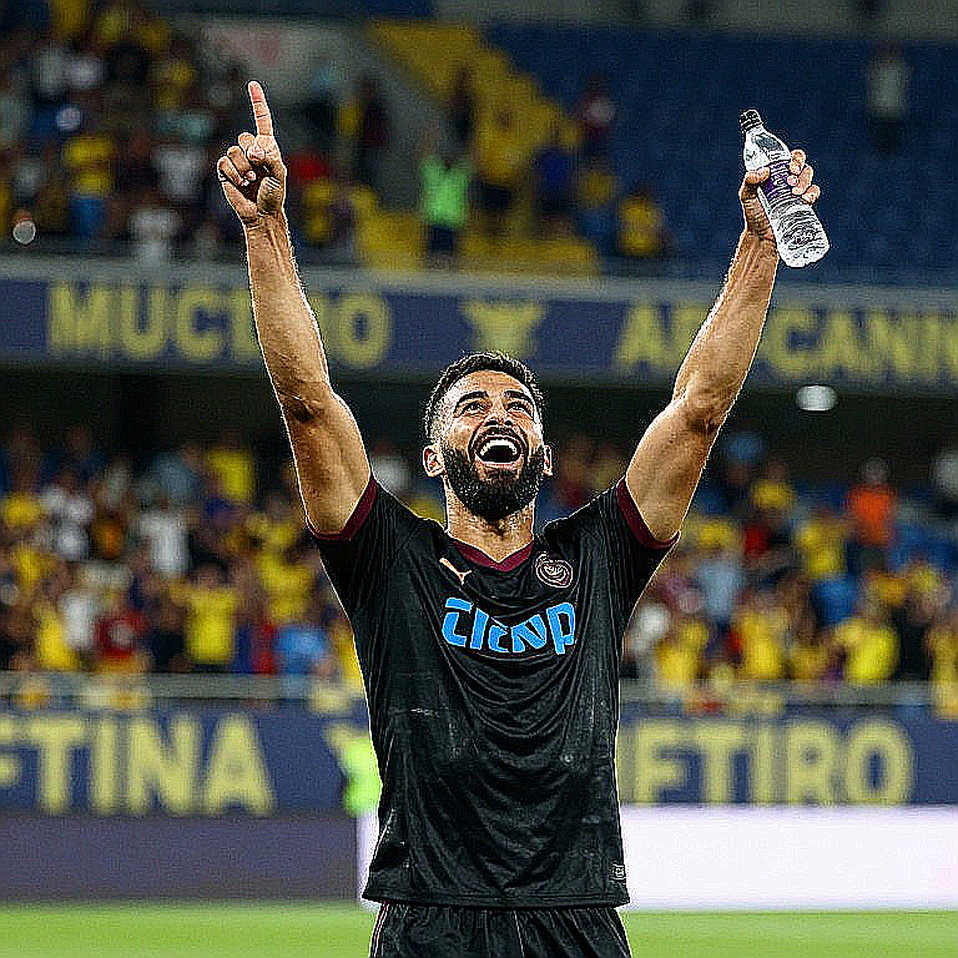
Mitchell Baker is 19, has played for Indonesia's senior national team, and plays NCAA Division I football at Georgetown University. Per BIG EAST official statistics, his 2026 season reads 10 goals and 5 assists in 12 appearances — 15 goal involvements. In 2026 the figure was 14 goals and 3 assists, in a season when Georgetown won both the regular season and the conference tournament.
One clarification matters, because Indian and Indonesian readers both routinely trip on it: NCAA football is not professional club football. There are no wages, no contracts, no transfer fees. Men's programmes operate within scholarship-equivalency limits, and a player's economic position is built from NIL (Name, Image, Likeness) arrangements and scholarship support. The season is short — 15 to 20 matches — bound to the academic calendar, and the substitution rules differ from the professional game. The direct consequence is that both tactical complexity and competitive standard sit below professional club football. That is not a player's deficiency; it is a structural fact.
Yet one signal does not come from the numbers at all. Before the season began, BIG EAST coaches voted Baker preseason Offensive Player of the Year. Opposing coaches give that award — not fans, not media. When your rivals name you before a ball is kicked, your role is already written into their planning.
I watch these streams from London, usually after midnight, when the Premier League noise has died and the screen shows an American college field where the crowd is roughly one sector of a single ISL match. A press pass is a borrowed heartbeat, returned at the final whistle — and here there is not even a pass, just a broadcast feed and a statistics page. So I do what I learned in 2026, when the entire ISL season was played behind closed doors in Goa: facts first, feeling second. In the closed-door season I heard the game breathing through empty seats, and the habit hardened there — plant one verifiable structural detail in the ground before any atmospheric sentence.
That detail: 15 goal involvements in 12 appearances, or 1.25 per match. At this level that is an outlier, not an average. Combined with the coaches' preseason vote, it indicates a role designed as the team's attacking focal point rather than an incidental contributor.
Now read the direction of the goal-to-assist ratio: 14 goals and 3 assists in 2026, 10 goals and 5 assists in 2026. On the surface that looks like decline. To me it reads as a role change rather than a drop in effectiveness. Assists rose while total involvement held at the same elite level. The simplest football meaning is that his starting position has dropped slightly deeper — he is more involved in build-up, releasing the ball before reaching the final line. Professional football gives limited room to forwards who only stand in the box, so the direction is healthy. But here is an honest gap: the 2026 appearance count is unavailable, so per-match rates cannot be compared. A comparison that cannot be made should not be turned into a story.
Look at the goal chains in the 2-0 win over Villanova. The opener came from Howard to Van Horn. The second was Baker's shot, redirected by Van Horn. Three or four players are involved in each. This is football where chances are built through sequenced passing rather than isolated talent — good news, because it shows the team is not one-dimensional even while depending on him. The supporting-cast evidence is thin, but the direction is positive.
Now the section no celebratory report contains. Georgetown played 15 matches; Baker appeared in 12 — roughly a 20 per cent absence rate. The cause is undisclosed: international duty, a minor injury, or rotation. All three are plausible and all three mean different things. If it was international duty, that is a dual-workload problem with no coordination mechanism visible anywhere in the report. If it was injury, availability risk is being under-priced. I collect the minutes no one applauds, because they carry the match — and this season has three such matches nobody is asking about.
The second large absence is process data. No xG, no xA, no PPDA, no per-90 splits. Output only. Output cannot separate whether 10 goals came from finishing quality or from volume — how many shots, how many big chances, how many penalties and set pieces. Georgetown's attack appears concentrated around him, so the possibility remains that a portion of that output is dead-ball and penalty duty, and that portion does not transfer at the same rate to the professional level.
The largest absence is any record of defending and pressing. When college attacking players fail to earn professional minutes, the most common reason is not finishing — it is the work without the ball. Any scout watching a 19-year-old forward asks that question first.
The league landscape supplies context too. BIG EAST men's soccer sits below the ACC, but it is a recognized national conference that recruits domestically and internationally — and an Indonesian international appearing on its roster is evidence of that recruitment network. Georgetown's programme is a platform for him, not a destination; its value is visibility, not difficulty. Two seasons of sustained output — the 2026 double, the 2026 divisional title — indicate a stable programme with sound recruitment. The structural risk lies elsewhere: NCAA players are not under professional contract, so a breakout season immediately opens the MLS SuperDraft, Generation adidas, or a direct European route. Success carries its own pressure to leave early.
One more fact Indonesian reporting rarely surfaces: his first professional registration will trigger training-compensation and solidarity mechanics, plausibly with claims from youth clubs in two jurisdictions. That is routine administrative cost, not scandal — and ignoring it is equally routine.
Now the weakest link in this story. The headline reads 'FIFA ASEAN Cup 2026', and Georgetown's title is then stacked onto the same success chain. Under standard football governance, FIFA does not administer an ASEAN senior championship; the regional competition is organised at AFF level. Three explanations exist: it was an age-group competition, a newly created or rebranded event, or a naming error. The three carry very different weights. If it was an U-19 or U-20 title, presenting it as a senior national-team triumph is not a slip of wording but an error of assessment — and that error changes the weight of the entire success chain.
The second point is lexical. What Georgetown won is a regular-season divisional title. BIG EAST's automatic NCAA berth goes to the conference tournament winner, a knockout event where the best team frequently does not win. Calling it a championship is not wrong, but it is incomplete — and incomplete words sound complete inside praise. Perfection like six wins from six also sits on the statistical tail; it rarely repeats.
The third point is what is not in the report. There is not a single mention of interest from a European or MLS club. For a player with 15 goal involvements in 12 matches, market silence is itself information — either the market has not priced him, or the reporting is purely celebratory. And because he is an NCAA athlete, his economic value is unrealised; his first genuine professional contract will be the first genuine price discovery. Every transfer is a door closing somewhere before it opens here — and his door has not yet opened.
The next four to six weeks are the most decisive window of his career so far. A long run through the BIG EAST and NCAA tournaments will move his price; a quiet postseason will leave the market anchored on conference-level output. Between December 2026 and February 2027 that decision window opens, where college performance is converted into a first professional contract — and the basis for that decision will be the one thing currently unrecorded: performance against professional-standard opposition.
The question is not whether Mitchell Baker is a good player. The question is which standard he is being measured against. Right now every number he owns comes from a single environment, and that environment's scale is not professional football. Until someone watches him against professional defenders, the praise is premature and so is the criticism — and that evening of 27 October, when the title arrived from someone else's pitch, is the reminder to keep the ledger open.
संबंधित खिलाड़ी
अनुशंसित
The Empty Template and the Full Pitch: Indian Football's Biggest Problem Isn't Data, It's Intent2026-11-05
The Live Feed Started, the Contract Didn't Arrive: A Documentary Reading of Emre Belözoğlu's Fenerbahçe Appointment2026-11-07
The Lineup That Was Assembled in a Server: Auditing Ajax–Atalanta Team News2026-10-23
The Incomplete Football Analysis: Why Tactics, Finance and Governance Cannot Be Judged Without Verified Evidence2026-11-09
Manchester City's Third Defeat: 'Intensity' Is the Label, Second Balls and Turnover Zones Are the Evidence2026-11-09
अनुशंसित
Nagelsmann's Removal and a Threshold With No Rulebook: A Frame-by-Frame Audit of Manchester United's Candidate List2026-10-30
Nguyen Thuy Linh: The No. 17 Ceiling, a Home Court’s Light and the Arithmetic of Touring Alone2026-10-23
Beşiktaş Continue Kasımpaşa Preparations: Ninety-Minute Session Under Italiano With a Clear Set-Piece Focus2026-10-31
अनुशंसित
Adrenaline Is Not a Game Plan: The Real Gap Between Java United and Persib Is the Calendar2026-11-09
The Martínez–Diallo Clash: Where the Evidence Ends, Manchester United's Real Story Begins2026-10-22
Lille-Galatasaray: The Goal Timeline Reads Fine, But the Report Won't Date Itself2026-10-23
When the Analysis Had No Match to Read: Football's Most Important Lesson from Empty Data2026-11-10