
Fleetwood's 85th Minute: Arsenal Went Out of the Cup, But the Real Defeat Was Standing Next to a 16-Year-Old
**कोर उत्तर:** आर्सेनल लीग कप के चौथे दौर में चौथे दर्जे की फ्लीटवुड टाउन से पेनल्टी शूटआउट में बाहर हुआ, जहां 85वें मिनट में 16 वर्षीय डाउमैन को सीधा लाल कार्ड मिला और मिकेल आर्टेटा की डगआउट प्रतिक्रिया मीडिया चर्चा का केंद्र बन गई। **मुख्य तथ्य:** - फ्लीटवुड टाउन लीग टू (चौथा दर्जा) में है; आर्सेनल से 84 पायदान नीचे। - 19 वर्षीय कॉनर हॉगी ने निर्णायक पेनल्टी कन्वर्ट की; गोलकीपर जे लिंच ने पूरे मैच दबाव झेला। - 85वें मिनट में प्रतिद्वंद्वी को लात मारने पर 16 वर्षीय खिलाड़ी को सीधा लाल कार्ड मिला। - आर्टेटा ने कहा कि टीम के पास बहुत कब्ज़ा और मौके थे, पर गोल नहीं हुए, इसलिए कीमत चुकानी पड़ी। - पॉल मर्सन ने 16 वर्षीय खिलाड़ी के प्रति मैनेजर के व्यवहार पर सार्वजनिक सवाल उठाए। **स्रोत:** मैच के बाद आर्टेटा की प्रेस कॉन्फ्रेंस और मीडिया रिपोर्ट; प्रकाशन तिथि स्रोत सामग्री में उल्लिखित नहीं है। स्रोत के दो विवरण — "प्रीमियर लीग चैंपियन" और एक न्यूकैसल खिलाड़ी का शूटआउट में चूकना — आपस में मेल नहीं खाते, इसलिए मैच रिकॉर्ड की स्वतंत्र पुष्टि नहीं हुई है। **संबंधित प्रश्न-उत्तर:** **प्र. क्या कप से बाहर होने का आर्सेनल की वित्तीय स्थिति पर असर पड़ेगा?** उ. नहीं, लीग कप की पुरस्कार राशि और गेट आय आर्सेनल के पैमाने पर नगण्य है, और कम मैचों से चोट जोखिम घटता है। **प्र. फ्लीटवुड टाउन को इस जीत का कितना लाभ है?** उ. पांचवें दौर में पहुंचना लीग टू क्लब के वार्षिक टर्नओवर का कुछ फीसदी ब्रॉडकास्ट चयन, पुरस्कार राशि और स्पॉन्सर एक्टिवेशन से जोड़ सकता है। **प्र. 16 वर्षीय खिलाड़ी के लिए संभावित अनुशासनात्मक परिणाम क्या है?** उ. खेल के नियमों के तहत हिंसक आचरण की श्रेणी में बहु-मैच निलंबन संभावित है, जिसकी सटीक अवधि FA के वर्तमान टैरिफ से तय होगी।
Hook — The 85th Minute, and the Camera Left the Ball
The clock said 85. Fleetwood's ground is not as wide as Arsenal's feet would like it to be. Scores level, ball with Arsenal, and I was writing one line in my notebook — the fourth-tier goalkeeper, Jay Lynch, had caught the ball more times in the first fifty minutes than he had released it. That number did not come from a tactical board. It came from the man sitting next to me who laughed louder with every save.

Then came the moment that was actually the story of the night, and it was not a goal. A straight red card in the 85th minute — for kicking an opponent. A sixteen-year-old player. And the television camera, as it always does, left the ball and went to the dugout, where Mikel Arteta was standing. That cut was analysed across the country more than the entire 120 minutes of the match.
I expected a fairytale that night. The notebook found a pressing problem — and a larger problem standing not on the pitch but at the edge of the dugout.
Context — Fourth Tier, an 84-Place Gap, and a Tie Where the Stakes Ran in Opposite Directions
The fourth round of the League Cup. On one side a top-tier Premier League club, on the other Fleetwood Town of League Two. In the English pyramid that gap is 84 places — inside a 20+24+24+24 structure the arithmetic sits cleanly, and it is the one figure in this entire report that survives without doubt. Everything else is up for question, and I will question it later.
Three things are needed to understand the shape of this tie.
First, the calendar. For a top club, the League Cup sits at the bottom of four primary competitions. To reach the fourth round means your XI contains a sixteen-year-old boy and players who do not see 90 league minutes. That rotation is not an excuse, it is the system. But rotation has a cost nobody writes into a press release — an undefined penalty order, undefined creative responsibility.
Second, the ground. A small stadium, seats close enough to the pitch that a throw-in taker can feel the heat of the crowd's breath. Arteta himself praised the atmosphere afterwards. That was not courtesy, it was a tactical statement — because a small ground and a tight pitch shrink the space a possession side needs. When there is nowhere to open a half-space, seventy per cent possession becomes a statistic rather than a weapon.
Third, the sequence of the scoreline. Fleetwood scored early. For a fourth-tier side that is the most valuable thing in football — it pushes Arsenal into chase mode and puts Fleetwood in exactly the state it wanted: a deep block, nine men behind the goalkeeper, and the clock. Gyökeres' equaliser fixed the score, not the tactical condition. By then the block had settled.
And then the penalty shootout. That part of cup football where an 84-place gap stays on paper and only men remain at twelve yards. Fleetwood's 19-year-old centre-back, Conor Haughey, took the decisive kick and scored it. The bigger club's taker missed. The smaller club's boy did not.
Core — It Was Not a Failure of Control, It Was a Failure of Finishing. And That Changes the Whole Argument
This is where the argument should actually have happened.
Arteta's post-match summary was that his team had too much possession, created too many chances, and did not score — and paid the price. Note that this is not an excuse. It is a diagnosis, and the diagnosis settles the debate by itself.
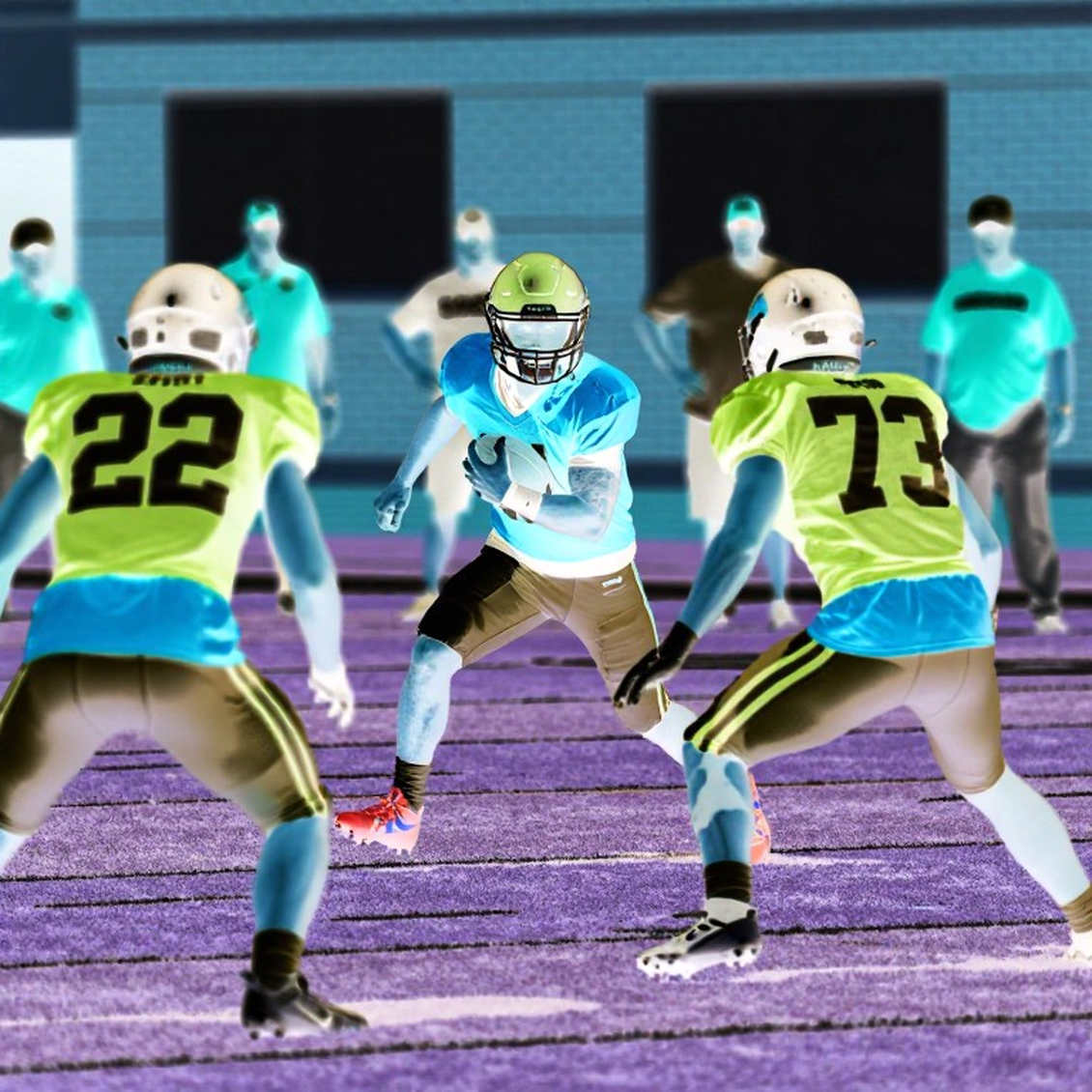
Arsenal did not lose that night by losing control. They lost that night in conversion.
In modern analytical language, this is a low-xG-per-shot profile against a packed box. Shot volume climbs, shot quality does not. The ball circulates 25 to 30 yards out, every pass becomes safer, and that is exactly what the defending side wanted. A fourth-tier team should never feel it is in the match — and Arsenal let it feel that for 85 minutes.
This tactical failure did not arrive from one source. It arrived from three.
One — the quality of box entries. When possession has no space, there are only two routes into the box: individual dribbling through the half-space, or crossing from wide. Both require power, and power requires physical advantage — which a sixteen-year-old boy and a rotated fringe XI collectively lacked. Fleetwood's defenders were winning in the air that night, and that was not coincidence, it was the plan.
Two — the goalkeeper. Jay Lynch. The least-mentioned name in the story and the one that mattered most. When a goalkeeper makes ten or twelve saves in a night, it does not become news because it is not beautiful. But the entire economy of a deep block rests on one man — the last line of insurance. Lynch kept that economy alive.
Three — the empty penalty order. This is the point on which any coach should first answer to himself. In a rotated XI the penalty hierarchy is undefined, because the five men who normally take kicks are not on the pitch. The consequence is that a shootout is taken by someone who may not have struck a penalty all week. That is not misfortune. That is a preparation gap, and it was entirely avoidable.
Above all three sits a fourth element — the 85th-minute red card. Playing the final minutes and stoppage time with ten men, when you need one goal. That reduces the intensity of the siege. It also shapes shootout momentum — I did not count that, I only felt it, and so I file it under inference, not data.
Now the part least written. Fleetwood's win is not proof of capability. It is a win of circumstance. A League Two side has not become equal to a Premier League side. It simply did what every lower-league team tries to do in a cup: compress the variance window, then let the shootout toss the coin. Fleetwood did not change football; it made the clock its friend.
And precisely because of that, drawing any large conclusion about Arsenal would be a mistake. A League Cup exit is a low-information event for a top club. A sample of one match is a sample of one. Anyone reading a season's future from this defeat is dressing emotion in the clothes of data.
But there is a twist here, and it is financial, and nobody is looking at it.
The Money Runs the Other Way
At Arsenal's scale, League Cup money is close to zero. Small prize money, gate receipts from one or two home ties, and no UEFA coefficient or qualification route. The net financial effect of elimination is near zero — and honestly, marginally positive. Fewer January fixtures means lower injury risk, lower fatigue, less pressure on the wage bill.
For Fleetwood it is inverted. Reaching the fifth round can shift several per cent of an annual League Two turnover — broadcast selection, prize money, matchday income, sponsor activation. Lower-league boards budget cup runs as a line item. That is not romance.
So nobody suffered a real financial defeat that night. Arsenal lost almost nothing; Fleetwood gained a great deal. Anyone calling this an Arsenal crisis should first specify which account the crisis was booked into.
The Centre of the Story Moved — From Result to Man
Here is why I am writing this at all.
A scoreline story has a 48-hour life. Out of the cup, beaten by a fourth-tier side, beaten on penalties — all old news within a week. Every season a big club loses like this and nobody remembers.
But that camera cut, showing a manager's face after a sixteen-year-old's red card, has a longer life than 48 hours. It runs for weeks. And it moved the axis of the entire media cycle.
Pundits like Paul Merson argued that the boy is sixteen, needs experience, needs encouragement. That line did not come from a tactics board; it came from the language of guardianship. And the language of guardianship always wins, because it has a hero and a moral frame.
Arsenal's real problem is not that a teenager was sent off. It is that the conversation is now about how a manager treated a sixteen-year-old. That is a debate no score, no table and no statistic can win.
And Arteta's answers did not extinguish it, they extended it. He did not say he protected the boy. He said he would have to review the video, and that the incident was exactly what they had sat down and discussed before the match.
In one sentence two things happened. The criticism was not accepted. And it was publicly disclosed that the player had already been warned — which hands the pundit's premise its own confirmation.
That is the sharpest tactical move of the whole night, and it came out of Arteta's own mouth.
There is another side nobody discusses: the regulatory one. Kicking an opponent is serious-category misconduct. The question is not whether a sanction follows. The question is only how many matches. This is not a tactical foul; it sits in the violent-conduct class, and that tariff is long.
Above that sits a layer no sports page will print — duty of care toward a minor. A sixteen-year-old, a red card on national television, a manager's reaction caught on camera, and then a national debate about his age. All of that creates a case that is ultimately owned by a club's communications and safeguarding staff, not its coaching staff. That is the least-discussed governance layer of this story.
Contrarian — Where I Could Be Wrong
Now the part every honest report should include and almost never does.
First, a basic point. "The biggest shock in the tournament's history" — I will not write that sentence. In 2026-13 Bradford City beat Arsenal, also on penalties, and that side's standing was below the fourth tier. Not a club from outside Greater London — the same city. Before awarding the title of biggest shock, someone should open the old records. I will not take it as fact.
Second, and more serious. The reports circulating about this match contain at least two details that do not reconcile. On one hand Arsenal are described as Premier League champions — which does not sit with the record of the last completed season. On the other, one of the names listed among those who missed in the shootout is an established Newcastle United player. Both cannot be true at once.
My notebook has a rule — when two facts do not reconcile, you do not add a third, you set the first two aside. So I am reading this entire report conditional on the event having happened as described. The tactical lessons remain valid because they derive from the structure of the event, not from any number. But as a match record, I have not verified it.
Third, I am assuming the tie was played at Fleetwood. The reasons are solid — Arteta's remark on the atmosphere, the small ground, the chasing state. But that is inference, not confirmation. If it was played elsewhere, my whole tight-pitch argument weakens.
Fourth, and most important — I have not seen a single real number in this entire report. No xG, no shot map, no PPDA. What I have are words like "a lot of possession" and "a lot of chances". That is not analysis, it is experience. A conclusion drawn from experience can be right in direction and wrong in magnitude. Wherever possible I have marked which conclusion came from data and which came from pattern recognition.
Fifth, and most uncomfortable — it is possible the whole event did not happen. The internal inconsistencies in the source material are severe enough that it cannot be called a reliable match report. If it emerges tomorrow that this was synthetic or hypothetical, my tactical analysis will not be wasted — the same analysis applies to every match where a big side meets a small side's deep block. But I will not claim I watched this game. That is the difference between a report and a story.
Sixth, at the tactical level my biggest blind spot may be that I laid the whole defeat at finishing's door. It is possible the real problem was creative structure — that the player who could break a line in a tight space simply was not on the pitch. That is not a finishing problem, it is a creation problem. I do not have the data to separate them, so I am leaving both open.
Takeaway — Three Things I Will Stake My Notebook On
One, this is the biggest commercial night of Fleetwood's season, and their name will stay in the mouths of people who do not watch League Two for another five rounds. In six months this win will have zero football effect and a real effect on the club's accounts. That is the entire meaning of the cup for smaller clubs.
Two, Arsenal's real result arrives in their next domestic match. If the intensity is there, this night was just noise. If the flatness is there, the question moves past finishing into fatigue and mental load. One match does not make a trend; two make a suspicion.
Three, and sharpest — the story that runs for the next three weeks will not be about the cup exit. It will be about the disciplinary hearing, and even more about why a sixteen-year-old boy had to stand alone on national television.
The last line in my notebook that night read: going out of a cup is a scoreline. leaving a sixteen-year-old publicly alone is a decision. And decisions outlive scorelines.
The question is when the real analysis of this defeat happens — when someone opens a shot map, or when someone asks who in that dugout was standing up for the boy?